

Der er to konkurrerende teorier indenfor den transpersonlige psykologi. Findes det spirituelle ved at vende tilbage til barndommen eller ved at hæve sig op over egoet. Dybdepsykologi eller højdepsykologi. Grof versus Wilber
Oversat af Annabritt Jakielski. Alle plancher er indsat af Kentaur Træning
Inden for den transpersonlige psykologi eksisterer der to konkurrerende synspunkter med hensyn til den menneskelige udviklings natur og udfoldelse. Det dybdepsykologiske perspektiv (Grof, Washburn) ser udviklingen som en dialektisk, spiral-lignende og (indledningsvis) regressiv bevægelse, hvor vi i løbet af den anden livshalvdel på ny kontakter den ubevidste grund, som vi forlod under opvæksten. I det højdepsykologiske perspektiv (Assagioli , Wilber) ses den menneskelige udvikling som en additiv, opadstigende og fremadskridende bevægelse, hvor vi i løbet af den anden livshalvdel fortsætter ad den vej, vi indtil nu er gået ad. Det vil derfor i høj grad øge vores forståelse af den transpersonlige dimension at holde forskellige ledende transpersonlige forfatteres arbejde op over for hinanden og sammenligne. Vi vil diskutere og vurdere de eksisterende kontroverser mellem henholdsvis Wilber og Washburn, og mellem Wilber og Grof. Der vil blive fremsat synspunkter om, at den transpersonlige psykologi grundlæggende er en højdepsykologi, og at en dybdepsykologisk tilgang til det transpersonlige er mangelfuld.
Det transpersonlige samfund ser ud til at være lykkeligt og fredfyldt. Det rummer Det Ny Paradigme, som lover at forene videnskab og spiritualitet, og at frelse verden fra den økologiske krise; udenfor er der dem, som stadig bekender sig til Det Gamle Paradigme, som baserer sig på den mekanistiske videnskab. Imidlertid rummer denne forførende enkle sondring en dyb kløft, som går midt igennem det transpersonlige samfund. Nogle ser den menneskelige udvikling som en klar linje, hvor andre ser den som en spiralproces, der går tilbage til sit eget udgangspunkt. Der refereres til tider til dette som forskellen mellem ”stige-modellen” og ”spiral-modellen” (Washburn, 1988, 1994), mellem den progressive og den regressive udviklingsmodel (Wilber, 1995, 1996), eller mellem den additive og den dialektiske teori (Scotton, Chinen & Battista, 1996). Disse dikotomier er, ud fra mit synspunkt nyttige, men begrænsede. De kan alle reduceres til den mere grundlæggende dikotomi mellem dybdepsykologien og det, der kan kaldes højdepsykologi. Den dybdepsykologiske tilgang til det transpersonlige er i kraft af sin natur spiral-lignende, regressiv og dialektisk, på samme måde som den højdepsykologiske tilgang er stige-lignende, progressiv og additiv. Disse to lejre tilbyder fundamentalt forskellige forståelser af transpersonlig vækst og udvikling.
Indtil nu har dette emne ikke fået en passende opmærksomhed i den transpersonlige litteratur. Det er ikke nævnt i Rowans (1992) oversigt over det transpersonlige område, og heller ikke i Walsh og Vaughans (1980, 1993) transpersonlige antologier. Ken Wilbers 14-punkt transpersonlige agenda for det kommende årti (uddybet i Walsh og Vaughan, 1993) kommer heller ikke ind på det, bortset fra udtalelsen om (under punkt 9, der omhandler den Jungianske psykologi), at forholdet mellem den Jungianske og den transpersonlige teori ”faktisk vil udgøre det mest ophedede diskussionsområde i det kommende årti”. Dette emne udgør imidlertid kun en del af det grundlæggende spørgsmål om værdien af og begrænsningerne i den dybdepsykologiske ramme for den transpersonlige psykologi. I nærværende artikel vil vi derfor udforske antagelserne og konsekvenserne af disse to diametralt forskellige tilgange til det transpersonlige mere fyldestgørende.
Når vi tager i betragtning, at meget af den transpersonlige psykologi har sit udspring i den californiske bugt, kan man med en metafor sige, at der eksisterer en underjordisk spænding i den transpersonlige psykologi, hvor dybde- og højdepsykologien udgør de tektoniske plader, der forskydes i hver sin retning – nærmest umærkeligt, men uomtvisteligt og uimodståeligt. De underjordiske spændinger kan meget vel føre til jordskælv. Lad os se på konsekvenserne af disse teoretiske jordskælv.
Dybde- og højdepsykologi
Sigmund Freud, grundlæggeren af den vestlige psykologi, kaldte sin psykoanalytiske tilgang til bevidstheden for dybdepsykologi. Han opdelte den menneskelige bevidsthed i den bevidste del, som styres af realitetsprincippet, og den ubevidste, som følger nydelsesprincippet. Den ubevidste del fremstilles ofte som mange gange støre end den bevidste; det bevidste sind udgør den berømte top af isbjerget. Groft sagt er en tiendedel af den menneskelige bevidsthed over vandoverfladen, hvor ni tiendedele er under overfladen. Freud fremstillede den menneskelige udvikling som en bevægelse fra det ubevidste til det bevidste, fra id’et til egoet. ” Wo Es war, soll Ich sein”, var hans formel. Dette betyder groft sagt følgende: I løbet af udviklingen opstår egoet fra det ubevidstes dyb, først som en skrøbelig struktur, der nemt lader sig overvælde af følelser, og senere som en mere stabil struktur, som er på omgangshøjde med livets omskiftelser. Det bevidste besidder den form for logik, som vi forbinder med rationalitet og fornuft; den såkaldt sekundære proces. Det ubevidste har også sin egen logik, den primære proces, som vi fortsat oplever i drømme og fantasier. Det er velkendt, at Freud ikke i særligt høj grad værdsatte religion og spiritualitet. Han så generelt religion som produktet af en umoden mentalitet, der hørte fortiden til, og som satte sin lid til Faderen i Himlen (eller Mødrene i Jorden). Ifølge Freud skulle det moderne menneske lægge religionens illusioner bag sid. Freud oversatte mystiske oplevelser som symbiotiske og oceaniske følelser, som han forbandt med spædbarnets fredfyldte tilstand ved brystet, som alle mennesker længes efter at vende tilbage til.
Hans mest fremtrædende discipel, Carl Gustav Jung, havde en langt mere positiv holdning over for religion og spiritualitet. Han ses derfor rettelig som en af de store forløbere for den transpersonlige psykologi. Jung fremsatte det synspunkt, at religion spiller en vigtig rolle i anden livshalvdel i individuationsfasen. Jung forblev trofast over for det dybdepsykologiskes perspektiv livet igennem. Også hos Jung fremstår egoet fra dybet af det ubevidste i en heroisk autonom bestræbelse. Et detaljeret studie af verdens symboler og myter tilskyndede Jung til at opdele det ubevidste i et personligt lag og i et dybere, kollektivt lag. I dette kollektive ubevidste eksisterer der arketyper, som kan opleves verden over i drømme og visioner. I urgrunden af dette kollektive ubevidste opstillede Jung en hypotese om en central kraft, hvorfra alle individuelle psyker, og sågar al skabelse, udgår (Jacobi, 1942). Dette universelle lag af det ubevidste omfatter ikke blot hele menneskeheden, men sågar også de under-menneskelige naturriger. I den Jungianske formulering betyder dybere: mere kollektiv, mere universel, mere “spirituel” og “transpersonlig”. Den individuelle eller personlige dimension står i kontrast til den kollektive og den transpersonlige. Den kollektive og den transpersonlige er mere eller mindre jævnbyrdige ud fra det Jungianske perspektiv, selvom der ikke på nogen måde er belæg herfor. Hvor Freud mest anså det ubevidste for instinkternes hav, tillagde Jung det en religiøs og spirituel betydning. Hans perspektiv forblev nedadrettet. Ikke desto mindre anså han, som Freud, udviklingen af egoet i første del af livet for værdifuld. Kun et fuldt udfoldet ego ville være stærkt nok til at møde det ubevidste og dets arketyper, hvor Selvet er den primære arketype. I individuationsfasen i anden livshalvdel udvikles den såkaldte ego-Selv akse, hvor vi bevidstgøres om Selvet. Jung havde sine forbehold over for den østlige spiritualitet og dens værdi for vesterlændinge. Selvom han skrev indledninger til mange østlige klassikere, var han uenig i den grundlæggende, indiske antagelse, at det overbevidste Selv eller Atma kunne opleves i dyb meditation . For Jung forblev Selvet den primære arketype og ikke en realitet, der direkte kunne erfares, endsige menneskets sande identitet.
Denne dybdepsykologiske tilgang til spiritualitet er kendetegnet ved en grundlæggende uklarhed. Både de primitive instinktive drifter og de mere forfinede spirituelle aspirationer udspringer af samme kilde: det ubevidste. Dette ubevidste er blevet gjort til en form for lykkebrønd, som nogle gange giver opløftende åndelige oplevelser, og andre gange en mørk indflydelse. Primitive tanker og mytologi som sådan bliver blandet med spiritualitet. Mange Jungianske religiøse videnskabsfolk søger fortsat i mytologien efter svar på det moderne menneskes spirituelle behov. Denne fundamentale uklarhed har givet næring til mange tilfælde af det, som Wilber (1983) meget passende har kaldt ”præ-trans vildfarelsen”. Når præ- og transpersonlige oplevelser henføres til samme kilde, det ubevidste, vil det uvægerligt føre til forvirring. Som Wilber viste, begik Freud den fejl at reducere al spiritualitet til et spørgsmål om instinkter, hvorimod Jung begik den modsatte fejl at finde spirituelle betydninger på dette instinktplan. Ingen af dem havde fat i den rette forståelse af den transpersonlige dimension som en realitet i sig selv, der ligger udover den præpersonlige og den personlige dimension. Denne teoretiske blindgyde kan kun løses ved at udvikle en højdepsykologi, hvor det præpersonlige, det personlige og det transpersonlige på utvetydig måde adskilles. I deres søgen efter den spirituelle dimension havde hverken Freud eller Jung andet sted at lede end i det ubevidste sind.

Roberto Assagiolis ovaldiagram
Den italienske psykiater, Roberto Assagioli (1888-1974), som i 1920’erne grundlagde psykosyntesebevægelsen, så meget tidligt i sin karriere, at det dybdepsykologiske system i det lange løb måtte lede til absurditeter. Han er først og fremmest kendt for sit syn på viljen som et værdifuldt spirituelt aktiv (Assagioli, 1973). Næst efter Jung er han en af de store frontløbere for den moderne transpersonlige psykologi, men desværre også en, som indtil nu er blevet alvorligt og uretfærdigt overset. Selvom han var bekendt med både Freuds og Jungs arbejde – han var den første, der introducerede Freud i Italien og nærede livet igennem stor affinitet over for det Jungianske perspektiv – var han overbevist om, at den menneskelige bevidsthed ikke blot har en dybde- men også en højde-dimension. Inden for det ubevidste skelnede han derfor mellem den lavere del (”det lavere ubevidste”) og den højere del (”det højere ubevidste”, eller det overbevidste), og foretog dermed en meget klar sondring mellem den mere primitive og de mere spirituelle dele af den menneskelige natur. Dermed være ikke sagt, at han vægtede de ”højere” dele mere end de ”lavere” dele – selvom dette udmærket kunne være en fuldgyldig fortolkning – blot at disse to virkeligheder aldrig måtte forvekslet. Modsat Jung, som fornægtede enhver idé om et overbevidst sind, anså Assagioli Selvet som en realitet, der kunne erfares gennem det at praktisere disidentifikation . Oplevelsen af Selvet er imidlertid i en kategori for sig, eftersom den, der erfarer det, og det erfarede, er én og samme. Selve ordet ”erfaring” er noget misvisende her. Ej heller kan vi med rette sige, at vi identificerer os med Selvet, da Selvet er det, som identificerer (og disidentificerer) sig. Det vil være mere retvisende at sige, at Selvet erkender sig selv ved at disidentificere sig fra bevidsthedens objekter (Visser, 1995).
Det interessante ved højdepsykologien er, at dybdepsykologien nu for første gang træder frem i lyset – igen mere Freudiansk end Jungiansk – og ikke længere er overbebyrdet med spirituelle betydninger, som det ellers er tilfældet. Men vigtigst af alt bliver to modsatrettede bevægelser, fra det bevidste og primært mentale ego, nu mulige: nedad imod de (primært ubevidste) emotioner og kropslige følelser, og opad imod de (tilsvarende primært ubevidste) intuitioner, viljeshandlinger og det sande Selv. Denne vertikale dimension, som på afgørende vis mangler i dybdepsykologien giver udviklingen retning, idet vi kan siges at bevæge os fra det ubevidste til det bevidste til det overbevidste. Eller: vi bevæger os fra fortiden til nutiden til fremtiden. Eller: vi bevæger os fra det animalske til det menneskelige til det spirituelle eller endog åndelige plan.
Assagioli kan med rette anses for grundlæggeren af højdepsykologien, idet han var den første psykiater, der systematisk overvejede et overbevidst sind. Desværre har han ikke været i stand til i særlig grad at bidrage til denne revolutionerende tilgang til bevidstheden med hensyn til offentliggjorte værker. Sammenlignet med Freuds og Jungs litterære præstationer er Assagiolis værker særdeles begrænsede (Assagioli, 1965, 1973 og posthumt: 1988). Imidlertid er hans teoretiske betydning omvendt proportional med omfanget af hans begrænsede værker. Assagioli hentede meget af sit system fra den østlige tænkning og de esoteriske traditioner så som teosofien (Campbell, 1980; Hardy, 1987). Så tidligt som i 1904 – kun fire år (!) efter, at Freud publicerede sit første afgørende værk om fortolkningen af drømme – havde teosofiske forfattere allerede tegnet omridset af en ægte højdepsykologi med særlig vægt på viljen og det åndelige Selv (Besant, 1904). Assagioli var nær ven med en anden teosof, Alice Bailey, som han repræsenterede i Italien. Hans system udviser mange paralleller med hendes, som det vil være tydeligt for enhver teosofi-studerende (Visser, 1996). I betragtning af den nuværende interesse for grænsefladen mellem den transpersonlige psykologi og de esoteriske traditioner fortjener teosofien mere opmærksomhed. Der er tale om et tidligt forsøg, mere end et hundrede år gammel, på at formulere et transpersonligt syn på den menneskelige natur, udvikling og evolution, som indeholder nogle bemærkelsesværdigt nutidige indsigter (Roszak, 1976). Hvad mere er, den tilbyder en meget nødvendig metafysisk baggrund for mange – om ikke alle – transpersonlige teorier (Visser, 1995). Eksempelvis kan spørgsmålet ”hvor kommer dette højere Selv fra i første instans?” kun besvares metafysisk.
På en vis måde valgte Assagioli ”den smalle vej”, og det har på afgørende vis gjort en forskel. Meget få fulgte hans spor, eftersom mange fortsat arbejder inden for dybdepsykologiens rammer.
Freud havde også tilhængere, hvis teorier om den menneskelige natur tog afsæt i den menneskelige krop. Selvom Freud tillagde kroppen og seksualiteten stor værdi, mente han også, at vi måtte forlige os med vores instinkter på en rationel og moden måde igennem styrkelsen af vores ego. Vi kan ganske enkelt ikke længere vende tilbage til den ubevidste naturs lyksalige tilstand. Vi må, for at blive menneskelige, til en vis grad undertrykke vore instinkter og skaber dermed den følelse af ubehag, som er så karakteristisk for den menneskelige kultur. Psykoanalysen lykkedes dog ikke i alle tilfælde. Kropsorienterede terapeuter som eksempelvis Wilhelm Reich og Alexander Lowen fandt i psykoanalysens fallit bevis for deres holdning om, at også kroppen bør inddrages i terapi. Ifølge dem kan mentale problemer ved at inddrage kroppen behandles langt mere effektivt end det er tilfældet igennem ren og skær tale-terapi. Interessant nok har kroppen her erstattet dybdepsykologiens ubevidste (Conger, 1988). For det ubevidste bliver da blot den del af kroppen, som vi ikke er i stand til at mærke. Som det er tilfældet i dybdepsykologien, anses det ubevidste for at være nærmere vores sande natur end det bevidstes sind, så i den kropsorienterede terapi anses kroppen ofte for at være vores sande væsen. Den taler til tider sit eget sprog og unddrager sig det bevidste jegs styring. Når vi skjuler det ubevidste og dets hemmelige motiver, skjuler vi kroppen fra det offentlige øje. ”Kroppen lyver ikke” er blevet et populært udtryk. Hvor Jung søgte den menneskelige naturs essens i det ubevidste, er kroppen for Lowen stedet, hvor vi skal lede. I hans værker beskrives kroppen – føde, sex, kropsøvelser – hovedsageligt i positive vendinger, hvorimod egoets behov – berømmelse, anerkendelse, billigelse – ofte ses som neurotiske (helt i modstrid med Maslows behovshierarki, hvor kroppens, sjælens og åndens behov har hver deres plads og ses i hierarkisk orden). En anden populær dikotomi i disse kredse er: krop/hoved. At leve fra hovedet får dermed følgende betydning: at være rationel og leve et sekulært, verdsligt og statisk liv; hvorimod det at leve fra kroppen får følgende betydning: at være ”spirituel” og leve et helligt, guddommeligt og dynamisk liv. Dette tilsidesætter fuldstændig den kendsgerning, at det, som adskiller os fra dyreriget, netop er den kendsgerning, at vi kan bruge ”hovedet”. Med andre ord er evnen til abstrakt tænkning netop det, som for alvor gør os menneskelige. Det ville være endog meget mærkeligt, hvis denne evne skulle vise sig at være vores mest uspirituelle side, hvorimod det, som vi har tilfælles med de lavere riger skulle være vores mest spirituelle side. Så skulle alle dyr være mere oplyste! Men det er rent faktisk den hypotese, som opstilles i meget af den kropsorienterede litteratur. I sine seneste værker bliver Lowen mere og mere konkret i formuleringen af sin overbevisning om, at det er kroppen, som har den største betydning. Eksempelvis skriver han i ”Den guddommelige krop”, at: ”Som jeg ser det, er sindet sekulært, hvor kroppen er hellig”. Og i sin seneste bog: ”Glæde: At overgive sig til kroppen og livet” skriver han: ”Terapiens formål er at forbinde os med Gud. Gud findes i det naturlige selv, kroppen”, eller endnu mere konkret: ”overgivelse til Gud er overgivelse til kroppen”. Det er imidlertid én ting at inddrage kroppen i terapi, og noget ganske andet at erklære den hellig – og udelukkende hellig. Fornægtelsen af kroppen, som er hovedtemaet i alle Lowens mange værker, kan sidestilles med fornægtelsen af det sande Selv. Selvet og kroppen gøres synonyme, og begge sættes i kontrast til det meget flygtige og uspirituelle ego.
Både dybdepsykologien og den kropsorienterede terapi anvender samme formel: jo dybere – hvad enten det handler om det ubevidste eller om kroppen – jo mere virkeligt; jo højere, desto mere uvirkeligt. Begge ser essentielt den menneskelige natur som bipolar: ubevidst/bevidst, Selv/ego, krop/ego, krop/hoved eller fundament/ego. Denne dobbelte udviklingsmæssige logik fører efter min mening automatisk til et regressivt syn på spiritualitet. For hvis spiritualiteten overhovedet har en plads, hører det uvægerligt hjemme i førstnævnte kategori, i det ubevidste, Selvet, kroppen, naturen eller overordnet set kosmos. Ingen synes at se noget spirituelt i det stakkels ego! Det at vokse op bliver derfor ensbetydende med at bevæge sig væk fra ånden. At finde ånden senere i livet bliver således ensbetydende med at vende tilbage til eller regrediere til den kilde, vi udspringer fra. Faktisk er der ingen anden mulighed; der er ikke noget andet sted at gå hen end tilbage. Det højdepsykologiske alternativ fører til diametralt modsatte konklusioner. Det følger helt grundlæggende en trefoldig udviklingsmæssig logik: den menneskelige natur består af krop, sjæl (ego eller selv) og ånd (Selv). Begrebet udvikling ses nu som en bevægelse, der er helt ligetil, fra krop til sjæl til ånd. Det at vokse op er ikke længere ensbetydende med at fjerne sig fra ånden, men tværtimod at nærme sig den. Hvad mere er, foretages skridtet fra et modent ego til spiritualitet ikke længere ved at gå baglæns til der, hvor vi kom fra, men ved at fortsætte ad den vej, vi indtil nu har betrådt. Det fører til et progressivt syn på spiritualitet. Ud fra dette perspektiv opdager vi ikke ånden ved at kigge bagud eller nedad, men ved at se fremad og opad. Dette progressive og prospektive perspektiv på spiritualitet er grundlæggende i konflikt med det regressive og retrospektive perspektiv, som er fremherskende inden for den moderne transpersonlige psykologi. Den fokuserer mindre på det, der er ”mistet” og i højere grad på det, der kan ”vindes” ved at fortsætte vores udviklingsmæssige rejse. Idéen om, at vi har mistet ånden et eller andet sted i løbet af civilisationen/modningen udtrykker en almindeligt udbredt overbevisning, som vi senere skal vende tilbage til.
Når vi følger denne trefoldige udviklingslogik, kan den menneskelige natur fremstilles som en pyramide. I psykologisk betydning består livet i at bygge en pyramide bestående af krop, sjæl (ego eller selv) og ånd (Selv). Dette svarer til de præpersonlige, de personlige og de transpersonlige planer af den menneskelige natur. Udviklingen starter på kropsplanet, hvor grundlaget for al senere vækst lægges. Et dårligt grundlag er skadeligt for hele resten af bygningen, men det ville være langt værre, hvis vi slet ikke byggede. Tilsvarende behøver vi ikke at basere vores identitet i kroppen, men bør ikke udelukkende holde den på det niveau. Vi starter med at skabe en grovstruktur, som senere udfyldes med detaljerede brikker. På samme måde har vi kun behov for et vist mål af kropsbevidsthed for at være i stand til at transcendere kroppen. Og vi har kun behov for en vis grad af mestring af sindet for at være i stand til at transcendere sindet. Det er altid godt at vende tilbage til fundamentet for at reparere de skader, som ørkenvinden har anrettet i vores liv. Men vi bør aldrig glemme, at vi har kurs imod toppen. Alle lag er nødvendige i opførelsen af en pyramide, men det er toppen, som skaber pyramiden!
Hvilken relevans har disse diskussioner i forhold til den moderne transpersonlige psykologi? Den etablerede transpersonlige psykologi – anført af Stanislav Grof og filosofisk befæstet af Michael Washburn – hviler fortsat på det dybdepsykologiske fundament, hvorimod en mindre men kritisk minoritet – anført af Ken Wilber – introducerer og fremmer den højdepsykologiske terminologi. Det er interessant, at både Grofs og Washburns værker offentliggøres af New Yorks universitetspresse (SUNY), hvorimod Wilbers værker publiceres af Shambhala, der specialiserer sig i østlig spiritualitet, og af Quest Books på Wheaton, som er et teosofisk forlag. Grof og Washburn er således nærmere det videnskabelige etablissement, hvor Wilber er nærmere de østlige og esoteriske studier. Dette antyder mere eller mindre den teoretiske kamp, der finder sted her: Hvad sker der med psykologien, når den lader sig influere af den spirituelle/esoteriske tradition? Kan den forblive en videnskabelig disciplin? Krydser Wilber en grænse her, eller er denne grænseoverskridelse omvendt en videnskabelig nødvendighed? Denne perspektivforskel mellem førende transpersonlige forfattere fortjener efter min mening en mere grundig undersøgelse. Den bør i hvert fald anerkendes. I den resterende del af nærværende artikel vil vi derfor undersøge nogle teoretiske forskelle mellem disse førende transpersonlige forfattere.
Wilber/Washburn-kontroversen
Ken Wilber har siden sine første publiceringer i slutningen af 70’erne med held anvendt den udviklingsmæssige tilgang til det transpersonlige. Han har anvendt denne spektrummodel inden for mange videnskabelige områder: udviklingspsykologien, kulturhistorie og religionssociologi for blot at nævne nogle få. Hans tanker er udviklet over årene. Efter et indledende, mere dybdepsykologisk orienteret forsøg på at skabe en komplet spektrummodel over bevidstheden (Wilber, 1977, 1979), er Wilber skiftet til en udviklingsmæssig, højdepsykologisk model, hvor han anvender en ”The Great Chain of Being” (den store Værens-kæde, o.a.) som en metafysisk metafor (Wilber 1980, 1981, 1982, 1983, 1995, 1996). 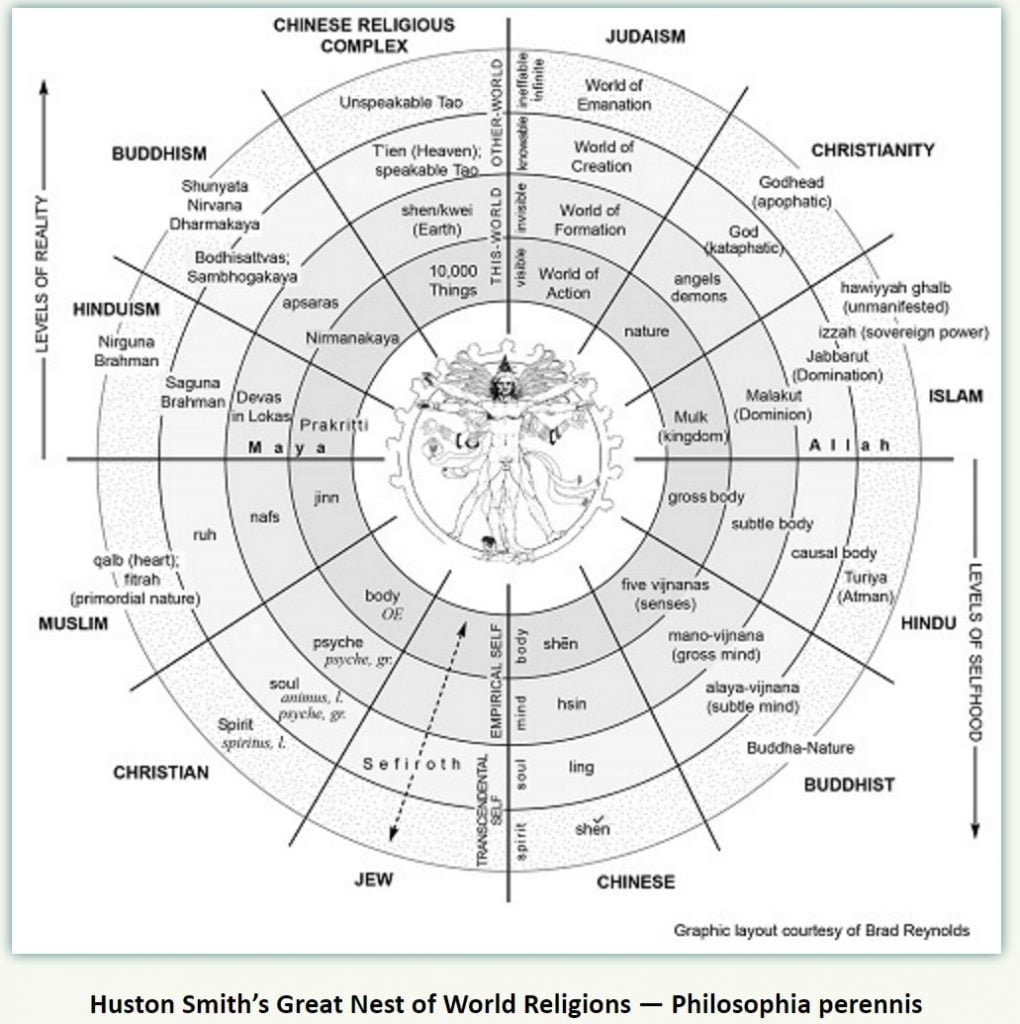 Hvor hans tidlige model tog udgangspunkt i det personlige niveau, tager hans senere og nuværende model udgangspunkt i det fysiske legeme. Hans tidlige model beskrev personlig (og transpersonlig) vækst fra det modne menneskes synspunkt, hvorimod hans nuværende model beskriver den naturlige og kronologiske udviklingsproces på såvel det personlige som det transpersonlige plan. Han har over de seneste 20 år omdefineret sin model til at omfatte ni planer, der groft sagt dækker tre præpersonlige, tre personlige og tre transpersonlige planer (se Wilber 1995, 1996, 1997). De første tre er primært kropslige og emotionelle, de mellemste tre overvejende mentale, og de sidste tre rent spirituelle af natur. Wilber har ved forskellige lejligheder skarpt advaret imod den udbredte tendens til at søge efter ånden på den fysiske naturs og kroppens præpersonlige planer. Vi behøver ikke at søge ånden dér, fastholder han, for ånden har sit eget sted i The Great Chain of Being over og uden for det personlige. Wilber har dermed egenhændigt udformet en omfattende højdepsykologisk bevidstheds- og udviklingsmodel.
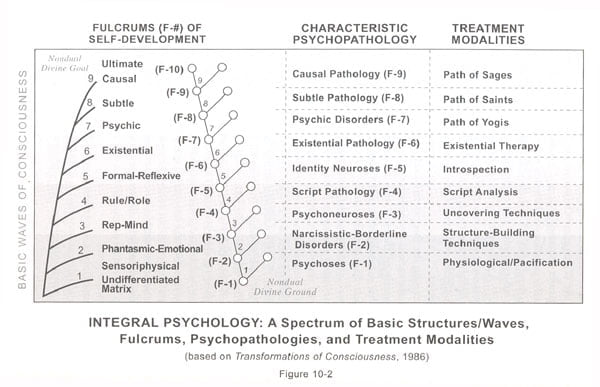
Wilbers model har ikke undgået kritik. De fleste kritikere har indvendinger imod dens åbenlyst lineære og hierarkiske natur. Med hensyn til det første punkt har der til tider været fremsat det argument, at det virkelige liv er langt mere kaotisk end disse nydelige, lineære modeller giver rum for. Det er efter min mening uden relevans her. Den kendsgerning, at vi kan gå op og ned ad en trappe, siger ikke noget, der taler imod eksistensen af denne trappe – men beviser omvendt dens eksistens. I mere abstrakte termer bør vi skelne mellem udviklingslogikken, som pr. definition beskriver de trin, som ét efter ét følger efter hinanden, og udviklingsdynamikken, som beskæftiger sig med den faktiske udviklingsproces med alle dens kroge og forviklinger, regressioner og progressioner, fikseringer og steder, hvor vi sidder fast. Det faktum, at åndelig udvikling, eller generel menneskelig udvikling, ikke i det virkelige liv følger et rigidt, lineært mønster, forbyder os ikke at formulere en sådan model. Og med hensyn til den formodede hierarkiske struktur i Wilbers model kan det siges, at en højdepsykologisk bevidsthedsmodel af natur er meget ”hierarkisk”, idet den taler om eksistensplaner, som transcenderer den dagsbevidste personligheds erfaringer. Så dette hierarkiske aspekt er indbygget i den transpersonlige tilgang – med mindre vi insisterer på, at vi lever i et helt igennem ”fladt” univers. Spørgsmålet, det handler om her, er, om vi virkelig ønsker at gå udover stofplanet eller ikke? Materialisme kan også være ”hierarkisk”, således som den fysikbaserede holisme påviser, men kun på illusorisk vis. For fysikken beskæftiger sig med kvantitative ”planer” af analyser; ikke kvalitativt eller ontologisk forskellige planer (Smith, 1976), og det er på ingen måde det, der her sigtes til (se også Wilber 1995, 1996).
Michael Washburn (1988, 1994) har udviklet et teoretisk alternativ til Wilbers transpersonlige udviklingsmodel, baseret på dybdepsykologiens principper. Han er solidt baseret i Freuds og Jungs tradition og har faktisk søgt at integrere begge. Selvom Washburn tror, at de to paradigmer er ”lige sammenhængende”, vælger han den dybdepsykologiske ”spiral-model”, idet han tror, ”at den tilbyder en mere følsom tydning af livets ikke ego-baserede og højere potentiale” (1988, p. 40). Washburn følger den tidligere beskrevne dobbelte udviklingslogik, hvor han ser den menneskelige natur som bipolar, bestående af en ”egoisk” (mental) og en ”ikke-egoisk” pol (krop/ånd), som andetsteds er kaldt The Ground (grundlaget, o.a.). Vi starter vores udvikling med en ikke-egoisk, præpersonlig fase og bevæger os derefter til en egoisk, personlig fase, hvorefter vi vender tilbage til det ikke-egoiske grundlag – som vi nu ser i et anderledes lys – i den tredje, transpersonlige fase. I denne tredje fase vender vi tilbage til vores kilde, det ubevidstes grund, hvor vi opdager nye aspekter ved det. Med den terminologi, vi anvender i introduktionen, kan vi sige, at Washburn behandler både kroppen og det ubevidste som det åndelige princip og sætter begge op over for egoet, som – på grund af dets undertrykkende kræfter – ses som åndens fjende.
Washburns model er stærkt præget af synspunkter, der stammer fra den europæiske, eksistentielle litteratur. Mennesket fremstilles her som en bipolar ”forening af krop og sind”, til tider omtalt som ”personen”, for at undgå forvirring i forhold til de to øvrige elementer. Disse to principper kan faktisk danne grundlag for en tre-faset udviklingsmodel. Den menneskelige udvikling forstås som en dialektisk proces, hvor en kropsfase (tese) efterfølges af en mentalt præget fase (anti-tese), og – hvis alt går vel – en fase, hvor kroppen og sindet integreres (syntese ). Den franske filosof Georges Gusdorf (1953) kaldte eksempelvis disse faser ”mytisk”, ”rationel” og ”eksistentiel”. Den første fase domineres af kroppen. I den anden fase (den mentale) undertrykkes kroppen. Sindet bliver så at sige diskarneret. Men den tredje, eksistentielle fase er karakteriseret ved ”det undertryktes tilbagevenden”, dvs. kroppen. Det diskarnerede sind inkarnerer på ny. Imidlertid er det eksistentielle ikke det samme som det transpersonlige: integrationen af krop og sind er ikke ensbetydende med at træde ind i åndens rige. Washburn har ændret denne model til en decideret transpersonlig model ved at tilskrive kroppen en numinøs (spirituel o.a.) kvalitet, således at vi ved at foretage transitionen fra det første til det andet plan ikke blot undertrykker kroppen, men i en vis forstand selve vores guddommelige urgrund. I den tredje fase, sammen med kroppens tilbagevenden, frigives de transpersonlige energier. På rent dialektisk vis ser han sindet som et anti-spirituelt princip, eftersom det ikke blot undertrykker kroppen, men også ånden. Den tredje fases syntesiske karakter kan tolkes på følgende måde: jeget (anden fase) kontakter på ny den ubevidste urgrund (første fase), men nu på bevidst vis (tredje fase), og både kroppen og jeget er dermed nødvendige for at nå den tredje fase. Jungianerne siger på tilsvarende måde, at udviklingen af egoet er nødvendig for at have et grundlag, der er tilstrækkeligt stærkt til at møde det ubevidstes arketypiske kræfter. En ren og skær regression (fra fase to til fase et) er ikke, hvad disse forfattere har på sinde. Men eftersom de uvægerligt anbringer ånden i samme kategori som kroppen, og aldrig i samme kategori som sindet, har deres modeller en stærkt ”regressiv” undertone. I modsætning til dette ses udviklingen af egoet i de højdepsykologiske modeller som noget positivt af helt andre årsager: det bringer os et skridt tættere på ånden. Egoet er åndens vej, ikke dens fjende. Eller formuleret i mere traditionelle vendinger: sjælen (egoet) er ét skridt fra ånden (Selvet), hvor kroppen er to skridt fra ånden. Der er alle tænkelige årsager til at tillægge egoet transcendentale kræfter!
Washburn har foreslået, at forskellene mellem ham og Wilber kan være af overvejende kulturel karakter. Hvor Wilber i vidt omfang har lænet sig op ad den kognitive udviklingspsykologi og den østlige tankegang – som lægger vægt på tanke og bevidsthed – har Washburn primært baseret sig på dybdepsykologien og den kristne mysticisme, som betoner dynamiske faktorer og emotionel udvikling. Han hævder endog, at en ægte tværkulturel model af den transpersonlige udvikling derfor endnu er fjern og måske en umulighed. Det sidste ord kan næppe være sagt i spørgsmålet om en sand transpersonlig videnskab, da den er nødt til at række dybere end kulturelle forskelle, som i øvrigt kan være virkelige nok. Af større vigtighed er, at vi – i den udstrækning Washburn komplimenterer Wilber i dennes mulige ensidige kognitive interesse – kun kan være taknemmelige for hans forsøg. Men i den udstrækning Washburn forsøger at omgøre Wilbers fremskridt, bør vi efter min mening være mindre entusiastiske. Hvis ”Wilber-revolutionen” (et udtryk, som blev skabt af den britiske psykolog John Rowan, 1992) primært handler om, at den spirituelle eller transpersonlige dimension får sin egen plads i den transpersonlige teori – som rækker udover det kropslige og mentale plan – kan vi karakterisere Washburn (som mærkværdigvis nok ikke figurerer i Rowans undersøgelse) som en mod-revolutionær, der opererer fra dybdepsykologiens lejr. Han anbringer faktisk på ny ånden i det ubevidstes og de primitive drifters rige og følger dermed en anderledes udviklingslogik.
Washburn (1988) har døbt de to rivaliserende standpunkter henholdsvis ”stige-modellen” (Wilber) og ”spiral-modellen” (Washburn). Stige-modellen er hierarkisk, lineær og trinvis, hvorimod spiral-modellen har U-form i den forstand, at udviklingen omkring midten af den menneskelige udviklingsproces skifter retning og på en eller anden måde vender tilbage til sit udgangspunkt igen – dog ikke bogstaveligt, finder dybdepsykologerne det vigtigt at påpege, men på et ”højere plan”; deraf spiralbilledet. En anden grundlæggende forskel er, at hvor Wilber ser udviklingsprocessen som en mere eller mindre naturlig transcendensproces, ser Washburn den som et resultat af fortrængning, som forsvinder i de senere faser. Wilber (1996) ville sige, at skønt fortrængning sandsynligvis forekommer i udviklingsfasen, kan den aldrig ses som selve drivkraften i udviklingen.
Begge modeller kan anvendes til at beskrive en tre-faset proces. Den grundlæggende forskel mellem dem ligger i den måde, hvorpå transitionen fra den anden til den tredje fase konceptualiseres: som et næste skridt fremad i udviklingen (stigen) eller som en tilbagevenden til rødderne (spiralen). I stigemodellen, for at tage den enkleste af de to først, starter udviklingen med kroppen (fase 1), bevæger sig til sjælen, jeget eller selvet (fase 2), og kulminerer i ånden eller Selvet (fase 3). De tre udviklingsstadier, den præpersonlige, de personlige og den transpersonlige – er ikke blot klart adskilte, de ”understøttes” af tre forskellige ”strukturer”, som vi kort sagt kan kalde for krop, sjæl og ånd. Spiral-modellen har også tre faser, som også kaldes den præpersonlige, den personlige og den transpersonlige – men med en stor forskel. Hvor de første to faser er næsten identiske, ses den tredje fase, den transpersonlige, i et andet lys. For ved at bevæge os fra fase et til to har vi, ifølge Washburn, ikke undertrykt kroppen, men også ånden. Så for at finde ånden på ny, må vi stoppe med denne fortrængning og vende tilbage til kroppens/åndens plan. Ved at sætte kroppen og ånden i samme kategori – den ikke-egoiske pol – er Washburn tvunget til at fremsætte synspunkter så som: ”den dynamiske grund” (Washburns navn for det ubevidste grundlag, fra hvilket egoet opstår) har en særlig relation til kroppen og er kilden til både libidoen og ånden. Han synes at sidestille instinkternes frisættelse fra egoets undertrykkelse med åndens frigørelse. Det er efter min mening tvivlsomt, om et enkelt princip i den menneskelige natur – ikke-jeg’et – kan tilskrives så forskellige fænomener som kroppen og ånden.
Washburn (1990) har opsummeret sit standpunkt i artiklen ”Two patterns of transcendence” (To transcendensmønstre, o.a.), som ironisk nok blev publiceret i tidsskriftet for humanistisk psykologi, og Wilber har svaret igen med en lang artikel i samme blad. De går direkte til det fundamentale spørgsmål: Følger udviklingen en lige linje, eller har den form som et U? Formuleret på en anden måde: bevægede vi os igennem udviklingen væk fra en (ubevidst) ånd, eller har vi bevæget os et skridt nærmere ånden? I sidste ende kan dette spørgsmål kun besvares metafysisk: er ånden den mest centrale del af vores væsen, som vi opdager hen imod slutningen af vores personlige udvikling, eller er ånden gemt i selve det ubevidste, som vi har kæmpet så hårdt for at undslippe i vores opvækst? Dybde- og højdepsykologien vil besvare dette spørgsmål på forskellig vis. Washburn argumenterer for, at spiral-synspunktet på udvikling bekræftes af de vestlige alkymi-traditioner, heltemyten og den kristne teologi og i sig selv er sammenhængende.
I sit svar til Washburn tilbageviser Wilber (1990) disse synspunkter og argumenterer i stedet for, at spiral-modellen ikke engang er understøttet af de kilder, som Washburn oplyser. Wilber fremhæver ydermere, at spiral-motivet kan integreres i stige-modellen, hvor det bortkaster dens reduktionistiske elementer. Han argumenterer endog, at spiral-modellen er ulig alt, hvad nogen vestlig videnskab og åndelig tradition har at sige os omkring udvikling. Efter hans mening er det udelukkende den romantiske forestilling, som går helt tilbage til Schelling, og som på tilsvarende måde influerede Jung og romantikerne, at vi vil vende tilbage til det paradis, vi mistede, da vi voksede op, der bakker spiral-synspunktet op. Wilber har også påpeget, at også tidligere udgaver af hans egen model havde en cirkulær form, som pegede i retning af, at udviklingen til sidst vender tilbage til kilden. I senere udgaver har han afskrevet denne fremstilling på grund af dens regressive implikationer.
Uheldigvis henviser de populære udtryk, som forekommer inden for transpersonlige kredse, ”den ydre bue” og ”den indre bue”, og som beskriver de personlige og de transpersonlige udviklingsfaser, fortsat til denne cirkulære fremstilling. I en vis betydning kan den menneskelige livscyklus i høj grad som en ”udadgående” bevægelse, som efterfølges af en ”indadgående” bevægelse. For i første halvdel af livet lærer vi at fokusere på ”tidens verden” – karriere, politik, skabe os et liv, stifte familie – hvor vi i anden livshalvdel lærer, eller burde lære, at fokusere på ”evighedens verden” – religion, livets mening, udsigten til døden, efterlivet. Det er imidlertid ikke ensbetydende med, at vi skal vende tilbage til den barnlige verden fra vores yngre dage. Tværtimod når vi kun frem til det niveau ved at fortsætte med at modnes. Wilber argumenterer også for, at udvikling ifølge hans model ikke ses som en lige opstigning imod ånden, men som en proces, hvor alle skridt fremad efterfølges af en tilbagevenden til det niveau, vi netop har lagt bag os, for at fuldbyrde integrationen. Den menneskelige udviklingen bliver dermed en proces, der så at sige handler om kontinuerlig ”opadgående spiralbevægelse”. Men den virkeligt vigtige måde, hvorpå også hans model grundlæggende set er cirkulær er, siger Wilber, at den tilsyneladende lige opstigning fra kroppen til sjælen til ånden faktisk blot er anden halvdel af en større bevægelse: involutionsprocessen (hvor vi bevæger os fra ånden til sjælen til kroppen) og den deraf følgende evolutionsproces (hvor vi bevæger os fra kroppen til sjælen til ånden). Denne for den transpersonlige psykologi ekstremt vigtige involutionsforestilling er den eneste sikkerhedsventil imod regressive fortolkninger af åndelig udvikling.

I sin seneste bog (1997), ”The Eye of Spirit” (Åndens øje, o.a.), dedikerer Wilber et helt kapitel til det synspunkt, som Washburn har udviklet. Han rekapitulerer deres hidtidige diskussion og påpeger, at Washburns standpunkt har store lighedspunkter med det romantisk-jungianske synspunkt, som han selv har været eksponent for i sit tidlige arbejde. Omkring 1980 brød Wilber imidlertid radikalt med dette synspunkt og udviklede sin højdepsykologiske vækst- og udviklingsmodel. Wilber koncentrerer sin kritik omkring Washburns idé om The Ground (Grunden, o.a.) og hans postulat om, at børn er ét med Grunden. Ingen af de eksisterende åndelige traditioner giver udtryk for, at børn helt og fuldt lever i Ånden. Tværtimod ses de mere rigtigt som skabninger, der er fuldkommen betinget af det materielle domæne. Den kendsgerning, at børn nogle gange gør et uspoleret (dvs. ikke-adskilt, o.a.) indtryk på os adskilte voksne, bør ikke gøre os blinde for den kendsgerning, at de er helt prisgivet deres begrænsninger. Børn forekommer os at være ”hele”, fordi de kun skal forholde sig til én ontologisk realitet; den fysiske krop og dens behov. Mens voksne må forholde sig til langt større virkeligheder: sindet, sjælen og ånden. For Washburn omfatter Grunden kroppen og ånden, men mærkværdigvis nok aldrig sindet og dets ego; for Wilber omfatter Grunden både kroppen, sindet og ånden, og mennesker udvikler sig ved successivt at bevæge sig fra kroppen til sindet til ånden. Dette synspunkt understøttes inden for alle større åndelige traditioner, hvor ingen begrænser Gud alene til kroppens niveau. Washburns synspukt, og dermed hele hans syn på den menneskelige udviklingsmekanisme – som er at ligne med en Gud, som er tabt og fundet igen – falder sammen, når det guddommelige spredes ud over hele eksistensen.
Den esoteriske tradition kan tilføje nogle vigtige detaljer her (Visser, 1995). Eksempelvis bør der skelnes mellem den faktiske skabelse af sfærerne og involutions-/evolutionsprocessen, således som det er tilfældet med inkarnations-/diskarnationsprocessen hos den individuelle menneskesjæl. Ifølge den teosofiske forståelse skabes sfærerne gennem en proces, hvor det formløse rodstof opdeles i flere forskellige lag, naturens planer. Disse udgør den baggrundsscene, på hvilken evolutionsdramaet udspiller sig. Efter denne kosmiske hændelse stiger den menneskelige ånd eller monade, som har sit udspring i det guddommelige, som har sin bolig på det højeste af alle planer, ned gennem sfærerne, indtil den når det fysiske plan. Her vender den om og stiger på ny op til det guddommelige igennem en langsom og møjsommelig proces, hvorigennem naturrigerne – mineral-, plante- og dyreriget samt menneskeriget – skabes. Denne bevægelse i stor skala kaldes meget retvisende involution og evolution, idet den finder sted på et kollektivt plan og dækker alle naturrigerne. Denne nedadgående/opadgående proces gentages i reinkarnationscyklussen. Når vi inkarnerer, ”stiger vi ned”, og når vi diskarnerer, ”stiger vi op” igennem sfærerne. I løbet af et menneskeliv bringes vores sanser i samklang med det fysiske plan, men vores ”bevidsthedscentrum” kan være steget op til højere planer – emotionelle, mentale eller sågar åndelige. Faktisk kan hele den menneskelige udviklingsproces (personlig såvel som transpersonlig) forstås som en gradvis opstigning igennem sfærerne, hvor vi dog forbliver i kontakt med den synlige verden igennem det fysiske legeme. Såfremt dette er sandt, bliver det af afgørende vigtighed at afgøre, hvilke sfærer der eksisterer bag det fysiske plan og i hvilken rækkefølge. Hele spørgsmålet om sfærer fortjener i sig selv et særskilt studie, eftersom forskellige synspunkter på sfærerne vil føre til forskellige forudsigelser med hensyn til den menneskelige udviklingsproces. En sammenligning af Wilbers model og disse sfærer viser, at hans eksistentielle og psykiske stadier ”stikker ud”, idet de ikke svarer til et konkret eksistensplan, således som det fysiske, det mentale og det åndelige plan. Hermed falder sfære-/plan korrespondancen fra hinanden.
Involutionsspørgsmålet er en nøgle-doktrin for den transpersonlige teori. Det kan være en svær kamel for nutidige videnskabsfolk at sluge, men der er et mere hjemligt eksempel på det samme princip i reinkarnationsdoktrinen. Denne nedad-/opadgående kurve er også indlysende i reinkarnationscyklussen, som består af en nedadgående inkarnationsbevægelse, efterfulgt af en opadgående diskarnationsbevægelse. Involution/evolution og inkarnation/diskarnation er forskellige, men analoge processer. I inkarnationsforløbet bevæger vi os væk fra ånden og stiger ned i sfærerne, indtil vi når den fysiske fødsels plan, hvorefter vi på ny vender om, så ethvert skridt vi tager fra fødselsøjeblikket er et skridt nærmere ånden. Denne fører til en paradoksal, men afgørende vigtig, indsigt: for at vende tilbage til ånden, som vi i sandhed har ”mistet”, må vi fortsætte på den vej, vi indtil nu er rejst ad; ikke tilbage til en tidligere sindstilstand, som kan relateres til vores individuelle eller kollektive historie (eksempelvis vores gyldne barndom, brystfasen eller endda tilstanden i livmoderen, urmennesket etc. etc.). Lad mig gentage: for at vende hjem, må vi fortsætte! Faktisk er den fysiske fødsel det sidste sted, vi skal lede efter ånden, for den repræsenterer det laveste punkt eller nadir i denne cykliske inkarnations-/diskarnationsproces. (Stanislav Grofs synspunkt, som tillægger den fysiske fødselsproces og genoplevelsen af fødselsprocessen afgørende betydning som en port til det åndelige rige, vil blive diskuteret i næste sektion). Så Wilbers model er også spiralformet på en meget virkelig måde, selvom hans spiral så at sige ”vender på hovedet”. Og hvor Wilber og Washburn begge anvender begrebet ”tilbagevenden til Kilden”, er deres kilder på dramatisk vis væsensforskellige!
Det, der derfor er på spil her, er den åndelige eller transpersonlige dimensions præcise natur. Det er et afgørende spørgsmål for den transpersonlige psykologi, for hvad er transpersonlig psykologi andet end et videnskabeligt studie af åndelige erfaringer og –udvikling? Wilber/Washburn-kontroversen er til syvende og sidst et spørgsmål om, hvorvidt den transpersonlige ånd eksisterer som en separat struktur i den menneskelige bevidsthed. Hvis det er tilfældet, kan vi fortsætte ad den vej, vi indtil videre har rejst ad, hvor udviklingen som helhed følger en lige linje. Hvis ikke, må vi søge et andet sted efter ånden og må endda se tilbage til der, hvor vi kom fra, hvormed udviklingen har U-form. Men siden hvornår vokser træerne ved at vende deres krone ned i jorden? Kun strudse er kendt for at gøre dette! Dybdepsykologiens påstand om, at ånden er gemt i det ubevidstes dyb er forældet og bør tages op til fornyet overvejelse i lyset af den nuværende viden. Den forekommer at være et levn fra den videnskabelige psykologis dybdepsykologiske fortid. Den er i sandheden fornærmelse imod ånden, da den kæder åndelig udvikling og regression sammen. Washburn og dybdepsykologerne er meget tro imod dette regressionsbegreb. Han taler endda om ”regression i transcendensens tjeneste”, som er en omskrivning af det velkendte udtryk ”regression i egoets tjeneste”. Denne idé giver alene mening, såfremt der ikke eksisterer noget åndens niveau udover kroppens og egoets, hvortil vi kan fortsætte, når vi har fuldbyrdet vores personlige udvikling.
Dybdepsykologien synes udelukkende at leve på baggrund af denne fornægtelse af ånden som et autonomt princip. En dybdepsykologisk tilgang til det transpersonlige synes endda at være selvmodsigende begreber. Den kan aldrig løbe fra sine regressive implikationer, så længe den søger efter ånden i det ubevidstes dyb. Dybdepsykologien synes at søge efter solen på havet dyb, alene fordi den afspejles på vandoverfladen. Højdepsykologien ser op imod den virkelige sol.
Wilber/Grof-kontroversen
Den anden større teoretiske opponent imod Wilber er Stanislav Grof. Han fremstår som leder af den transpersonlige bevægelse, hvor han ikke blot tilbyder en komplet bevidsthedsmodel (baseret på sin forskning i ikke-ordinære bevidsthedstilstande), men også en praktisk metode til personlig udvikling (kaldet ”holotropisk åndedrætsteknik” og en verdensomspændende organisation (The International Transpersonal Association) (den internationale transpersonlige forening, o.a.). Han har omfattende skriverier bag sig, ikke blot om sin egen forskning (Grof, 1975, 1985, 1988), men også om døden og livet efter døden (Grof, 1980, 1994), og om Det Ny Paradigme (Grof, 1983). Grof har været del af den transpersonlige bevægelse praktisk taget fra dens spæde start sidst i 60’erne og har været i stand til at debattere med næsten alle større intellektuelle inden for området. Hvor Washburns kritik af Wilber primært har hvilet på et teoretisk grundlag, har Grof tillige stillet sine omfattende kliniske beviser til rådighed, som er baseret på bogstaveligt talt tusinder af terapeutiske sessioner. Hvor Grof betoner de ikke-ordinære bevidsthedstilstande, lægger Wilber vægt på begrebet ”niveauer” af personlig og transpersonlig eller kontemplativ udvikling – som er helt forskellige perspektiver. Grof og Wilber repræsenterer to konkurrerende, forskellige og på en vis måde to indbyrdes selvmodsigende modeller, som fortjener at blive holdt op over for hinanden og sammenlignet, da vi igen her har et interessant tilfælde af dybde- versus højdepsykologi.
I Grofs velkendte model med “det menneskeligt ubevidste rige” definerer han tre niveauer: et personligt plan, som indeholder det biografiske materiale; et dybere, “perinatalt” plan med minder om fødselsprocessen; og det dybeste, “transpersonlige” plan, som mere eller mindre minder om Jungs kollektivt ubevidste . Populært sagt er det personlige plan Freuds domæne, det perinatale lag er Ranks og Reich’s domæne, og det transpersonlige lag er Jungs domæne. Grof synes ingen steder at transcendere den dybdepsykologiske begrebsramme. Grof ser, ligesom Washburn, sig selv primært som dybdepsykolog i Freuds, Jungs, og i Grofs tilfælde – Otto Rank (som forskede i det menneskelige fødselstraume). Det er derfor ikke overraskende, at også Grof er fortaler for spiral-modellen. ”I takt med at den bevidste evolution fortsætter [ind i det transpersonlige], følger den ikke en lineær bane”, skriver han, ”men lukker sig i en vis betydning omkring sig selv. I denne proces vender individet tilbage til tidligere udviklingsfaser, men vurderer dem nu fra det modne voksne perspektiv. Samtidig bliver han eller hun bevidst opmærksom på visse aspekter og kvaliteter på disse planer, som var implicitte, men uerkendte fra den lineære evolutions perspektiv (Grof, 1985, p. 137). Grof og Washburn er helt vigtige i dette afgørende spørgsmål.
Grofs model anvendes ofte som et kort over åndelig udvikling. Igennem en intens psykologisk regressionsproces, som muliggøres af åndedrætsteknikker, som Grof og hans hustru Christina har udviklet, udforskes først de personlige og biografiske lag af det ubevidste. Minder om livet som barn og baby dukker op. Dybere endnu og længere tilbage i tid kan sågar minder om ens egen fødsel afdækkes. Grof har på omfattende vis studeret dette niveau af det ubevidste. Det er centralt for hans opfattelse af bevidsthedsudvikling og åndelig vækst. Dette studie er udmøntet i en detaljeret teori om fødselsprocessens fire stadier (kaldet ”grundlæggende perinatale matricer”), som former alle senere erfaringer i livet. Erfaringerne på det perinatale niveau varierer fra ekstremt smertefulde og endda sado-masochistiske til ekstatiske og frisættende. Det første af disse stadier, den relativt fredfyldte tilstand i livmoderen inden den faktiske fødselsproces går i gang, forbinder Grof konkret med den mystiske forenings tilstand. Ved at genopleve denne fødselsproces – i det, vi analogt med den langt mere velkendte ”nærdødsoplevelse” kan kalde for en ”nær-fødselsoplevelse” – opnår vi adgang til det ”åndelige rige”, som er det dybeste lag af det, Grof kalder for det ubevidste. Vi kan her opleve imponerende arketypiske processer, hvor de fleste har at gøre med død og genfødsel. Transpersonlige erfaringer definerer Grof som en følelse af enhed eller identifikation med andre væsener – fra biologiske celler, planter, dyr eller andre mennesker og ånder til Det Universelle Sind eller det Meta-Kosmiske Tomrum.
Det, at en førende transpersonlig teoretiker forbinder den mystiske erfaring med symbiotiske og oceaniske tilstande i livmoderen er ingen ringe overraskelse og er, for at være ærlig, meget prekær. Freud, for nu blot at nævne ham, ville have elsket det! Grof skriver konkret: ”Den mystiske erfaring af kosmisk enhed synes at være forbundet med den oprindelige enhed mellem fosteret og moderen. Når der ikke er nogen skadelige stimuli, som griber ind, er forholdene for fosteret næsten ideelle og yder fuldkommen beskyttelse og sikkerhed og bevidst tilfredsstillelse af alle behov. De grundlæggende kendetegn ved denne tilstand er transcendens af subjekt/objekt-dikotomien, oplevelsen af hellighed, som rækker udover tid og rum, uudsigelig lyksalighed og indsigter af kosmisk relevans” (Grof, 1980). Selvom Grog og hans tilhængere aldrig går så langt som til konkret at sige, at den mystiske erfaring er en genudspilning af den fysiske fødselsproces, fører selve logikken i hans model uvægerligt til denne konklusion. For Grof vedbliver at se tilbage i tid og nedad efter ånden: fra det nuværende øjeblik tilbage til den personlige fortid, tilbage til fødselsoplevelsen og endog længere tilbage til den relativt fredfyldte ”transpersonlige” svangerskabsfase – som Grof kalder ”den gode livmoder”. Men hvorfor skulle fødslen være døren til ånden? Og kan vi i sandhed sige, at fosterets behov kan sidestilles med et voksent menneskes behov, endsige en moden mystikers? Som vi har set før, repræsenterer fødslen det laveste punkt i den cykliske reinkarnationsproces og udgør faktisk åndens modpol. Grof synes at lægge så stor vægt på ”nær-fødselsoplevelsen”, fordi han bliver ved at søge efter ånden i dybet af det ubevidste, hvorved kroppen uundgåeligt bliver den primære åndens port. Han har fundet et åndeligt erfaringsparadigme i den (symbolske, ikke virkelige!) oplevelse af død-og-genfødsel, som er fremherskende i mytologien. Han ser både fødslen og døden som porte til det åndelige rige. Efter min mening, og i betragtning af den tilgængelige viden om sfærerne, er det højst tvivlsomt, at vi skulle vedblive at søge efter ånden i disse dybe, mudrede vande.
Grof og Wilber har beklageligvis endnu ikke mødtes i en face-to-face debattering (men se Wilber, 1997, med hensyn til Wilbers omfattende kritik af Grof). I betragtning af den teoretiske betydning af disse meningsforskelle ville en sådan debat være mere end relevant. De har imidlertid sporadisk kommunikeret igennem deres publicerede værker. Det er interessant, at hvor Wilber indtil for nylig udelod Rank af sin ellers meget omfattende spektrummodel, synes Grof at fokusere næsten udelukkende på det Rank’ske område som hovedporten til ånden! Wilber og Grof er i denne forstand hinandens spejlbilleder. Og begge hævder fortsat at have en fuldstændig bevidsthedsmodel! Grof har kritiseret Wilber for den rigide linearitet i hans model, og for hans negligering af fænomenet fødsel og død (Grof, 1985). Wilbers model starter med fødslen, Grofs starter endnu tidligere. Vi har i de foregående afsnit beskæftiget os med linearitetsspørgsmålet. Med hensyn til det andet punkt, fødselstraumets placering i den menneskelige udvikling, har Wilber for nyligt nuanceret sit synspunkt ved i sin model at inkorporere et trin i begyndelsen af udviklingen, som skal redegøre for mulige indflydelser, der har relation til fødselstraumet; det såkaldte ”Fulcrum-0” (omdrejningspunkt-0, o.a.) (Wilber, 1994, 1996). Men til trods for, at han er villig til at indrømme, at fødselstraumet kan have en vis indflydelse på udviklingsprocesserne senere i livet, anser han det ikke for så fundamentalt og vidtrækkende, som Grof hævder, og han afviser idéen om, at den biologiske fødsel sætter rammerne for al senere udvikling.
Ganske som i tilfældet Washburn eksisterer der en bemærkelsesværdig parallelitet mellem Grofs og Wilbers tidlige værker. I sin første bog, The Spectrum of Consciousness (Bevidsthedens spektrum, o.a.) skitserede Wilber (1977) en udviklingsmodel, som har et stærkt dybdepsykologisk præg. Vi starter i personlighedens øverste lag og fortsætter derfra ”ned” til dybere lag ved at integrere skyggen, kroppen (organismen) og det transpersonlige. På sindets ”dybeste” plan forenes vi med kosmos som helhed. Dette er reflekteret i Grofs model, hvor rækkefølgen er: det personlige, det perinatale (dvs. det, der har relation til perioden umiddelbart før og efter en fødsel, o.a.), og det transpersonlige. Begge modeller tager afsæt i den dagsbevidste personlighed og bevæger sig derfra til stadigt dybere lag af vort væsen. Som vi har set i Wilbers senere værker, er han gået over til en decideret højdepsykologisk model, som tager udgangspunkt i det fysiske legemes grundplan og derfra bevæger sig opad til henholdsvis sjæl og ånd. Her har også Wilber distanceret sig mere og mere fra dybdepsykologiens terminologi.
I sit seneste omfattende værk, Sex, økologi og spiritualitet, som er første bind i en planlagt kosmos-trilogi, har Wilber (1995) svaret mere konkret igen på Grofs kritik. Han forsøger imidlertid at bagatellisere forskellene mellem de to modeller ved at fastholde, at selvom de er opstået på forskellige måder, giver de begge nøglen til de samme sandheder om den menneskelige bevidsthed. For hvor Wilber beskriver udviklingens kronologiske processer, har Grof dokumenteret resultaterne af sine omfattende eksperimenter med regressionsterapi, hvor han så at sige vender rækken af begivenheder om. Efter Wilbers opfattelse er det arbejde, som er nødvendigt for at integrere begge modeller meget begrænset. For begge følger den samme kronologi, men i hver sin retning: Grofs rækkefølge ville være det ordinære ego/det freudianske/fødselstraumet/det transpersonlige, hvor Wilbers er fødselstraumet/det freudianske/det ordinære ego/det transpersonlige. Imidlertid tilsiger hans model – igen ifølge Wilber – samme rækkefølge for regressionsprocessen: det ordinære ego/det freudianske/fødselstraumet/det transpersonlige. Men en alternativ måde at forstå Wilbers model på vil her være på sin plads: fra det personlige jegs synspunkt vil to forskellige og indbyrdes modstridende udviklingsretninger være mulige: opad eller fremad (progression) imod det transpersonlige, henholdsvis nedad eller baglæns (regression) til de freudianske og perinatale niveauer. Efter min mening eksisterer der en helt grundlæggende forskel mellem Wilber og Grof. Igen her gælder det, at dybde- og højdepsykologien mødes ikke her – de følger forskellige veje.
I samme passage karakteriserer Wilber Grofs tilgang til det transpersonlige som en form for ”spiritualitet ad bagvejen” (Wilber, 1995, p. 587). Hvor det kentauriske (eller eksistentielle) for Wilber er porten til det transpersonlige, er fødslen for Grof porten. Men siden hvornår fører disse to forskellige porte til de samme virkeligheder? Nær-fødselsoplevelsen (og for den sags skyld også nær-dødsoplevelsen) kan udmærket være porten til en trans-fysisk virkelighed, da det fysiske legeme er transcenderet. Alle såkaldt paranormale fænomener (extra-sensorisk perception, nær-dødsoplevelser, ud-af-kroppen oplevelser etc.) peger på en mulig transcendens af det fysiske, kropslige eller sensoriske niveau, men ikke nødvendigvis af det mentale eller det personlige niveau. I det teosofiske verdensbillede er den sfære, som direkte grænser op til den fysiske verdens fødsel og død ikke på nogen måde spirituel, men derimod astral, dvs. emotionel af natur (se Visser, 1995). Dette kan redegøre for det stærkt ”astrale” og psykedeliske anstrøg, der er i Grofs værker, som har så meget at sige i forhold til de mørkere og intenst emotionelle områder i den menneskelige psyke. Grof definerer desuden det transpersonlige på en meget løs måde, hvor det ifølge ham indbefatter såvel paranormale som spirituelle fænomener. Rowan (1992) refererer til dette som det ekstrapersonelle og det transpersonlige. En traditionel forståelse ville omtale forskellen mellem ”psykisme” (det paranormale) og ”spiritualitet” (det transpersonlige, eller mellem ”okkultisme” og ”mysticisme” – to meget forskellige områder.
Wilber (1997) har for nylig givet en dybdeanalyse af Grofs synspunkter, hvor han fremfører, at Grof anvender en dobbelt definition af det perinatale plan, som er centralt i hans forståelse. Hvor Grof gentagne gange har fremført, at det er afgørende for genoplevelsen af fødselsprocessen, inden den spirituelle dimension kan kontaktes, giver Wilber igen ved at sige, at ingen spirituel tradition nogensinde har angivet dette som en nødvendig forberedelse. Den kendsgerning, at en eksistentiel bevidsthed af fænomenet liv og død synes at være en forudsætning for spiritualitet – og hvorfor ville vi ellers begynde at søge efter det uforgængelige? – retfærdiggør ikke det synspunkt, at vi er nødt til at gå tilbage til vores egen fødsel for at finde porten til det spirituelle område. Wilbers følgende passage synes for mig at være konkluderende: ”Spørgsmålet er, om det eksistentielle plan nødvendigvis delvist involverer den faktiske genoplevelse af den kliniske fødsel? Det gør det muligvis, men gør det nødvendigvis også som en regel det? Grof siger helt grundlæggende ja, hvor stort set alle andre siger nej. Vi finder ikke nødvendigheden af at genopleve den kliniske fødsel i nogen af de store spirituelle manualer eller teknikker. Det findes sjældent eller aldrig i de store klassiske værker inden for den tidløse visdomslære eller i nogen af de store visdomstraditioners tekster. Vi finder det heller ikke hos det store flertal af vestlige dybdepsykologer, inklusive James og Jung, eller hos den generelle jungianske tradition. (Vi finder det heller ikke hos Washburn, der som regressionist kunne forventes at erklære sig enig, men det gør han ikke. Det er min gisning, at Grof er så forpligtet over for fænomenet fødsel, som han er, fordi han som dybdepsykolog er tilbøjelig til at se tilbage i tid for holdepunkter i forhold til åndens lokalitet, og ikke fremad.
Spørgsmålet om døden og livet efter døden har i flere af Grofs publikationer en speciel opmærksomhed (Grof & Halifax, 1977; Grof, 1980, 1994). Også Wilber har kontempleret over dette emne ud fra såvel en teoretisk (Wilber, 1980) som en mere personlig vinkel (Wilber, 1991). Både Wilber og Grof har bidraget til Gary Doore’s artikel om emnet livet efter døden (Doore, 1990). Eftersom dette ser ud til at være et centralt emne i den moderne esoteriske (teosofiske) litteratur, kunne en sammenligning mellem disse perspektiver vise sig hensigtsmæssig. Grof (i Doore, 1990) er optimistisk i forhold til perspektiverne omkring et muligt liv efter døden, baseret på resultaterne af ”moderne bevidsthedsforskning” i almindelighed, og forskning i ændrede bevidsthedstilstande i særdeleshed, således som disse skabes igennem LSD eller holotropisk åndedrætsarbejde. Disse praksisser synes at skabe paranormale oplevelser af forskellig art – visionære erfaringer som dem, der er beskrevet i Den Tibetanske Bog om Livet og Døden, ud-af-kroppen oplevelser, spiritistiske eller ”astrale” fænomener eller erindringer om tidligere liv. Ifølge Grof ”understøtter disse fænomener et udsyn, som anerkender realiteten af, at bevidstheden overlever den fysiske død”. Ud fra hans synsvinkel transcenderes tiden, rummet og endog hele det fysiske univers i transpersonlige oplevelser. Det er sidstnævnte kategori – arketypiske visioner, møder med afdøde menneskers ånder, clairvoyante iagttagelser – som kaster nyt lys på muligheden af en ”efterverden”. Navnlig kategorierne ud-af-kroppen oplevelser, møder med ”ånder” i en astral verden, og erindringer om tidligere liv – som Grof anser for transpersonlige, selvom ”psykiske” formentlig ville være mere passende – er en rig kilde til bevis for liv efter døden. Den esoteriske tradition giver en klar fremstilling af de sfærer, som transcenderer det fysiske plan. Dette emne er mere fyldestgørende og klart beskrevet end de shamanistiske og tibetanske verdensbilleder, som er så populære i vores tid.
Wilber (hos Doore, 1990) trækker ikke på paranormale beviser som grundlag for sin overbevisning om, at reinkarnation er en kendsgerning. Tværtimod anser han reinkarnation for en spirituel hypotese og argumenterer for, at meditation i dette liv kan vise os alle bevidsthedstilstandene efter døden, således som de religiøse traditioner beskriver. Hans antropologiske teori er klarere end Grofs – kroppen, sindet, sjælen og ånden er de grundlæggende elementer i den menneskelige natur. Wilber fastholder, at det ikke så meget er sindet, der reinkarnerer, men derimod sjælen. Han tvivler endda på validiteten af såkaldte erindringer om tidligere liv, da disse findes hos sindet, som forgår, og ikke hos den udødelige sjæl eller Selvet. Ud fra hans synspunkt er de erindringer, som til tilder dukker op hos meget unge børn, undtagelsen, som bekræfter reglen om, at intet af den jordiske personlighed bliver tilbage – bortset fra ”dyder” og ”visdom”. Ifølge den tibetanske tradition, som Wilber her følger, passerer vi i løbet af to liv gennem alle sfærer – hele vejen op og hele vejen ned. Over otte stadier bevæger vi os fra den døende fysiske krop til Det Absoluttes Klare Lys. Efter en relativt hurtig opstigen gennem sfærerne, hvor vi kortvarigt er i kontakt med Lyset, forlader vi vores krop og træder ind i bardotilstanden, som består af et stadie, hvor vi har strålende visioner, og det stadie, hvor vi reinkarnerer i et nyt legeme. Wilber anser ikke dette for blot at være en interessant fænomenologisk tildragelse, men bekræfter, at: ”Efter min mening er disse planer virkelige, de har faktisk og definitiv ontologisk status, og derfor er oplevelserne på disse planer i sig selv virkelige” (p. 186).
Teosofien, som er en nutidig filosofi, der omhandler netop disse planer, er enig i, at det ikke er sindet (personligheden eller egoet), som reinkarnerer, men sjælen (individualiteten eller Selvet), men åbner mulighed for erindringer om tidligere liv, da også Selvet har sin egen hukommelse. For hvordan ville ellers erindringer om tidligere liv, som eksempelvis beskrevet i den buddhistiske litteratur, overhovedet være mulige? Hvorfor skulle vi fornægte Selvet dets mentale aspekt? Ifølge den teosofiske forståelse består Selvet af vilje (dyder), intuition (visdom) og abstrakt tænkning (erindring). Ydermere, at vi i sandhed rejser gennem sfærerne mellem livene, men: (1) vi når ikke hele vejen op til Det Absolutte, men kun til sjælen (eller Selvet), (2) denne opstigning tager meget længere tid end de få timer, som Den Tibetanske Bog om Livet og Døden tilsteder os, (3) den følgende nedstigning til det fysiske plan kan ske meget hurtigt, (4) denne periode er på ingen måde begrænset til den periode på 49 dage, som Den Tibetanske Bog angiver, og (5) at genfødes i en dyrekrop er ganske enkelt ikke relevant. Det ville være yderst relevant at placere det teosofiske syn på livet efter døden på niveau med de fremherskende tibetanske eller shamanistiske beskrivelser. Det kan endda siges, at den traditionelle forståelse af himmel, helvede og skærsilden ifølge teosofisk forståelse ikke er langt fra sandheden. Det betyder, at vi kan skabe et metafysisk syn på efterlivet uden at have behov for at låne fra østlige eller primitive kulturer. Hvor Wilber erklærer sig enig i det tibetanske syn på døden, er Grof mere tværkulturel i sin stillingtagen, selvom det gør hans synspunkt mere generelt og vagt. Der kan ikke udledes nogen detaljeret information mht. sjælens rejse efter døden fra hans model: udforsker vi i dødsprocessen og efterlivet det ubevidstes perinatale og transpersonlige planer? Genfødes vi i en transpersonlig virkelighed? Teosofien giver et meget enkelt svar på spørgsmålet om, hvad der sker, når vi dør: Vores personlige selv overlever kroppens død og oplever sin ”himmel” og sit ”helvede”, men forgår til sidst, hvorimod vores transpersonlige Selv er relativt udødeligt og i stand til at opnå frigørelse fra cyklussen af død og genfødsel.
Grof anser de nye videnskaber – systemteori, kvantefysik, holografi etc. – for allierede i de transpersonlige studier og som grundlag i uenigheden mellem ham selv og Wilber. Wilber har kritiseret det regressive og reduktionistiske i næsten hele den såkaldte Ny Paradigme-tænkning (Wilber, 1995). Grof, derimod, er en af de varmeste fortalere for holismens ”evangelium”. Han giver udtryk for, at hvor Den Gamle Videnskab ikke var i stand til at håndtere bevidsthedens ikke-ordinære fænomener, er Den Ny Videnskab: ”Hvor de transpersonlige oplevelser klart og helt grundlæggende er uforenelige med den mekanistiske videnskab, kan den integreres med den revolutionerende udvikling, der har fundet sted inden for forskellige videnskabelige discipliner, som er blevet kaldt Det Ny Paradigme” (Grof, 1988, p. 163). Men den sørgelige og ædruelige kendsgerning er, efter min mening, at hverken den gamle eller den nye fysik er i stand til at trænge igennem til den subjektive bevidstheds komplekse indre virkelighed; de er alene i stand til at håndtere stoffets verden – hvad enten de betragtes atomart eller holistisk. Ikke nok så megen kvantefysik kan fortælle os noget om selv den mest basale menneskelige følelse. Hvad mere er, Grofs grundlæggende metafor – hylotropisk kontra holotropisk tænkning, dvs. som bevæger sig henholdsvis mod delen eller mod helheden – er tæt knyttet til det fysiske plan. Den metafor, som handler om delen kontra helheden, burde efter min mening erstattes af dybde-/højde metaforen.
Det meget reduktionistiske holistiske synspunkt placerer ofte ånden i naturen, hvorved vores fremmedgjorthed fra naturen tolkes som en fremmedgjorthed fra Gud. Det verdensomspændende skrig efter et mere økologisk sundt samfund, hvor værdifuldt dette end i sig selv måtte være, gives en spirituel overtone, eftersom helingen af vores fremmedgjorthed fra naturen gøres synonym med healingen af vores fremmedgjorthed fra Gud. I Wilbers forståelse er vores fremmedgjorthed fra naturen ikke en fremmedgjorthed fra Gud, men tværtimod et skridt nærmere Gud. Hele processen med modernisering og sekularisering kan ud fra dette meget originale synspunkt endda ses som Guds handling! Og selvom nutidens økologiske problemer er usædvanligt alvorlige og bør løses, bør de aldrig forveksles med de spirituelle problemer, som er tilsvarende alvorlige og voldsomme. Wilber har i sit seneste værk (1995, 1996) gjort det smerteligt klart, at der ikke er grundlag for dette holistiske postulat. Også her er der en dyb kløft inden for det transpersonlige, hvor Grof og Wilber er hovedeksponenterne.
Konklusion
Forskellen mellem dybde- og højdepsykologien er klart det vigtigste teoretiske emne inden for den transpersonlige psykologi. Der kan udledes to diametralt modsatte perspektiver på mennesket og samfundet fra disse perspektiver. Det dybdepsykologiske/holistiske synspunkt synes at betone den kollektive dimension, som alle væsener har til fælles. Den taler alene om enhed og helhed, som ofte forstås som værende af fysisk natur og som pegende på de præ-moderne samfund som redskab i løsningen af det moderne samfunds problemer. Den indtrængende holistiske bøn om en mindre fragmenteret og delt verden hviler på dette grundlag. Det højdepsykologiske synspunkt synes at betone den individuelle dimension, som handler om vækst, og som vægter mystikernes sjældne og meget usædvanlige oplevelser. Den taler om en opstigning til ånden og om et hierarki, som bringer os i kontakt med stadigt mere spirituelle planer, og som derigennem anviser de faktiske skridt, vi må tage, førend vi når til enhed.
I denne betydning befinder den transpersonlige psykologi sig ved en korsvej. Vi befinder os præcis midt imellem det underbevidste og dets mange planer – kroppen, seksualiteten, følelserne etc. etc. – og det overbevidste – den åndelige intuition, det højere Selv, etc. etc. Dette overbevidste sind er formodentlig lige så komplekst som sin lavere modpart og er den transpersonlige psykologis rette domæne. Så hvor finder vi ånden? Søger vi ånden i dybden og derfor i fortiden (vores egen udviklingsmæssige historie)? Eller ser vi opad efter ånden, og derfor mod fremtiden? Dybdepsykologien ser ikke blot mod fortiden, men er i sig selv, mener jeg, et levn fra fortiden. En ægte transpersonlig psykologi vil derfor være en højdepsykologi, som dækker den transpersonlige ånds gebet på en utvetydig og videnskabelig måde. Hvis den ser sig selv som omfattende også den personlige dimension, ville udtrykket ”integral psykologi” være mere dækkende (se Wilber, 1997). En psykologi, som på ægte vis dækker alle områder af den menneskelige bevidsthed og udvikling, vil dække både dybde- og højdeaspekterne. I denne integrale psykologi vil den ”vertikale” dybde/højde dimension formentlig være den vigtigste dimension. Det er på tide, at vi lægger vores dybdepsykologiske fortid bag os for at være i stand til at bane vej for en højdepsykologisk fremtid. Dybdepsykologien har ikke noget at give os her. Psykologien startede, som vi alle gør, på instinktplanet; den vil – som det gælder for os alle – blive fuldbyrdet på åndens plan.
Referencer
- ASSAGIOLI, R. (1965). Psychosynthesis. New York: Viking. (På dansk: Psykosyntese , Kentaur Forlag)
- ASSAGIOLI, R. (1973). The act of will. New York: Viking. (På dansk: “Viljens psykologi”, Kentaur Forlag).
- ASSAGIOLI, R. (1988). Lo sviluppo di transpersonale [Transpersonal development]. Rome: Editrice Astrolabio. (På dansk: “Transpersonlig udvikling”, Kentaur Forlag)
- BESANT, A. (1904). A study in consciousness. London: Thesophical Publishing Society. Current edition: Adyar, Madras, India: Theosophical Publishing House, 1987. (“Et studie af bevidstheden”)
- CAMPBELL, B.F. (1980). Ancient wisdom revived. Berkely: University of California Press. (“En genopvækkelse af den gamle visdom”)
- CONGER, J.P. (1988). Jung and Reich. Berkeley: North Atlantic Books. (“Jung og Reich”)
- DOORE, G. (1990). What survives? Los Angeles: Tarcher. (“Hvad overlever?)
- FREUD, S. (1961/1923). The ego and the id. Standard Edition 19. London: Hogarth Press. (“Egoet og id’et”)
- GROF, S. (1975). Realms of the human unconscious. New York: Viking. (“Det menneskelige ubevidstes virkeligheder”)
- GROF, S. (1980). Beyond death. London: Thames & Hudson. (“Hinsides døden”)
- GROF, S. (1983). Ancient wisdom and modern insight. Mill Valley: Cal.: Robert Briggs Ass. (“Den gamle visdom og moderne viden”)
- GROF, S. (1985). Beyond the brain. Albany: SUNY Press. (“Hinsides hjernen”)
- GROF, S. (1988). The adventure of self-discovery. Albany: SUNY Press. (“Selvopdagelsens eventyr”)
- GROF, S. (1994). Books of the dead. London: Thames & Hudson. (“De dødes bøger”)
- GROF, S. & J. HALIFAX. (1977). The human encounter with death. New York: Dutton. (“Det menneskelige møde med døden”)
- GROF, S. & H. BENNETT. (1992). The holotropic mind. San Francisco: Harper. (“Det holotropiske sind”)
- GUSDORF, G. (1953). Mythe et metaphysique. Paris: Flammarion. (“Myter og det metafysiske”)
- HARDY, J. (1987). A psychology with a soul. London: Routledge. (“En psykologi med en sjæl”)
- JACOBI, J. (1942). The psychology of C.G. Jung. London: Routledge. “C.G. Jungs psykologi”)
- LOWEN, A. (1967). The betrayal of the body. New York: Macmillan. (På dansk: “Fornægtelsen af kroppen”)
- LOWEN, A. (1990). The spirituality of the body. New York: Macmillan. (På dansk: “Den guddommelige krop”)
- LOWEN, A. (1996). Joy: surrender to the body and to life. (in press) (“Glæde: Overgivelse til kroppen og livet”)
- ROSZAK, Th. (1976). Unfinished animal. New York: Harper & Row. (“Det ufuldstændige dyr”)
- ROWAN, J. (1992). The transpersonal. London: Routledge. (“Det transpersonlige”)
- SCOTTON, B.W., CHINEN, A.B. & J.R. BATTISTA (ed.). (1996). Textbook of transpersonal psychiatry and psychology. New York: Basic Books. (“Tekstbog om transpersonlig psykiatri og psykologi”)
- SMITH, H. (1976). Forgotten truth. New York: Harper & Row. (“Den glemte sandhed”)
- VISSER, F. (1995). Zeven sferen [Seven spheres]. Amsterdam, Uitgeverij der Theosofische Vereniging in Nederland. (“De syv sfærer”)
- VISSER, F. (1996). Transpersonal views of human nature: Jung, Assagioli and the esoteric tradition. Submitted for publication. (“Transpersonlige synspunkter på den menneskelige natur: Jung, Assagioli og den esoteriske tradition”)
- VISSER, F. (Spring 1996). ‘Bodhisattvas will have to turn to politics’. Interview with Ken Wilber, Panta (journal of the ITANT, the Dutch section of the ITA). (“Bodhisattvaer vil være nødt til at vende sig imod politik”)
- WALSH, R. & F. VAUGHAN. (1980). Beyond ego. Los Angeles: Tarcher. (“Hinsides egoet”)
- WALSH, R. & F. VAUGHAN. (1993). Paths beyond ego. Los Angeles: Tarcher. (På dansk: “Menneskets transpersonlige dimensioner”)
- WASHBURN, M. (1988). The ego and the dynamic ground. Albany: SUNY Press. (“Egoet og det dynamiske grundlag”)
- WASHBURN, M. (1990). Two patterns of transcendence. Journal of Humanistic Psychology, 30(3), pp. 84-112. (“To veje til transcendens”)
- WASHBURN, M. (1994). Transpersonal psychology in psychoanalytic perspective. Albany: SUNY Press. (“Transpersonlig psykologi i psykoanalytisk perspektiv”)
- WILBER, K. (1977). The spectrum of consciousness. Wheaton: Quest Books. (“Bevidsthedens spektrum”)
- WILBER, K. (1979). No boundary. Los Angeles: Center Publications. Current edition: Shambhala. (“Ingen grænser”)
- WILBER, K. (1980). The Atman project. Wheaton: Quest Books. Second edition 1996. (“Atman-projektet”)
- WILBER, K. (1981). Up from Eden. New York: Anchor Books. Current edition: Wheaton, Quest Books, 1996. (“Op fra Paradis”)
- WILBER, K. (1982). A sociable God. New York: McGraw-Hill. (“En selskabelig Gud”)
- WILBER, K. (1983). Eye to eye. New York: Anchor Books. Current edition: Shambhala, 1996. (“Øje mod øje”)
- WILBER, K. (1990). Two patterns of transcendence: A reply to Washburn. Journal of Humanistic Psychology, 30(3), 113-136. (“To transcendens-mønstre: Et svar til Washburn”)
- WILBER, K. (1991). Grace and grit. Boston: Shambhala. (“Nåde og ben i næsen”)
- WILBER, K. (1995). Sex, ecology, spirituality. Boston: Shambhala. (“Sex, økologi og spiritualitet”)
- WILBER, K. (1996). A brief history of everything. Boston: Shambhala. (På dansk: “Gud, livet, universet og alt muligt andet”)
- WILBER, K. (1997). The eye of spirit. Boston: Shambhala. (“Åndens øje”)
- WILBER, K., Engler, J. & D.P. Brown. (1986). Transformations of consciousness. Boston: Shambhala. (“Bevidsthedens transformationer”)
(c) 1998 Frank Visser
Sådan kan du komme videre
Her kan du modtage syv gratis meditationer, hvor du udvikler forskellige sider af dig selv
Læs også artiklen Psykosyntese en integral psykologi og biografien om Roberto Assagioli
Læs introartiklen om energipsykologi
Læs introartiklen om integral meditation
