

Integration af energityper i praksis
Case-stories
Hvordan ser det i praksis ud når et menneske begynder at integrere sin personlighedstype og essenstype. I denne artikel belyses dette gennem en række case-stories.
Af Kenneth Sørensen
Du vil måske foretrække først at læse den korte introartikel om energipsykologi. Modtag mine syv gratis meditationer på dine syv kernetalenter
Integration af personlighedstype og essenstype
 I energipsykologien kalder vi kombinationen af din personlighed og essens for din kerneidentitet. Du har med andre ord to forskellige ansigter du skal have til at samarbejde. Det ene ansigt vender ud mod verden, det kalder vi for personligheden. Den giver dig fødder at gå på og grounder dig i den konkrete fysiske verden. Dit andet ansigt vender indad mod værdiernes verden. Det forbinder dig med den større indre sammenhæng og mening hvor du oplever dig forbundet med livet, med en unik rolle at spille.
Roberto Assagioli beskriver det på denne måde: ”’En person’ kan i sit væsens dyb besidde egenskaber, der tilhører én type, mens vedkommendes ydre personlighed fremviser træk af en anden type”.[1]
Janusansigtet fra den romerske mytologi beskriver på glimrende vis denne dobbelthed i vores natur. Ifølge en af de mytologiske beskrivelser blev Janus skabt af himmelguden Uranus som en kærlighedsgave til underverdenens gudinde Hekate. Hun var også forbundet med livet på Jorden og stod for frugtbarhed. Men Janus længtes efter det himmelske og flygtede fra underverdenen. Han faldt dog i unåde hos guderne og blev straffet så han altid måtte være et bindeled mellem den ydre og indre verden. Han kunne aldrig kun være det ene eller andet sted. Altid et sted midt i mellem.
Det er disse to kræfter som må forenes i os. Vi har alle en længsel efter en bedre verden (essensen) og et ansigt vendt mod den uperfekte fysiske verden (personligheden).
I modsætning til Janus bør vi ikke flygte fra verden, men derimod bringe den godhed, sandhed og skønhed vi finder i det indre med ud i det ydre. Har vi kun ansigtet vendt mod ’himlen’, bliver vi upraktiske idealister uden jordforbindelse. Har vi kun ansigtet mod verden, fortaber vi os i alle de ydre former og glemmer vores indre hjem.
Essenstypen giver os adgang til de kvaliteter hvormed vi forbinder os med mening og skaber en bedre verden. Man kan også sige at essenstypen bliver aktiv når vi åbner hjertet, når vi forstår at livet ikke kun handler om én selv og familien som verdens centrum. Vi har tidligere beskrevet at åbningen ind til essensen ofte sker gennem en eksistentiel krise hvor vores indre værdigrundlag bliver udfordret. Der er dog mange mennesker som ikke oplever denne åbning, idet de er tilfredse med livet i den ydre verden. De er denne verdens jordbundne mennesker, og her sover essenstypen indtil den måske en dag vækkes.
Generelt er der dog en dyb længsel efter ’mere’, og den blomstrende selvudviklingslitteratur er et synligt tegn på denne strømning. Derfor er millioner af mennesker verden over klar til at integrere deres essens- og personlighedstype. Vi kan beskrive forholdet mellem de to som væren og gøren. Essenstypen skaber kontakt med vores inderste identitet, hvilket giver selvværd og evnen til at hvile i sig selv. Den forbinder os med en overflod af kreative talenter og kvaliteter, som er glædesfulde at udfolde. I kontakten til essensen er der ingen mangel, kun fylde og mening, som betyder at vi kan skabe ud fra en indre overflod.
Personligheden er mere styret af mangelbehov. Den repræsenterer det indre behov som får os til at præstere og gøre os duelige. Den gør os robuste, handlekraftige og realistiske. Den hjælper os til at sætte vores spor i verden og giver os selvtillid.
Energipsykologiens filosofi er at vi må lære at harmonisere begge disse indflydelser i vores liv. Vi må få spændt personlighedens duelighed foran essenstypens dybe værdigrundlag. Personligheden skal være som et vitalt firspand af heste der styres af kusken (essensen). Vi kunne også kalde denne udvikling for selvrealisering. Det vil sige virkeliggørelsen af alt det vi har mulighed for at blive.
I figur 1 ser vi en illustration som beskriver det optimale samspil mellem essenstypen og personlighedstypen. Den vertikale væren-akse illustrerer det himmelske blik mod nye værdier og muligheder. Den horisontale gøren-akse repræsenterer alle de handlinger vi foretager i verden. De evner vi har til at omsætte vores kvaliteter og talenter til resultater.
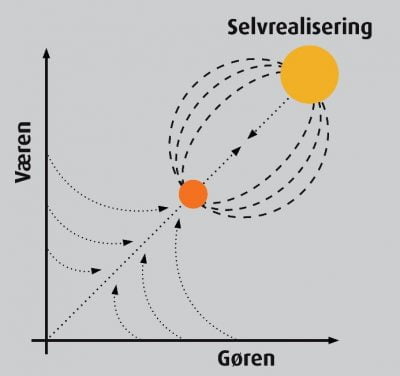
Figur 1. Væren-Gøren-Aksen
Når personlighedens bevidste Jeg – den orange cirkel – forstår at trække på kvaliteterne fra såvel essenstypens værens-kvaliteter som personlighedstypens gørens-kvaliteter, da opstår en stor fokuseret styrke. De tre stiplede pile fra de to akser repræsenterer kræfterne fra kroppen, følelserne og tankerne som styrker personlighedens bevidste Jeg.
Denne styrke giver kraft til at realisere sine drømme, sine visioner og sit inderste Selv. Solen – den gule cirkel – repræsenterer visionen og behovet for at samle alle vores kræfter om at nå visionen på en balanceret måde hvor væren og gøren er i balance. Når det sker, opstår der en kreativitet mellem det bevidste jeg (orange cirkel) og vores vision (Solen). Det er i dette spændingsfelt at inspiration opstår samt energien til at handle på den til gavn for andre.
I praksis vil pilen mellem væren og gøren sjældent være præcis i midten som på illustrationen. I den vestligt orienterede verden er fokus i høj grad på gøren og præstation. Det vil trække centeret ned mod gørens-aksen og have tendens til at skabe stress og materialisme.
Integration af alle fem psykologiske niveauer
Det er dog ikke kun personlighed og sjæl-essens, der skal integreres. Et væsentligt aspekt af energipsykologien handler om integrationen af de fem psykologiske niveauer i vores væsen. Kroppen, følelserne, tanker, personligheden og sjælen (essens). De fleste mennesker oplever en splittelse eller indre konflikt mellem det man vil og de reaktioner man får fra kroppen, følelserne eller tankerne. Man ønsker at slanke sig, men vanemæssigt gør man det man plejer. Man ønsker at skabe sig et nyt karrierespor (personligheden) men man reagerer med frygt og usikkerhed (følelse) og beslutningen bliver ikke ført ud i livet.
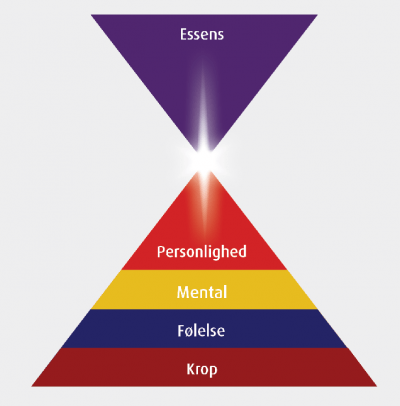
Figur 2. De fem psykologiske niveauer
Der er med andre ord ikke flow og overskud, når vi søger at skabe nye handlemønstre og det er det, som integrationsarbejdet handler om i et energipsykologisk perspektiv. Når vi kender energitypen på de fem psykologiske niveauer, det vil sige essenstypen, personlighedstypen, tænketypen, føletypen og kropstypen (se figur), så får vi en indsigt, der gør det langt nemmere at få de forskellige sider af os til at samarbejde. Vi ved nemlig hvad der motiverer hver energitype.
Vi kan omsætte denne forståelse til noget mere følbart og håndgribeligt ved at beskrive en række eksempler på, hvordan den vertikale integration mellem personligheden og sjælen kan se ud i det virkelige liv. Alle eksemplerne er blevet slørede, så personerne bag ikke kan genkendes, men indholdet i deres krise er korrekt fremstillet.
Maria – en kreativ personlighedstype vågner op til en sensitiv essenstype
Maria var en kvinde på 38 år, som stod i en stor eksistentiel krise i sit liv, hvor alle de værdier, hun indtil da havde levet for, ikke længere gav mening. Hele hendes liv havde været styret af et stort behov for opmærksomhed og bekræftelse, og alle hendes karaktertræk bar tydeligt præg af den kreative energitype. Hun var født ind i overklassen med alle dens privilegier og havde et fantastisk ydre, som åbnede mange døre, men som også skabte dybe bindinger til overfladelivet i jetsettet.
Hendes fokus havde gennem hele livet drejet sig om at finde den skønhed og harmoni, som hun så tydeligt ikke var i kontakt med indeni sig selv. Hendes barndom var stærkt præget af manglende omsorg og mangel på levende interesse i hende som menneske, hvilket skabte et indre tomrum, som søgtes fyldt gennem ydre bekræftelse af hendes udseende og festlige humør.
Hendes liv havde haft mange op og nedture, brudte forhold, uddannelsesforløb og depressive perioder, afløst af fantastiske oplevelser med kunst og kultur. Det var da også i underholdningsbranchen, at hun forsøgte at slå sig igennem professionelt, men uden større held, fordi tomrummet indeni konstant gjorde hende ustabil. Set i bakspejlet havde hendes liv været en konstant jagt efter den næste højdepunktsoplevelse af skønhed, komfort og succes afløst af tomheden, når behovstilfredsstillelsen efterhånden aftog. Hun havde et særdeles vindende væsen, fuld af humor, åbenhed og overskud, som gjorde det let for hende at relatere og blive populær på distancen. Men kom man tættere på, så opdagede de fleste, at hun overvejende kun var interesseret i sig selv.
Hun havde det svært med sig selv og sin overfladiskhed. Der var nemlig en dybere tone af længsel efter at bidrage med noget væsentligt, som blev stærkere i hende. Smerten indeni var i de seneste år tiltaget i styrke, og hun oplevede, hvordan hun igen og igen trak sig fra fester og det ydre sociale miljø, hvor hun ellers havde hentet sin styrke. Ægteskabet med en meget velstående mand gik også i stykker, fordi hun ganske enkelt ikke vidste, hvad hun skulle snakke med ham om. Hun var træt af at være hans statussymbol og seksuelle legetøj. Skilsmissen kastede hende ud i hendes livs krise. Det var, som om alle veje lukkede sig, og hun måtte se sig selv og sine livsværdier i øjnene for første gang. Der måtte være en dybere mening, fortalte den indre stemme.
Hun startede i et intensivt psykoterapeutisk forløb, som afdækkede de dybere lag af hendes tomhedssmerte, men som også satte hende i kontakt med sin længsel efter at forstå de dybere sammenhænge i livet. Hvem er jeg? Og hvorfor er vi her? blev de helt centrale spørgsmål at få besvaret. Det var, som om hendes indre hul kun kunne fyldes af en større visdom, som gav hende mening og retning i livet. Hun læste den ene spirituelle selvudviklingsbog efter den anden i et næsten manisk tempo, for det var som om bøgerne spejlede hendes indre sjæl, som om hun vidste det hele i forvejen. Hun blev introduceret til meditation og fandt her en metode til at fylde hullet indefra. Hun vidste, at det ville tage tid, og at smerten ikke længere var i vejen, men var en del af vejen til større selvindsigt. Men vigtigst af alt, hun vidste nu hvad hun ville bidrage med. Hun ville arbejde med mennesker, der ligesom hendes selv var fanget i en meningskrise, og hjælpe dem til at finde deres kald i livet.
I de to år, hun gik i det psykoterapeutiske forløb, ændrede hendes liv sig radikalt. Hun fik nye venner, interesser og påbegyndte et universitetsstudie i psykologi. Det var tydeligt for terapeuten, at det var hendes sensitive essenstype, som begyndte at tage over og gav hendes liv nye værdier. Der er fortsat et stort arbejde at gøre med at integrere hendes kreative personlighed, men nu sker det ud fra en højere motivation om at blive et værdifuldt redskab for visdom. Energitypeforståelsen var en stor hjælp for Maria, for det hjalp hende med at acceptere og forstå hendes behov for skønhed og harmoni, men også hendes kaotiske og ustrukturerede liv. Den sensitive essenstype gav også dyb mening, for ikke nok med, at den forklarede hendes behov for at forstå hele livet, den gav hende også mulighed for at gøre en forskel. Behovet for skønhed og harmoni var nu i overvejende grad en længsel efter den skønhed, som findes, når man lever i harmoni med sig selv, og hjælper andre med at gøre det samme.
Ovenstående case viser, at personligheden ikke behøver være fuldt integreret, før sjælens dybere væren og værdier begynder at slå sig igennem. Det er i øvrigt fuldt ud i tråd med Maslows og Ken Wilbers undersøgelser, der viser, at mennesker i virkelighedens verden er langt mere komplekst sammensatte, end teorierne ofte levner mulighed for. Maria fortsætter sin personlighedsintegration, men nu motiveret ud fra værdier om at gøre en forskel i verden. Det vil i praksis sige, at hun gennem sit psykologiske arbejde forsøger at blive en målrettet og effektiv kreativ personlighed, der kan udtrykke sin sjæls visdom. Stadiet, hvor sjælsenergitypen tager mere og mere over, kaldes for den sjælsintegrerede personlighed.
Peter – en analytisk personlighedstype vågner op til en dedikeret essenstype
Peter var en klassisk analytisk energitype, som i hele sit voksenliv havde interesseret sig for ingeniørvirksomhed, især i forbindelse med konstruktion af broer. Han var anerkendt inden for sit felt, som en meget kompetent person, der havde styr på alle detaljer, især i forbindelse med den historiske udvikling inden for området. Hans fremtoning var dæmpet, tør og med meget afmålte bevægelser, nærmest som om hans kropssprog blev styret med matematisk præcision.
Der var dog sket det, at han for 1½ år siden havde mødt sit livs kærlighed og havde mistet hende igen, hvilket havde slået benene væk under ham. Hans normalt ordnede liv var nu i kaos, og han kunne ikke længere samle sig om sin hovedinteresse. Det var, som om han var udtømt for liv. Susanne, som hun hed, var en helt anden type, end han nogensinde havde mødt før. Hun var clairvoyant og healer, noget han på det bestemteste havde afvist som sludder før forelskelsen, men som han nu måtte sande var helt utroligt spændende. Susanne kunne sige så mange ting om ham, som var helt uforklarlige, og det tændte en lidenskabelig nysgerrighed i ham – hans forskergen var blevet vakt.
Da han mødte op i terapi virkede han meget ubalanceret. Mødet med Susanne. som han helt tydeligt idylliserede og tillagde alskens fantastiske evner, havde åbnet ham op til en idealverden, hvor alt var i en perfekt orden. Han fornemmede nu engle omkring sig og mente, at det var muligt at kunne snakke med oplyste mestre, gigantiske kosmiske væsener, som befandt sig i den åndelige dimension.
En gennemgribende aspiration og hengivenhed over for den åndelige verden var resultatet af mødet med Susanne, iblandet en dyb sorg over ikke at kunne være sammen med den kvinde, som han oplevede var hans sjælepartner. Det var tydeligt for terapeuten, efterhånden som terapien skred frem, at det var hans dedikerede essenstype, der begyndte at slå igennem og ikke blot en regression tilbage i de primitive lag af følelseslivet, hvor magisk tænkning opererer. Det var naturligvis en meget ubalanceret periode han befandt sig i, men det var en åbning til noget værdifuldt, som ville forandre hans liv for altid.
De transpersonlige energier var tydeligt til stede i Peters brændende hjerte, motiveret af kærlighed til den åndelige verden og smerten i hans sorg. Det var også tydeligt, efterhånden som terapien skred frem, at denne åbning ikke kun handlede om ham selv, for han mærkede et stigende behov for at studere og forstå disse for ham uforklarlige fænomener. Han ønskede lidenskabeligt at gå ind i den psykiske forskning og studere alle dens mystiske fænomener med henblik på at skrive en bog og holde foredrag om det.
Et væsentligt element i terapien blev at undersøge den projektion, han havde på Susanne, for noget tydede på, at en del af hans indre spirituelle arketype blev overført på denne kvinde, hvilket gav hende et overjordisk skær. I bagklogskabens klare lys kunne han se, at det ikke var alt, hvad denne kvinde havde sagt, der var den eksakte sandhed. Hun havde også været rimelig brutal i sin måde at afslutte forholdet på, så måske var hun ikke den helgen, han i starten havde opfattet hende som. Hans egne indre oplevelser af oversanselig kontakt blev også udsat for test og validering. Ikke alle de ”beskeder”, han mente at modtage, var udtryk for den dybeste visdom – faktisk var meget rimeligt ordinært.
Disse mere analytiske og realitetsbetonede undersøgelser begyndte at grounde ham noget mere. De slukkede på ingen måde hans brændende ild, for der var vitterligt ting, han havde fået fortalt, som ikke kunne forklares på nogen rationel måde. Og han følte nu et indre kald om virkelig at forstå dette og at medvirke til at bygge en bro ind til den åndelige dimension, som han nu mere end noget andet ønskede at tjene. Det terapeutiske arbejde kunne ikke bringe Susanne tilbage i hans liv, men en hel del af den overstrømmende kærlighed, som forholdet havde vakt, kunne han nu overføre på de transcendente verdener.
Da terapien afsluttedes efter et års forløb, havde han fortsat sit arbejde som ingeniør, men det var nu en sekundær ting. Al hans fritid gik med spirituelle interesser i den forening, hvor han var blevet medlem. Mødet med Susanne havde på afgørende vis ændret hans liv.
Ovenstående case udviser også nogle klassiske træk ved opvågningen til essenstypen. For det første er den nye energi overvældende for personligheden og kommer til udtryk på en meget ubalanceret måde. Dernæst udløses krisen af et andet menneske, som kommer til at fungere som udløser af en langvarig opvågning til sjælskaldet. Dette menneske bærer så at sige sjælsenergien i sin udstråling, hvilket muliggør, at den opvågnende personlighed kastes ud af sine vante rammer og forestillingsverden. Et tredje væsentligt træk er, at personlighedens kvaliteter hjælper med at rodfæste de nye energier. I Peters tilfælde er det hans analytiske evner, som er en stor støtte i forbindelse med at validere hans fortolkninger af sine oplevelser.
Den sidste og meget væsentlige pointe er, at opvågningen kommer som en tyv om natten, forklædt som en almindelig forelskelse, der kræver en transpersonlig psykoterapeuts evne til at skelne mellem en almindelig kærestesorg, og en med videre spirituel betydning. I dette tilfælde var Susanne det perfekte sjælsmøde, der på en upersonlig måde skulle åbne Peters slumrende spiritualitet. Han får formentlig aldrig den personlige kærlighed, som han drømte om fra hende, men han fik noget, der var endnu bedre. Muligheden for et helt nyt og meningsfuldt liv.
Hanne – en sensitiv personlighed vågner op til en praktisk essenstype
Hanne var tydeligt en sensitiv energitype – hendes fremtoning var rolig, mild og centreret, og hendes mange år som socialpædagog i socialpsykiatrien vidnede om, at arbejdet med mennesker stod helt centralt i hendes liv. Hun trivedes med at skabe trygge rammer for sin familie og de mennesker, hun arbejdede med, men noget var alligevel blevet anderledes. Det var, som om hun havde mistet lysten til at være ’den store mor’. Hun havde givet så meget, og der var fortsat meget at give, men det var alligevel, som om det ikke rigtig kunne gøre hende tilfreds. Hun syntes, der var for meget omsorg og for lidt forandring. Der skete ikke nok udvikling på hendes arbejdsplads, eller for den sags skyld i hendes privatliv. Hun var kort sagt i en krise.
Da hun tog hul på det terapeutiske forløb, kom det hurtigt frem, at hun ikke følte, at hun brugte alle sine potentialer og ressourcer. Det var, som om arbejdet og hendes rolle som mor til to snart voksne børn havde låst hende fast i en rolle, hun ikke kunne komme ud af. Hun længtes efter frihed, at blive fri for at skulle tage sig af alle de umiddelbare følelsesmæssige behov, som altid havnede på hendes bord. Hun var med sine egne ord en ’problemmagnet’, men ofte var det kun brandslukning, hun lavede. Hun følte ikke, at hun nåede ind til kernen i problematikkerne.
Da hun arbejdede meditativt med hjertets behov, mærkede hun en dyb længsel efter at trække sig helt ud af omsorgsarbejdet og i stedet for arbejde mere på distancen. Hun havde opsamlet så mange erfaringer på det socialpsykiatriske område, som hun kunne tænke sig at implementere på et mere overordnet plan. Måske via foreningsarbejde, lovgivningsarbejde eller som leder af en eksperimenterende institution. Det blev klart, at hun var færdig med at være ’mor’, såvel arbejdsmæssigt som privat, hvor hun også følte et behov for at frigøre sig. Hun ville ikke længere være ukritisk tjenesteorgan for sin mands og sine børns mange personlige behov. Indsigten skabte en stor krise, for det vakte en frygt for at blive forladt og stå uden arbejde, men på den anden side, så måtte det briste eller bære, for hun vidste, at hun ville blive syg, hvis ikke hun lagde sit liv om.
Tanken om at være dirigenten i sit eget liv gav dyb mening, og der var også en tydelig transpersonlig energi til stede i lokalet, hver gang der blev arbejdet med hendes formål og vilje. Det var et helt nyt felt af stærk vilje, som hun oplevede, en vilje til at sætte sig igennem og tage styringen over sit liv. Den praktiske essenstype blev tydeligere, jo længere tid der gik. Det strømmede ind med ideér til, hvordan hun kunne omsætte sine erfaringer til visioner i det socialpsykiatriske felt, som var langt mere holistiske end det, den traditionelle psykiatri kunne byde på. Kontakten med sjælen åbnede op til, hvordan fremtiden kunne være, hvis ellers man gav sit liv til at realisere den. Hun ville ikke længere blot vedligeholde og bringe lindring i det eksisterende system, men bidrage til at skabe et helt nyt system. Et klart træk ved sjælsinspiration er netop en dynamisk interesse for det nye, – at man bliver en kreativ kraft for fremtiden.
Hendes privatliv måtte også ’reformeres’, – hun havde simpelthen ikke tid til at hygge så meget omkring sin familie, som hun ellers havde gjort. Der var mere mening i at bruge tiden på at udvikle forholdet fra at være en ’hyggekuvøse’ til at være et fristed, hvor individualiteter kunne udveksle meninger om livet.
Hanne var overrasket over den styrke, hun kom i kontakt med, og vidste, at den evne hun altid havde haft til at organisere familielivet og på arbejdspladsen nu skulle udvikles endnu mere. Hun orkede ikke længere være ude i felten ansigt til ansigt med brugerne, men ville langt hellere arbejde mere overordnet, for der var så megen symptombehandling i den gamle arbejdsfunktion.
Én ting er at få en idé og vide, at den er rigtig. Noget andet er at realisere den. Hanne vidste, at der var mange stadier fra idé til manifestation – og ikke mindst udfordringen med at håndtere frygten for at skade sine relationer. Hun var bange for at blive upopulær, hvis nu omgivelserne oplevede, at hun svigtede – det værste, en sensitiv energitype kan gøre.
På den anden side, så vidste hun nu, hvad der var hendes sande ’jeg’. Hun var vågnet op til sin sjæls kald, ikke på en klassisk ’spirituel’ måde, hvor hun følte sig ét med et større guddommeligt væsen. Det var langt mere en stille indre vilje til det gode, der ikke på nogen måde ville gå på kompromis med det, hun nu vidste, var sandt. Længslen efter frihed var også toneangivende – hun ville selv være fri til at arbejde mere overordnet og på den måde skabe rammerne, så de sindslidende kunne befri sig fra mange af de fængsler, som systemet og deres egen psykiske lidelse pålagde dem.
Hvorvidt det var den praktiske essenstype, eller den dynamiske essenstype, der satte sig igennem på sjælsniveauet, er svært at afgøre. Hanne mente selv, at det var førstnævnte, men der er også meget, der kunne tyde på sidstnævnte, ikke mindst den kraft, hvormed hun påbegyndte sine forandringer.
Da Hanne stoppede i terapien, var hun meget målbevidst gået i gang med at reformere sit liv, og hun havde ikke tid til at ’drøvtygge’ mere i terapien, men ville hellere klare det selv, således som det også er typisk for såvel den dynamiske som den praktiske energitype.
Det transpersonlige niveau afsløres af den bærende motivation, som var at skabe mere frihed til de skabende aktiviteter, der i høj grad handlede om at gøre en forskel. Et kald, som i høj grad også ville påvirke de nederste niveauer af behovspyramiden – her især forholdet til familien.
Hans – et sensitivt følelsesliv integreres
Hans var en succesfuld leder inden for marketing. Det var dog aldrig lykkedes ham at komme helt til tops inden for sit felt, for som han sagde – ”jeg er alt for blød til at tage de ubehagelige beslutninger”. Denne blødhed og sårbarhed var noget, der pinte ham meget.
Der var ingen tvivl om, at han havde en leders direkte og kontante udstråling, men man kunne også fornemme en underliggende sensitivitet, især i hans øjne. Den dynamiske energitype var tydelig på personligheden – her var en person, der ville frem i livet, og det kunne kun gå for langsomt. Men det var følelserne, som konstant spændte ben for hans gennemslagskraft – ifølge hans egen selvforståelse.
Da han mødte frem til coaching, havde han allerede gennemanalyseret sin situation i hovedtrækkene. Han var meget klar og præcis, faktuel og nøgtern i sine beskrivelser, og det var tydeligt, at hans mentalitet var præget af den analytiske energitype. Han var endvidere uhyre kritisk, nærmest nådesløs i sin dom over den indre ’svækling’, som han kaldte sin følsomhed.
Denne svækling stod så sandelig i vejen for hans ambitiøse mål om at skabe succes for sig selv og sin virksomhed. Der var tydeligvis en stærk splittelse mellem hans sensitive følelsesliv og kritiske tankeliv. Da coachingen skred frem, blev det klart, at det var forholdet til den sensitive energitype på følelsesniveauet, der udgjorde hans største forhindring. Men ikke på den måde, han først havde analyseret sig frem til.
Skulle han lytte til sit hoved, så skulle disse følelser blot elimineres, men efterhånden som coachingen fik afdækket det værdigrundlag, som støttede disse fordomme, så gik det op for Hans, at de i høj grad var farvet af hans fars holdninger til følelser. I hans fars univers var der ikke plads til følelser, hvilket havde sat sine dybe spor i hans selvforståelse. Han havde lært at foragte sin sårbarhed og følte, at der var noget umandigt over ham.
Denne opdagelse skabte en gryende forståelse af at acceptere sin følsomhed, som en integreret del af ham selv. Noget, han måtte lære at leve med og få det bedste ud af. Han indså, at sensitivitet ikke nødvendigvis gjorde ham til en dårlig leder, men at det faktisk styrkede hans evne til samarbejde, empati og evne til at netværke. Han så også, at det ikke kun var hans målrettede drive og gode analytiske evner, der gjorde ham dygtig til at forudse markedstendenser. Det var ligeså meget hans intuitive fornemmelse af folkestemningerne, der bidrog til at skabe en god plan, støttet af kolde facts.
Det var tydeligt, at den nådesløse kritik, han udsatte sine følelser for, bidrog til at gøre ham langt mere frygtsom og nærtagende, end han behøvede at være. Efterhånden som han ’landede’ i sin sensitive energitype, blev han lidt mindre overfølsom, fordi der ikke var så meget, der skulle forsvares eller skjules. Da Hans stoppede, var der noget, som var faldet på plads i ham. Der var fortsat lang vej hjem, før han var helt tilfreds med sig selv, men forudsætningerne for at opnå målet var langt bedre end hidtil.
Ovenstående case viser værdien af den vertikale integration mellem personlighed, tanker og følelser, og hvordan forståelsen af energitypernes kvaliteter kan bidrage til at skabe en mere afrundet personlighed i harmoni med sig selv.
Horisontale integrationer mellem energityper
Vi har indtil videre set eksempler på vertikal integration i mellem de forskellige lag i pyramiden (figur 2) og vi vil nu beskrive et par eksempler med det energipsykologien kalder for horisontal integration.
Denne type integration handler om, at alle energityper uanset på hvilket niveau, må integrere kvaliteter fra de andre energityper for at blive helstøbt i sit udtryk. En dynamisk tænketype har tendens til at blive ensporet i sin tænkning, derfor må et menneske med denne type tankesind, bevidst bestræbe sig på at udvikle især den kreative tanketypes kvaliteter. Kvaliteter som spontanitet og dialogisk tænkning, hvor man vender sine tanker med andre, da den dynamiske tænketype ofte holder af at tænke i enerum.
De horisontale integrationer er ofte noget, der sker i samspil med andre, når man oplever, hvordan andre mennesker fungerer helt anderledes på et eller andet område. Denne erkendelse nødvendiggør, at man må udvide sin måde at fungere på for at få et samarbejde til at fungere.
Jørgen – en dynamisk tænketype møder en analytisk tænketype
Jørgen var meget entusiastisk gået i gang med at samle alt, hvad et af hans åndelige forbilleder havde sagt om forskellige udvalgte emner inden for det åndsvidenskabelige område, han interesserede sig for. Tanken var at udgive samlingen som en kompilation på et forlag, som han netop havde fået kontakt med, og som viste interesse for sagen, hvis arbejdet var omhyggeligt lavet.
Når Jørgen først havde fået sat sig noget i hovedet, så var der ikke langt fra tanke til handling. Han elskede at skabe sig overblik og se de store linjer i en sag. Nu kunne han slå to fluer med et smæk: Skabe sig et overblik over, hvad hans yndlingsforfatter havde sagt, samtidig med at han kunne få det ud til en bredere offentlighed, hvor det kunne udøve indflydelse. Jørgens dynamiske tankesind var tydeligt for enhver. Han talte med stor autoritet, når han udtalte sig, for han var altid stensikker på, at han havde ret, når han sagde noget.
Jørgen fik hurtigt organiseret en læsegruppe, der kunne indsamle relevante citater, så han kunne stå for udvælgelsen og organiseringen af teksterne. En klassisk kvalitet ved den dynamiske tænketype er at få andre til at gøre det grove arbejde, mens man selv tager sig af det essentielle. Teksterne blev indsamlet i et lynhurtigt tempo – det dynamiske sind elsker hurtighed – og de blev organiseret og samlet i ét dokument, så de kunne afleveres til forlæggeren. Jørgen forventede, at det færdige resultat – trykningen af bogen – blot var en formalitet, der skulle overstås, så han kunne nyde frugterne af sin indsats. Men han gjorde regning uden vært.
Forlæggeren var en meget omhyggelig mand, der gik lidenskabeligt op i at lave et perfekt resultat, hvor fontstørrelser, layout, grammatik og præcis logisk systematik gik op i en højere enhed. En klassisk analytisk tænketype. Dette var så absolut ikke Jørgens styrke; faktisk tværtimod. Han hadede alt det pernittengrynede, alle smådetaljerne og ligegyldighederne. For ham handlede det om at få den rette mening frem, formålet i en sag. Så måtte andre tage sig af petitesserne. Han blev da også rasende, da han fik manuskriptet tilbage med mange sirlige påtegninger om, at systematikken og fontene ikke var konsistente. Hans umiddelbare holdning var at udgive det selv, men han indså hurtigt, at værket formentlig ville få større indflydelse ved at blive udgivet på det forlag, hvor alle forfatterens hovedbøger var udgivet. Så efter denne korte magtanalyse – noget det dynamiske tankesind er dygtig til – indså han nødvendigheden af at lave det detaljerede arbejde selv. Han havde ikke tid til at vente på, at nogen andre kunne lave det – tid er kostbar for det dynamiske sind – så han måtte selv påtage sig opgaven.
Det var en rigtig træls opgave. Her skulle han sidde og fedte med detaljer og lægge mærke til områder af tekstarbejde, som han aldrig havde gidet sætte sig ind i. Efterhånden som arbejdet skred frem, opdagede han betydningen af detaljen, hvorledes meningen kom tydeligere frem, når der var en omhyggelig systematik i præsentation af hvert emne, hvordan tekstens helhedsindtryk blev stærkere, efterhånden som alle detaljerne blev samstemt med samme type fonte, margener og så videre.
For første gang indså han nødvendigheden af at være omhyggelig med selve formudtrykket; den måde budskabet blev præsenteret på. Det var egentlig ikke æstetikken, der motiverede ham, det var snarere, at det gjorde budskabet stærkere. Det er netop det, der motiverer et dynamisk sind, at få stærke budskaber ud, der kan rykke holdninger. Næste gang Jørgen skriver en tekst, bliver der lagt langt større vægt på forarbejdningen af teksten, takket være en emsig forlægger.
Stine – en dedikeret føletype møder en kreativ føletype
Stine havde et klassisk og elegant ydre, hvor alt matchede i stil og afdæmpede farver. Hun var kendt som en meget kompetent organisator og facilitator og havde arbejdet flere år i shippingbranchen. Derfor var der ingen tvivl om, at hun var en praktisk energitype i personligheden. Men bag hendes effektive, lidt kølige personlighed, gemte der sig et meget dedikeret følelsesliv, som gik op i sit arbejde og familieliv med liv og sjæl. Hun elskede sin mand og sine børn og ville gøre hvad som helst for at organisere rammerne omkring deres liv, så alt var fred og idyl. Hun havde et klart billede af det perfekte familieliv, hvor der var tid til samvær og fællesskab.
Men alt var ikke fred og idyl! Hendes mand, Torben, var et ret utilregneligt menneske, der ernærede sig som skuespiller på diverse scener – et liv, hvor stabilitet og forudsigelighed ikke lige var hverdagskost. Han trivedes med foranderligheden og havde den kreative personlighedstypes behov for underholdning, drama og spontane indfald. Det var aldrig kedeligt at have Torben omkring, for der skete altid noget uventet, hvis ikke i det ydre, så i hans foranderlige sind, hvor han svingede mellem depressive og opstemte faser.
Torben var en stor udfordring for Stine, for hans livsstil udfordrede hendes forestilling om det perfekte liv med ordnede rammer, og alligevel elskede hun ham for alt det liv og den foranderlighed, han bragte ind i familien – når han var der.
Stine hadede, når de havde deres skænderier om økonomi og fordeling af arbejdsopgaver i hjemmet. De var hyppige, for Torben var efter hendes mening kun et stort barn, når det kom til at tage ansvar for det praktiske. Det sværeste var dog, når Torben lavede en kæmpe scene og dramatisk forlod hjemmet uden at tale færdig om emnet. Det flåede Stines følelsesliv helt op – det var, som om verden brød sammen, når det skete, for hun opfattede hans afsked, som om de nu skulle gå fra hinanden. Torben derimod havde det ok med dramaet. Han følte at et godt skænderi ligesom rensede luften og fik konflikterne op til overfladen. De brød også den monotone familieidyl, som han på den ene side var afhængig af, fordi den gav ham stabilitet, men som også kvalte hans idealer om at være en utraditionel bohemeagtig fribytter. Normalitet var for ham et gravsted, befolket af levende døde.
Da Stine mødte op i terapi, var hun oprevet, for de havde netop haft endnu et skænderi. I terapien blev der fokuseret på at forstå, hvad det var for en modsætning, der levede i hende. På den ene side undersøgte hun sit idealbillede af det perfekte familieliv, dets værdier og behov. På den anden side hendes stærke tiltrækning til Torbens uforudsigelige spontanitet. Begge sider levede i hende, men ofte valgte hun at lade Torben spille sin egen kreativitet ud, selvom den levede i hende selv. Men der var ligesom ikke plads til to voksne børn i familien.
Ved at udfordre sin idealverden af fred og idyl, af sin tendens til at indsnævre sin hengivenhed til kun nogle få, begyndte hun at indse, hvor vigtigt det var, også for hende, at skabe plads til leg, glæde og spontane indfald. Det blev også tydeligt, at hun i høj grad havde overtaget sine forældres normer for det perfekte familieliv. Hun ville så gerne være ’rigtig’ i sine forældres øjne.
Da energityperne blev introduceret, var det tydeligt, at hun kunne lære meget af Torbens kreative tilgang, men også at hun havde meget at bidrage med i hans liv – især hvad angik orden, effektivitet og hengivenhed. Hun forstod, at hun altid ville være meget dedikeret og organiseret, men at livet ikke behøvede at være så alvorligt, at hvis hun åbnede sig op for det legende element via sin mand, kunne hun også få et større netværk uden for hjemmet, noget hun faktisk savnede. Det er en klassisk ubalance for den dedikerede energitype at blive meget fokuseret og dermed isoleret på nogle få områder, hvilket også gør det vanskeligt at tackle følelsesmæssige konflikter, fordi der er så meget på spil, når al trygheden er placeret nogle få steder. Gennem den kreative indflydelse kunne hun lære, at følelsesmæssige konflikter faktisk kan bringe nyt liv, hvis man styrer ’dramaet’ ind i positive baner. Det er bare ikke særlig behageligt at få forstyrret idyllen.
At Torben havde meget at lære var indlysende, men hun kunne først og fremmest ændre sig selv, og ved at tage åbent imod det bedste fra det, Torbens kreative indflydelse kunne give, kunne hun udvikle sig følelsesmæssigt. Samtidig kunne hun lettere rumme Torbens anderledeshed, når hun kunne mærke, at den havde sine værdifulde elementer.
Kortlægning af sine energityper på fem niveauer
Vi vil nu gå over til at beskrive det praktiske arbejde med at kortlægge energityperne på de forskellige niveauer. Lad det være sagt med det samme, at det er en stor udfordring at kortlægge de nøjagtige energityper for kroppen, følelserne, tankesindet, den integrerede personlighed og sjælen/essensen. Selv garvede psykologer og vejledere, der har arbejdet med dette i mange år, opstiller kun hypoteser, som det er op til klienten at verificere gennem egne iagttagelser livet igennem.
Jeg vil dog stærkt anbefale, at man starter med at tage den test og identitetsprofil du kan købe på Jivayou.com som vi har brugt mange år på at udvikle. Den kommer med et kvalificeret bud på din personlighedstype og essenstype baseret på 168 udsagn du skal svare på. Du kan også nøjes med at tage den personlighedstest for at undersøge om det giver mening for dig. Det vil være helt optimalt, hvis du kombinerer den test med at få resultatet verificeret hos en uddannet JivaYou-coach. Coachen vil sammenholde din identitetsprofil med dine uddannelser og arbejdsforløb, dine stærke interesser og hobbies. På den måde bliver dit testresultat målt op imod dit faktiske livsforløb.
Dine energityper på kroppen, følelserne og tankesindet kan du indirekte få et kvalificeret fingerpeg om ved at tage JivaYou’s talentprofil. Den vil teste dine talenter på de fem psykologiske niveauer og toptalenter her, vil give dig en ide om hvad dine energityper kan være på disse områder. (jivayou.com/talent/)
Det er naturligvis ikke muligt i denne artikel at gennemgå alle de mulige kombinationer, der kan findes på de forskellige niveauer: Syv variationer på fem niveauer, som udgangspunkt. I bogen Energipsykologi – Forstå dine syv energityper – Dit psykologiske DNA, gennemgår jeg alle energityperne på de fem niveauer. Den vil jeg naturligvis varmt anbefale til de læsere der ønsker at gå i dybden med denne psykologi.
Lad mig nu give dig et par vink, som du kan gå frem efter, når du vil forstå hvilke energityper der styrer hvilke niveauer. Indledningsvist er det væsentligt at pointere, at energipsykologien fastholder, at mennesket først og fremmest er en indre bevidsthed, der handler gennem tanker, følelser og kroppen. Vi er med andre ord ikke disse psykologiske funktioner, men den indre bevidsthed, der kan lære at iagttage dem og vælge hvilke tanker, følelser og handlinger, vi ønsker at udtrykke. Bevidstheden, der handler, kan være identificeret med personligheden, sjælen eller en endnu højere enhed – ånden. Vores definition og fortolkning af hvem vi er, udvikler sig kontinuerligt gennem livet og afhænger af det til en hver tid gældende bevidsthedsniveau, vi er forankret i. Jævnfør de fem psykologiske niveauer og de pågældende energityper på hvert niveau. Lad os se lidt på de enkelte områder.
Kropstypen – og dermed hjernen og nervesystemet
Det er indlysende for enhver, at kroppe er forskellige, og der findes en masse studier, der forsøger at kortlægge de forskellige typer kroppe, især med hensyn til kost osv. Set fra et energipsykologisk perspektiv, så er kroppens opgave at være et vitalt handleredskab for den indre bevidsthed. Det er ikke alle kroppe, der er lige handlekraftige. Nogle er langsomme eller hurtige og aktive, medens andre er smidige eller stærke osv. Det er energitypen, der afgør hvilke tendenser, der gør sig gældende. Bogen Energipsykologi, beskriver som sagt alle de syv kropstyper og de nedenstående typer.
Følelsestypen
Det følelsesmæssige område fungerer først og fremmest som sensitivt føleorgan for bevidstheden og fortæller noget om kvaliteten af det, man føler ind i og registrerer som stemning. Det er naturligvis redskab for diverse følelsesstemninger af mangfoldig art og giver bevidstheden mulighed for at fornemme, hvad den foretrækker, baseret på tidligere erfaringer. Men dets formål er også at gøre det muligt at forene og forbinde sig med andre mennesker, det kalder vi kærlighed. På det niveau er vi også meget forskellige. Nogle har en rolig og hvilende grundtone i deres stemningsleje, hvor andre er mere aktive og svingende mellem mange forskellige poler. Andre igen mærker næsten ikke deres følelsers udsving, hvilket ikke behøver at skyldes fortrængning. De forskellige energityper giver hver deres særpræg i følelseslivet.
Tænketypen
Tankesindet er bevidsthedens fortolker og skaber en helhedsforståelse af alle de andre psykologiske funktioner, baseret på den viden, der er opsamlet, og på evnen til at reflektere, analysere og kombinere nye informationer med hinanden. Det har en evne til at skabe tankeformer, det vil sige tænke, hvilket er en proces, hvor man enten skaber nye tanker eller telepatisk modtager dem fra det kollektive tankefelt. Det fungerer også som koncentrationsorgan, evnen til at fokusere bevidstheden i et afgrænset område, med henblik på at erhverve viden. Vi tænker altså ikke ens, hvilket energityperne har afgørende indflydelse på. Nogle tænketyper går direkte til kernen af en sag (dynamisk), andre væver overblik og generaliserer (mental), andre igen springer fra punkt til punkt via associerende tænkning (kreativ). Der er syv forskellige måder at tænke på.
Den integrerede personlighedstype
Personlighedens integrerede energitype opstår som følge af, at bevidstheden i mennesket bliver så modent, at den selvstændige og individualiserede vilje opstår. Det bevirker, at de tre underliggende typer får en indre styring, der samler dem til en koordineret enhed. Et menneske, som er integreret, flyder ikke længere hid og did og bliver ikke i så høj grad styret af eksterne faktorer, men har fundet sin egen retning i livet. Kombinationen af de tre energityper skaber et helt nyt felt, en ny udstråling, som er personlighedstypen.
Når det er tilfældet taler man om at et menneske er trådt i karakter, er blevet en autoritet. Det er en overordnet indflydelse, som karakteriserer de brede interesser og livsretningen, og det der mest tydeligt kendetegner personen for andre. Man vil ofte se personlighedstypen mest tydeligt afspejlet gennem valg af karriereforløb.
Denne personlighedstype kan være en af syv energityper, men det er som sagt ikke sikkert, at dette felt overhovedet eksisterer, hvis ikke det pågældende menneske har opnået dette udviklingsniveau. Det gør sig helt sikkert gældende, når det handler om at typebestemme børn, de er endnu ikke trådt modent i karakter og derfor er de kvaliteter man ser hos børnene, de tre underliggende energityper.
Sjælens egen indflydelse – essenstypen
Sjælen er den højere bevidsthed og vilje, som vi er i vores essens. Sjælen i os er i samklang og dybt forbundet med livets helhed. Det er den stille indre stemme i os, som søger at manifestere sin kærlighed og visdom gennem personligheden. Uanset hvilken energitype, der kendetegner dens indflydelse og udstråling, så er dens grundtone kærlighed-visdom. Sjælen er først og fremmest bevidstheden i mennesket, men den højere universelle bevidsthed. Når mennesket vågner op til de altruistiske værdier, det gode, det sande og det skønne, begynder dens direkte indflydelse at gøre sig gældende i personlighedsfeltet. Det sker som tidligere beskrevet ofte gennem en eksistentiel krise, der får mennesket til at nyorientere sig mod at gøre en forskel i livet, og ikke kun leve for sin egen tryghed, komfort og ambitions skyld. Sjælens energitype, der altså også farver udstrålingen, kan være en hvilken som helst af de syv. Erfaringen viser, at sjælens energitype sagtens kan begynde at gøre sin indflydelse gældende, selvom personen endnu ikke er en integreret personlighed.
Åndens indflydelse
Jeg har i denne artikel valgt ikke at beskrive indflydelsen fra selve det åndelige liv i mennesket, fordi det er så vidtrækkende i sin kosmologiske og bevidsthedsmæssige betydning, og fordi dette område for de fleste ligger langt ud over det genkendelige. Men ifølge den esoteriske psykologi har selv ånden en grundtone, når den manifesterer sig. Det vil, ifølge den esoteriske psykologi, være en af de første tre, primære energityper. Den dynamiske, sensitive eller mentale energitype.
Dette var afslutningen på gennemgangen af de mangfoldige integrationer mellem de fem psykologiske niveauer. Jeg glæder mig til at se dig på et eller flere af de webinarer vi afholder i JivaYou’s regi, i forbindelse med at du tager en af vores test.
Vil du vide mere om energipsykologi?
Du kan gå til min Youtube kanal, hvor du finder videoer der omhandler typerne og hvor jeg beskriver min egen essens- og personlighedstype.
Du kan købe min bog om Energipsykologi i webshoppen.
Besøg min side på Facebook om Energipsykologi
Rigtig god fornøjelse
[1] Roberto Assagioli, Psykosyntesens Typologi, s. 52, Kentaur Forlag, 2006
