

Denne artikel beskriver hvordan vi udvikler de energityper, der præger vores krop, følelser, tanker, personlighed og sjælen/essensen. Vi må udvikle kvaliteter fra de andre energityper, for at få en helstøbt udfoldelse af de fem energityper der udgør vores psykologiske DNA.
Af Søren Hauge
Denne artikel er en bearbejdet og revideret artikel som indgik i bogen: De syv holotyper af Søren Hauge og Kenneth Sørensen. Der er nu kommet en ny grundbog: Energipsykologi af Kenneth Sørensen og her kan du modtage mine syv gratis meditationer på dine syv kernetalenter.
Artiklen forudsætter et basalt kendskab til energipsykologi, de syv livsenergier, de syv energityper og de fem psykologiske niveauer.
Energipsykologien baserer sig på den forståelse, at alt i denne tilværelse består af syv livsenergier, der i mennesket bliver til syv energityper eller syv forskellige adfærds- og handlemønstre. Når vi taler om energi, så henviser vi til den udstråling af kvaliteter, som ethvert menneske har, på de fem psykologiske niveauer.
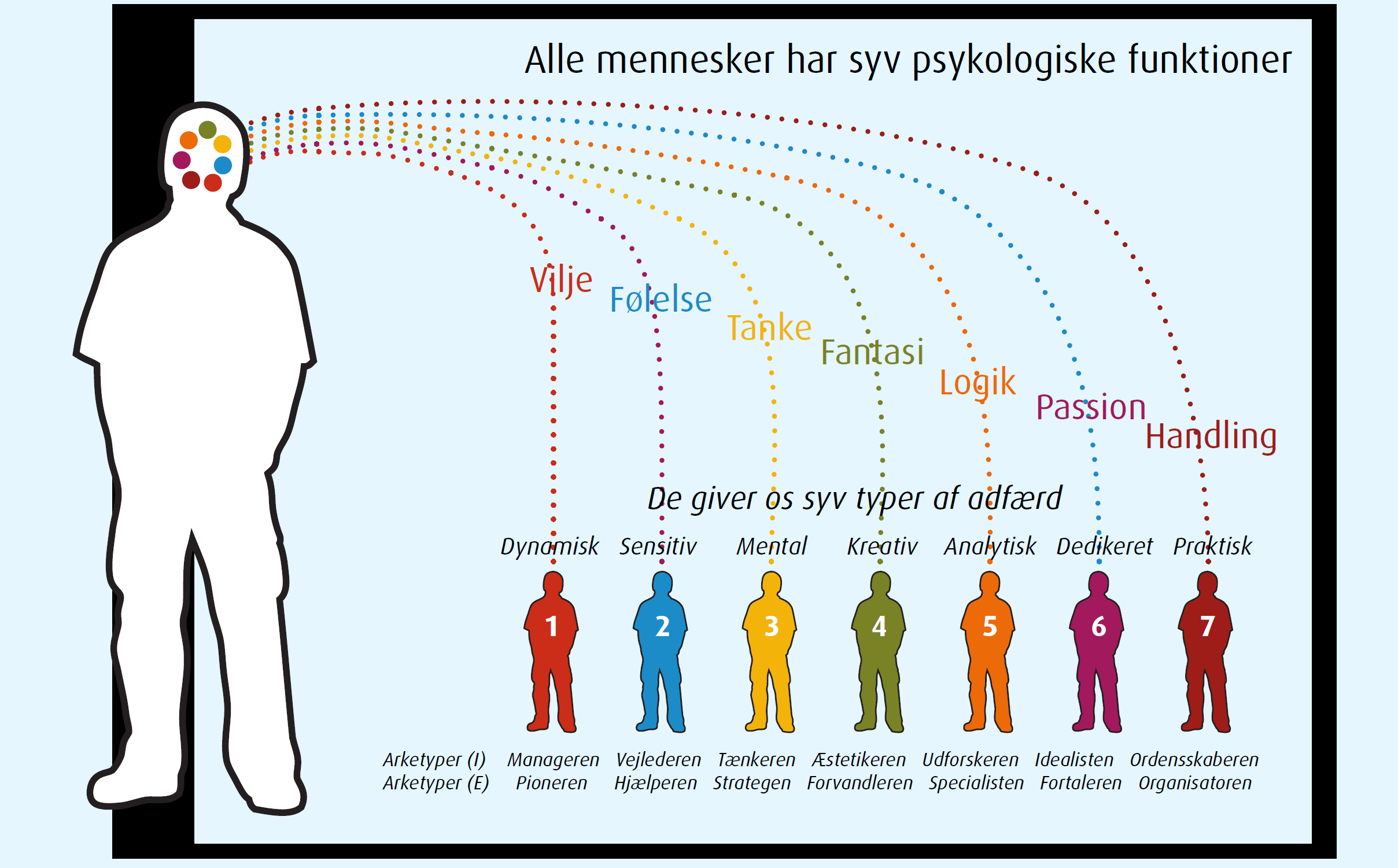
Når vi har afklaret hvilke energityper, der farver vores krop, følelser, tanker, personlighed og sjæl, så har vi fundet den unikke typesammensætning vi er, og det psykologiske DNA vi er sat på jorden for at udvikle. Det første skridt er taget, men det er først her rejsen begynder, for vi opdager at hver energitype må udvikles. Det vil sige, at vi fx må udvikle vores følelsesliv ud fra den særlige indsigt vi har opnået gennem kendskabet til energitypen, der farver vores følelsesliv.
 Det bliver derfor relevant at se på, hvordan de involverede energityper opnår størst mulig balance. Vi må sikre, at de bliver så modne og integrerede som muligt, såvel i sig selv, som med hinanden. Lad os først uddybe, hvordan man udvikler en moden udgave af en energitype på et af de fem psykologiske niveauer.
Har man f.eks. den dynamiske energitype på det mentale niveau, så tænker man målrettet, i store linjer og går lige til essensen af en sag. Men for at udvikle en moden udgave af den mentale energitype, så må de seks andre energityper integreres i mentaliteten, uden at det på nogen måde svækker den dynamiske kerneevne. Det vil fremgå tydeligt ud af den nedenstående gennemgang.
Men det er ikke nok blot at udvikle sit tankesind. Det mentale niveau og tænkeevnen må ligeledes integreres med de fire andre vertikale niveauer, således at der f.eks. 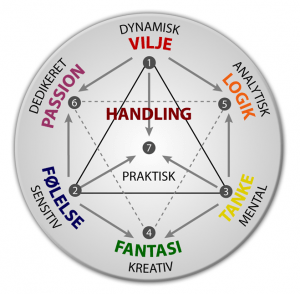 ikke er en spaltning mellem tanke og følelseslivet, hvilket ofte gør sig gældende. Dette kaldes for vertikal integration mellem de fem psykologiske niveauer. Figur 1, viser de pågældende niveauer i en bevidsthedspyramide og det er disse niveauer, der også må integreres med hinanden.
Ofte siger vi ét og gør noget andet, fordi der ikke er et harmonisk samarbejde mellem alle disse forskellige sider af vores natur. I bevidsthedspyramiden ser vi et menneske med fem forskellige typer på de pågældende områder. Der kan dog ofte være nogle typer der gentager sig på de forskellige niveauer, så dette er blot ét ud af mange eksempler.
Dette integrationsarbejde er et livslangt tema, som fordrer stor indsigt og forståelse i den menneskelige psykologi – det er f.eks. indeholdt i det, Maslow kalder for selvaktualisering. Vi vil ikke gå så dybt ind i det integrative arbejde mellem alle de fem vertikale niveauer (krop-følelses-tanke-personlighed-sjæl) i denne introducerende artikel. Lad os nu vende os imod en energitypes horisontale integration med andre energityper på det samme niveau, dvs. det arbejde, der fører til, at vi f.eks. får et godt harmoniseret udtryk i følelserne, tankerne eller på sjælens og personlighedens niveau. Det sker primært ved at udvikle en moden udgave af energitypen ved at integrere de andre i sig.
Hvis udgangspunktet er, at hver energitype er en helhed i sig selv, så kan vi anskue deres indbyrdes relationer, og anvendelsen af det basale cirkeldiagram viser forholdene relativt enkelt:
Som det kan ses på det basale cirkeldiagram, tegner der sig et billede, hvor energityperne (den yderste cirkel) er placeret ud for hver af de syv psykologiske funktioner. Hver af de syv psykologiske funktioner skaber en bestemt type dynamisk, sensitiv etc. adfærd. Cirkeldiagrammet viser også energitypernes indbyrdes forhold til hinanden.
De tre primære energityper, hvis grundfunktioner er henholdsvis (1) vilje, (2) følelse og (3) tanke, danner en triangel med spidsen opad. Den fantasifulde, kreative type (4) ligger imellem den sensitive (2) og den mentale (3), fordi følelse og tanke er dens komponenter. Den analytiske logiker (5) ligger imellem den dynamiske (1) og den mentale (3), fordi vilje og tanke er dens komponenter. Og den dedikerede, idealistiske (6) ligger mellem den dynamiske (1) og den sensitive (2), fordi vilje og følelse er dens komponenter. Tilbage er der den praktiske (7), som ligger i midten, fordi den har både vilje, følelse og tanke som komponenter.
Energityper – Udvikler, hjælpere og naboer
Ved at bruge cirkeldiagrammet kan man se hvilken energitype, der ligger længst væk fra en valgt energitype. Denne vil da udgøre den stærkest udviklende faktor i den psykologiske udviklingsmodel som energipsykologien arbejder med. Vi kalder den for udvikleren.
Hvis vi tager udgangspunkt i viljen og den dynamiske energitype, så kan vi i cirkeldiagrammet se at fantasi og den kreative energitype er udvikleren.
De energityper, som ligger næstlængst væk, vil også være vigtige i integrationen af energitypen, og de kaldes hjælpere, fordi deres kvaliteter kan hjælpe en energitype med at blive mere hel i sig selv. I forhold til den dynamiske energitype, så er det kvaliteterne fra den sensitive og mentale energitype som er hjælperne. Endelig vil de nærmest liggende energityper selvfølgelig også spille en rolle i afbalanceringen af den givne energitype, og de kaldes naboer. Vi vil gennemgå integrationen i detaljer nedenfor.
Den praktiske energitype har en særlig position fordi den står i midten af cirkeldiagrammet, fordi handling altid indebærer tanke, følelse og vilje. Her udgør den kreative (4), analytiske (5) og dedikerede (6) de primære integratorer, som må balanceres, netop fordi de ikke er de kræfter, som skaber energitypen. De tre andre omkringliggende energityper, den dynamiske (1), den sensitive (2) og den mentale (3), er integrerende alliancepartnere og ligger generelt tættere på praktikeren. Vores erfaring fra det praktiske arbejde vi har udført med praktikeren er dog, at man må sikre at kvaliteterne fra den sensitive energitype er på plads, førend man går til udviklerne.
”Alt det, der irriterer os ved andre, kan føre os til en forståelse af os selv”. ~ Carl Gustav Jung
Det helt centrale at forstå i det integrative arbejde er, at alle energityper er helheder i sig selv, og de enkelte energityper finder sig selv gennem stærke, gode og afbalancerede forhold til alle de øvrige. Hver energitype er som en dialekt, og alle syv energityper taler overordnet det samme sprog, men med hver sin variant eller ud fra sin vinkel. Energityperne er ikke adskilte og kan ikke blive det. Gennem voldsom ubalance eller umodenhed kan et menneske opleve energityperne som stærkt adskilte, men det er ikke realiteten dybest set. Vi træffer alle beslutninger (vilje), vi mærker alle (følelse), vi ræsonnerer alle (tanke), vi har alle vores opfindsomhed (fantasi), vi skelner alle (logik), vi drømmer alle (passion) og vi agerer alle (handling). Oplevelsen af adskilthed er derfor illusorisk. Vi ér alle energityperne, vi ér den syvfoldige helhed.
Det integrative arbejde med energityper
Lige så rigtigt og sandt det ovenstående er, ligeså klart er det, at vi er sammensat forskelligt, har forskellige talenter, udfordringer, kompetencer, opnåelser, udfordringer og muligheder. Vores grundlæggende typesammensætning på alle fem niveauer spiller her en vigtig rolle, fordi de samtidig er nøgler til det arbejde, vi kan gøre, for at blive mere hele, mere velfungerende, mere tilfredse og mere i stand til at realisere vores drømme og forfølge vores visioner. En energitype i ubalance er en energitype, som kører sololøb på det niveau hvor den udtrykker sig – fra krop til sjæl. Her vil den komme til at vise sig fra sine umodne og ukonstruktive sider. Et dedikeret følelsesliv kan køre passioneret på i et voldsomt tempo, selvom måske kroppen er ved at bryde sammen i stress. Det er et eksempel på en energitype der kører sololøb.
En energitype i balance har taget ved lære og tager fortsat ved lære af de øvrige, og i særdeleshed dem, der ligger den fjernest, samtidig med at den bevarer sin hoveddominans.
Det integrative arbejde er at bygge bro over kløfter, skabe nye kommunikationslinjer og udvikle venskab og samarbejde mellem forskellige aktører. Det er en fantastisk spændende og livgivende proces, som beriger og udfolder det, vi er kommet til verden for at gøre. Det integrative arbejde får os til at gå det fremmede i møde, få mening ud af galskaben og finde nye og dybere balancer ved at inkludere et større spektrum, der giver mere frihed, dybere glæde og større klarhed. Det integrative arbejde er såvel en indre subjektiv proces, hvor vi gennem erkendelser bevidst arbejder på at harmonisere vores udtryk, men det er også en integrativ proces, der foregår i mødet med andre mennesker og livet, som vi søger at integrere os med. Vi får med andre ord fat i energierne fra de forskellige energityper direkte gennem vores egen psykologi eller indirekte gennem andre menneskers indflydelse på os.
Vi vil nu illustrere, hvad det integrative arbejde helt konkret betyder for de enkelte energityper, idet vi udvælger særligt vigtige eksempler, der kan belyse kernepunkterne. Der vil være mange flere eksempler end dem, vi udvælger, og de individuelle livssituationer bringer nye kombinationer og udfordringer i spil, som må imødegås helt konkret i de faktiske situationer. I gennemgangen vil vi ikke skelne mellem energityperne på de forskellige niveauer, for det er i princippet den samme integration, der skal foregå uanset niveauet fra krop til sjæl.
1 Dynamisk helhedsintegration
 Den dynamiske energitype har især brug for at lære det legende, poetiske og umiddelbare fra sin primære udvikler den kreative, og det indfølende, tålmodige fra den sensitive og det strategiske, fleksible fra den mentale, de to hjælpere. Foruden dette er der naturligvis også ting at lære fra de tre andre naboer, men dem vil vi ikke beskæftige os med i det følgende.
Den dynamiske er målrettet og tænker i en lige linje. Dette går ikke altid i godt spænd med den kreatives umiddelbarhed og legende gemyt. Den dynamiske kan lære at mindske sin stivhed og sin målrettede alvor ved at give plads til det rekreative, til et varmt glimt i øjet og til det, som ikke altid er strengt nytteorienteret, men som kan åbne for nye, uventede muligheder. Musik og leg lyder ikke særlig handlingseffektivt, men den dynamiske har brug for at lære, at det rummer sin egen visdom, der kan skabe lethed og parathed over for nuet. Den dynamiske kan også lære, hvor vigtigt det er at have indfølingsevne og være i stand til at lytte til andre. I stedet for bare at sætte sin egen dagsorden og forfølge sine mål, kan det være afgørende vigtigt at stoppe op og lære tålmodighed og et mildt sindelag.
”Hvis du lever længe nok, så begår du fejltagelser. Men hvis du lærer fra dem, så bliver du et bedre menneske. Det handler om, hvordan du håndterer modstand, ikke hvordan det påvirker dig. Det vigtigste er: Giv aldrig op, giv aldrig op, giv aldrig op”. ~ Bill Clinton
Den dynamiskes hårdhed er velkendt, og der kan være brug for at opdage, at dynamitmetoder ikke altid giver succes. Simpel, ægte venlighed kan være en langt større nedbryder af adskillende mure. Fra den sensitive kan den dynamiske også lære at være god ved sig selv og ikke drive sig selv med døvhed og blindhed. Omsorg og nænsomhed kan give styrken en helt anden dybde end rå kraft. Endelig kan den dynamiske lære tilpasningsevne og fleksibilitet fra den mentale. Den dynamiske kan være stiv og målfikseret, og det kan vise sig at være spild af kostbar energi. Man kan sige, at den mentale kan tilbyde intelligent assistance til at manøvrere på den mest energibesparende måde, og at det ofte er vigtigt at have alternative strategier til at nå frem. Sammenfattende og meget enkelt kan man sige, at den dynamiske bedre opnår sine mål ved at udvikle umiddelbarhed og sans for humor og lethed, ved at forstå betydningen af venlighed og omsorg, og ved at lære at manøvrere intelligent.
2 Sensitiv helhedsintegration
Den sensitive energitype har især brug for at lære den logiske, metodiske skelneevne fra sin primære udvikler den analytiske energitype, den kraftfulde dynamik (dynamisk) og den upersonlige, strategiske sans (mental) fra sine to hjælpere.
 Den sensitive er ekstremt inkluderende og har altid et naturligt øje for helheden og det, der forener. Men det kan let udvikle sig til en udvandet form for sammenhængsforståelse, hvor forskelle udviskes. Den analytiske energitype kan lære den sensitive den skarphed og skelneevne, som ser og forstår værdien af forskelle, og som kan vælge det vigtigste i stedet for at ville holde sammen på alt. Den sensitive behøver også at udvikle upersonlighed og evnen til at tænke i mange muligheder uden at blive alt for knyttet til mennesker eller ting, der har særlige præferencer.
”Gud, giv mig sindsro til at acceptere de ting, jeg ikke kan ændre, mod til at ændre de ting, jeg kan, og visdom til at se forskellen”.
~ Sindsro-bønnen
Fra den dynamiske kan den sensitive lære handlekraft, ufravigeligt fokus og robusthed. Det er ikke altid lige let, netop fordi den sensitive er så følsom og let bliver påvirket af indflydelser, der får den til at give op og flytte sig fra ubehaget. Den sensitive må lære at stå stærkt i sit center for at kunne udtrykke kærlighed. Det lader sig kun gøre gennem centrering fra den dynamiske, gennem en usentimental evne til at forholde sig til det principielle, som den mentale besidder, og ikke mindst gennem den nødvendige og tiltrængte objektivitet og sunde fornuft, som den analytiske har så let ved. Hvis disse stærke hjælpere står sammen med udvikleren, så kan den sensitive modnes til for alvor at træde i karakter.
3 Mental helhedsintegration
 Den mentale energitype har især brug for at lære den inderlige idealisme fra sin primære udvikler, den dedikerede energitype. Den målrettede beslutsomhed (dynamisk) og den kærlige empati (sensitiv) fra sine hjælpere.
Den mentale er naturligt nøgtern og rimeligt upersonlig i sine mange undersøgelser og spørgsmål. Der er et behov for at befinde sig i de principielle områder og ikke at knytte sig til et enkelt synspunkt eller en bestemt person. Og det er netop her, at den dedikerede integrator kan minde den mentale om, at uden ægte commitment kommer man i længden ikke frem til de store resultater. Det er nødvendigt, at man kan stå inde for visse værdier og personligt sige ja og nej til de ting, der er acceptable og uacceptable. Det har den mentale ikke let ved, og der kan være en tendens til at bøje af, så snart følelser involveres. Ja, følelser kan ligefrem ses som hindringer for det væsentlige.
“Intelligens består ikke i at være fejlfri, men i hurtigt at se, hvordan fejlen kan rettes”. ~ Bertolt Brecht
Den mentale kan også have hårdt brug for at kunne skære igennem de mange tankemæssige spindelvæv og træffe en beslutning; noget, som ind imellem kan få den mentale til at gå i panik. Ubeslutsomhed er en af typens svagheder, og det må behandles med en krydret dosis fra den dynamiskes medicinskab. Endelig må den mentale lære hemmeligheden i den kærlige indlevelsesevne, den usentimentale varme, som er den sensitives gave, og som er nødvendig for den mentale, hvis de geniale og spirituelt intelligente muligheder skal blomstre i balance. Med helhjertet commitment, evne til at følge et klart formål og favnende varme vil den mentale energitype stå frem som en velgørende og nyttig kraft i verden.
4 Kreativ helhedsintegration
 Den kreative energitype har især brug for at lære den formålsbestemte retningssans fra sin primære udvikler, den dynamiske energitype. Den metodiske systematik (Analytisk) og den ufravigelige dedikation (Dedikeret) fra sine to hjælpere.
Den kreative lever og trives i en uforudsigelig og blomstrende verden hvor alt kan ske i spontanitetens flow for den har en evne til at leve i nuet og de umiddelbare impulser. Netop med en sådan disposition er det særligt vigtigt at kunne stikke fingeren i jorden ind imellem og spørge: Hvorfor gør jeg dette, og hvor er jeg på vej hen? Det kan være ekstremt svært for den kreative at følge et formål og holde en kurs, da det let ses som at være modstander af spontanitet og improvisation. Og præcis fordi det vækker så meget modvilje, er denne træning vigtig for at give den kreative stabilitet, styrke og forankring.
“Skuespil er dels en skam, dels en triumf. Det er skam, når du bare udstiller dig selv, og triumf, når du kan glemme dig selv”.
~ Sir John Gielgud
En anden egenskab, som den kreative kan ønske sig langt væk fra, er konsekvent systematik og vedholdende metoder, der ikke fraviges. Her kan analytikeren være den kreatives læremester og bringe en sandfærdighed og konsekvens på banen, som den kreative umiddelbart undgår, men som i virkeligheden giver den kreative tyngde og troværdighed. Hvis det bliver koblet med den sande dedikation, der holder kursen i forhold til de bærende værdier, så kan den kreative tage afsæt fra en stabil platform og bibringe vedvarende harmoni og skønhed i stedet for de flikflakkende hop og spring, som så ofte tidligere frustrerede den kreative, da de ikke bar i længden. Den modnede kreative er centreret i sit indre formål, sætter pris på tydelighed og troværdighed, og er seriøs i sin motivation. Det legende og underfundige er blevet forbundet med en vertikal akse, der kan bygge broen mellem de indre værdier og de ydre mål.
5 Analytisk helhedsintegration
 Den analytiske energitype har især brug for at lære den favnende venlighed fra sin primære udvikler, den sensitive energitype. Den legende umiddelbarhed (kreativ) og den helhjertede idealisme (dedikeret) fra sine to hjælpere.
Analytikeren elsker at begrave sig i sin særligt udvalgte, detaljerede verden og holde sig til de facts, som er uomstødelige og udgør et sikkert fundament for viden og praktisk nytte. Ofte sker dette fokus på bekostning af hjertets værdier, og det er utroligt, hvad varme og venlighed kan gøre ved denne energitype, når den tør være favnende. Netop dette giver den nøglen til den visdom, som er logikkens højere form. Den dybdeborende analytiker, som elsker at begrave sig i detaljer, kan lære en helt ny verden at kende ved at lytte til den kreatives eventyr og barnets umiddelbarhed og evne til at lege og være uforpligtet, når energien skal genskabes. Det er bestemt ikke nogen let sag for den meget seriøse og mentalt fikserede analytiker, der holder af konsekvent metode.
”Den, der er god med en hammer, er tilbøjelig til at tro, at der kun findes søm”. ~ Abraham Maslow
Samtidig kan analytikeren med stor fordel lære den dedikerede at kende og se visdommen i at forfølge en ledestjerne, der ikke er bevist på forhånd. Faktisk lærer analytikeren, at selv de mest faktuelt orienterede teorier hviler på tro og overbevisning, indtil de er veldokumenterede. Det er helende for analytikeren at turde stå ved det at være helhjertet og brænde for sin sag, vel vidende at følelser og tanker ikke behøver at være fjender, men kan gå hånd i hånd mod et større mål.
6 Dedikeret helhedsintegration
 Den dedikerede energitype har især brug for at lære mental fleksibilitet og upersonlighed fra sin primære udvikler, den mentale energitype. Humor og lethed og sans for sund fornuft fra sine to hjælpere.
Den dedikerede energitype har et dybt behov for at fiksere sin energi på en særlig ledestjerne, et ideal, en sag eller et yndlingsemne – for derefter at holde fokus på det. Men det udvikler let en stivhed, en fastlåst mentalitet med skyklapper og ensidighed som følgevirkninger. Derfor kan netop den dedikerede lære særligt meget af sin primære integrator, den mentale, som er udpræget god til at se sager fra mange sider og derfor bevare en fleksibel bevægelighed. Læring fra denne vinkel kan løsne op på den dedikerede, som har brug for at værdsætte andre vinkler end sin egen favorit. Den mentales upersonlighed kan også med fordel bruges som træning, hvor den dedikerede øver sig i at distancere sig og se sin sag udefra i et mere afklaret lys. Der er ting at lære fra andre, som har et andet syn på livet.
”En fanatiker er en, der ikke er i stand til at ændre sit synspunkt, og som ikke vil skifte emne”. ~ Winston Churchill
Den dedikerede er velkendt for sin alvorsfulde seriøsitet og sit altid helhjertede engagement. Men den kreatives smilende lethed kan lette lidt på alvoren og minde om, at barnets uskyld og ligefremme natur må bringes med på livsrejsen. Hvis ikke man kan glæde sig over øjeblikkets rigdomme og kun er fast fikseret på fjerne mål og store horisonter, så mindskes glæden og evnen til at være sammen med andre mennesker på en afslappet måde i nuet. Endelig har den dedikerede en stor læremester i analytikeren, som den dedikerede ofte håner eller undervurderer. Analytikerens afsvalende soberhed kan være særdeles vigtig for den dedikerede og modvirke naiv godtroenhed og håbløst ensidig dyrkelse af et ideal, der måske ikke kan forblive på den høje piedestal ved et grundeftersyn. Analytikerens objektive sans for sund fornuft og fakta er særdeles værdifuld for den glødende idealist, som den dedikerede er.
7 Praktisk helhedsintegration
 Den praktiske energitype består af den dynamiske, sensitive og mentale energitype og har som universalisten først og fremmest brug for at lære af alle de 4 øvrige. Vi har dog erfaring for at den sensitive energitype, er en meget vigtig udvikler, som den må styrke, fordi den giver en indføling i omgivelserne som får samarbejdet og handlingerne til at glide mere ubesværet.
De må også lære improvisatorisk sans og lethed (Kreativ), skelneevne og dybde (analytisk) og helhjertet dedikation (dedikeret), men også integrere de tre primære funktioner den dybere formålsbestemthed (Dynamisk), empati (Sensitiv) og virkelig forståelse (Mental) fra de tre øvrige.
Praktikeren er indbegrebet af effektivitet og praktisk duelighed. Det ligger dybt i praktikerens natur at få noget udrettet og at se tingene blive omsat fra gode intentioner til konkrete resultater. Det, som især kan være akilleshælen for praktikeren, er, at al denne dygtighed meget let bliver en stiv fiksering på kontrol og på kun at se på resultater.
Fra den kreative kan praktikeren blive mindet om, at kontrol ikke er alt her i livet, og at der også må være en legende lethed, hvis tingene skal give de bedste resultater. Mange praktikere er for afhængige af rutiner og kontrol. Den kreative kan hjælpe med at massere disse myoser væk og minde om glæden ved nuet og evnen til at slippe krampagtig kontrol, når den bliver for stiv. Analytikeren kan minde praktikeren om, at man må vælge med omhu, og at det ikke i sig selv er godt at være aktiv, bare for at være aktiv. Sammen med den dynamiske kan analytikeren minde praktikeren om, at der må være mening med galskaben og klare, definerede formål med det, man er engageret i.
”Vi må blive den forandring, vi ønsker at se”. ~ Mahatma Gandhi
På samme måde kan den dedikerede minde praktikeren om, at det ikke bare handler om at være produktiv, men at man må have sin etik med i handlingerne og kunne stå ved det, som rent faktisk udføres. Systemer kører ikke bare af sig selv. De hviler på bærende principper. Det er ikke bare nødvendigt, men også vigtigt, at være dybt funderet og kunne sige helhjertet ja til sine anliggender.
Den dynamiske hjælper praktikeren med at holde kontakt med det levende liv og formålet bag handlingen. Den sensitive kan supplere ved at minde praktikeren om, at det effektive aldrig bør blive overfladisk. Det er nødvendigt at lytte til de bløde værdier og undgå, at det bliver den effektive overflade, som går af med sejren. Hvis praktikeren bliver for mekanisk og sjælløs, så tabes det dybere formål. Og den mentale kan supplere ved at minde praktikeren om, at der er brug for virkelig forståelse for det, man engagerer sig i, og ikke kun glæde ved ydre resultater.
Med denne gennemgang er det vigtigt at understrege at de konkrete situationer et menneske befinder sig i, kombineret med det samlede billede af energitypedominanser, naturligvis vil fremkalde højst individuelle integrationsprocesser, hvor de oven for givne skematiseringer kun er generelle antydninger. Udforskningen af de helt konkrete udfordringer udgør arbejdsprocessen og fører til unikke opdagelser for den enkelte.
Energipsykologisk integration – En case story
For at se integrationsprocesserne for de enkelte energityper, kan vi supplere med et eksempel med en enkelt energitype. Hvis vi siger, at det drejer sig om den dynamiske energitype (1), så vil den blive sat i centrum for at integrere de seks øvrige og opnå optimal balance.
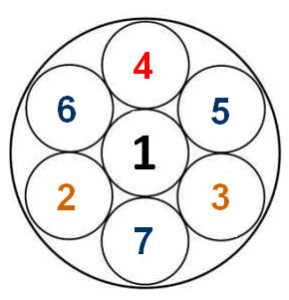 Den dynamiske energitype dominerer og er derfor i centrum. Opgaven er nu at se, hvad der især kan læres af den primære udvikler (4, angivet i rødt) og de to hjælpere (2 og 3, angivet i gult). Endelig må der lyttes til de tre naboer (5, 6 og 7). Her kan det måske i den konkrete situation vise sig, at den dynamiske (1) måske nok har brug for at løsne op og lære lethed fra den kreative (4), men at konkrete forhold indebærer, at der især ligger udviklingspotentiale at hente i den mentales (3) evne til at komme grundigt omkring en sags mange sider. Det viser sig også, at der er blidhed at lære fra den sensitive (2) i den konkrete situation.
Lad os nu illustrere disse principper gennem et levende eksempel. Hvordan vil man konkret arbejde på at skabe en moden og integreret udgave af et dynamisk sind – altså et tankeliv præget af den dynamiske energitype? Vi må huske, at vi får fat i energierne fra alle energityperne enten direkte gennem vores egen indre psykologi og spiritualitet ved at tænke eller meditere over dem, eller indirekte gennem omgivelsernes indflydelse.
Thomas var en tydelig etter på det mentale. Han udtalte sig ofte skarpt og direkte, gik lige til sagens kerne og blev ofte dominerende i sin argumentation, idet han fremførte sine meninger med en sikkerhed, der ofte virkede overbevisende, selvom han ikke altid havde ret. Thomas troede som udgangspunkt, at han altid havde ret, indtil det modsatte var bevist, hvilket gjorde ham ufleksibel og til tider ubøjelig. Han havde en tilbøjelighed til alt for hurtigt at springe til konklusionerne, før en sag var grundigt belyst, for han kunne ikke udstå al den væven og fabuleren rundt, som andre typer efter hans mening så ofte lå under for. ”Kom nu til sagens kerne”, kunne han ofte høre sig selv sige på en irriterende måde.
Da Thomas erkendte sin dynamiske mentalitet, kunne han med større klarhed se, hvordan typens styrker og svagheder farvede hans tænkning. Han kunne med større lethed påskønne de mennesker i hans omgivelser, som var farvet af den kreative energitype og helt tydeligt tænkte associativt og ikke i direkte linjer. Hvor han var optaget af essensen, principperne og kernen i en sag, så indså han nødvendigheden af at brede billedet ud ved at inddrage oplevelser og forestillinger, som ikke nødvendigvis var direkte relaterede til sagen, men dannede vigtige baggrunde. Det kom især til at farve hans skrivestil, som nu er begyndt at blive mere levende, personlig og farverig frem for den opstilling af pointer og facts, som var hans yndede stil førhen. Værdien af at pakke en pointe ind i en god historie blev indlysende.
Gennem den mentale energitype (bl.a. anskueliggjort af andre mennesker) lærte han nødvendigheden af at se en sag fra mange sider og at holde en mere neutral holdning til sine overbevisninger, i stedet for at identificere sig for stærkt med sine meninger. Diskussioner var førhen ofte en kamp om at have mest ret, frem for at blive klogere, hvilket reducerede hans evne til at påvirke sine omgivelser, som er et hovedbehov for en dynamisk mentalitet.
Gennem den sensitive energitype lærer han nu at tage sig tid til at indleve sig i de forhold, han forsøger at forstå, før han udtaler sig med sikkerhed, hvilket gør ham til en bedre lytter og giver ham en dybere forståelse af virkeligheden. Ingen af disse udviklinger reducerer hans hovedkompetence og særegenhed på det mentale område. Han er fortsat direkte, essensorienteret og overbliksorienteret i sin tænkning, men nu med en større bredde, dybde og lethed.
Det er ikke altid, at den primære udvikler per automatik tilbyder løsningen. Man må kigge sig grundigt omkring og se, hvad retning udfordringen har, og hvilken situation man rent faktisk befinder sig i. Det er imidlertid sikkert, at hvis der foretages en ærlig granskning af de seks øvrige energitypers særlige forcer, så vil de tilbyde lys til det blinde punkt og minde om strategier og indstillinger, der kan forløse den mulige knude. Ovenstående eksempel viser, hvor mange variationer og opdagelser, der ligger gemt i integrationsarbejdet. Konkrete øvelser kan iværksættes, f.eks. gennem meditation, rollespil eller samtale, som hjælper processen i gang. Men i realiteten er mulighederne for helhedsintegrationen uden afgrænsning alt efter kompetencer og interesseområder.
”Kreativitet fordrer, at vi har modet til at give slip på det sikre”.
~ Erich Fromm
At opdage sine energitype dominanser
Kunsten at lære sig selv at kende og blive bevidst om sine dominanser, ikke mindst gennem forståelsen af de vertikale niveauer og forskellen på sjælen eller det transpersonlige på den ene side, og personligheden på den anden side, er naturligvis en proces, som kan involvere mange forskellige redskaber eller fremgangsmåder. Det er her, det praktiske arbejde med energityperne bliver relevant. Men det er vigtigt at lytte til sine umiddelbare reaktioner, og ofte viser det sig, at de første registreringer og genkendelser viser sig at holde mere eller mindre stik i det lange løb. Derfor kan det anbefales, at man allerede på et tidligt tidspunkt tager bestik af situationen og giver et bud på egne dominanser. Her kommer nogle spørgsmål, du kan stille dig selv. De er delt op i forhold til sjæls- og personlighedsniveauet, men man skal være opmærksom på, at indflydelserne kan overlappe:
Hvad er mine overordnede beskæftigelser og almene interesser?
Med hvilken kvalitet er jeg blevet en stærk karakter?
Hvordan har jeg virkelig skilt mig ud fra mængden?
Hvordan virker jeg generelt på andre?
Hvilke hovedegenskaber karakteriserer især min natur?
Hvad er mine stærke og svage sider?
Generelt – primære frygtområder
Den dynamiske: Frygten for at miste indflydelse
Den sensitive: Frygten for at blive udelukket og afvist
Den mentale: Frygten for forvirring og uklarhed
Den kreative: Frygten for ikke at kunne udtrykke sig
Den analytiske: Frygten for overtro og manglende facts
Den dedikerede: Frygten for at miste troen og retningen
Den praktiske: Frygten for kaos og resultatløshed
Generelt – primære ubalancer
Den dynamiske: Tendenser til selvovervurdering og dominans
Den sensitive: Tendenser til populærsyge og forfængelighed
Den mentale: Tendenser til mental arrogance og snu manipulation
Den kreative: Tendenser til store, emotionelle udsving og ustabilitet
Den analytiske: Tendenser til mentale skyklapper og bedreviden
Den dedikerede: Tendenser til selvfornedrelse og blind autoritetstro
Den praktiske: Tendenser til overperfektionisme og mekanisk effektivitet
Der er nogle vigtige ting, man skal huske på. Undertiden føler man sig frastødt over for ting, som dybest set interesserer en, men som man har en blokering overfor på grund af tidligere hændelser, man har været udsat for. Derfor må man være særdeles realistisk og hudløst ærlig, og det er som bekendt ikke altid lige nemt. Hjælp udefra kan være værdifuld, og det er her analysearbejde og gruppedynamik kan være en hjælp. Men som hjælp kan man prøve at tilgodese dette område ved at spørge:
Er der energityper, jeg har stor modstand overfor?
Hvorfor og hvordan?
Gemmer der sig bag antipatien en skjult tiltrækning?
Endelig er der spørgsmålet om delpersonligheder, der er roller eller aspekter af os selv, som er mere eller mindre ubevidste, og som kun kommer op i særlige situationer. Disse delpersonligheder eller facetter skyldes oftest erfaringer, vi har haft på et tidligere tidspunkt, som har sat sig varige spor i os som adfærdsmønstre, der gentager sig. Hver delpersonlighed udtrykker ofte en meget specifik energitype. De kan opleves positivt eller negativt, men det er stemmer i os, som må høres og forstås, hvis vi skal opdage, hvad der sker i os, og hvordan vi virker i forhold til energityperne:
Især i forhold til delpersonligheder
Hvilke forskellige roller eller sider dukker undertiden frem?
Hvordan er deres natur?
Viser de uerkendte dominanser, jeg måske rummer?
Meditativ øvelse i syv trin
Den følgende meditative øvelse viser enkelt og klart, hvordan et naturligt forløb kan involvere de syv energityper på en meningsfuld måde. Øvelsen tager 10-15 minutter. Trin fire kan tilpasses årstiden eller erstattes af andre billeder.
Centrer dig
Sid afslappet, luk øjnene og afspænd kroppen. Mærk, hvordan du sidder rank og skaber en lodret søjle af kraft. Du hviler i indre ro. Du har indtaget din trone og sidder som kongen/dronningen i dit univers. Du hviler i urokkelig ro i dit center, med værdighed og fred.
Forbind dig
Kontakt dit hjerte og oplev en sol, der mildt stråler fra din midte til alle sider, gennem din krop og ud omkring dig i alle retninger. Forbind dig med lyset og varmen, der stråler til alle sider. Mærk din forbundethed med andres hjerter.
Iagttag
Løft nu opmærksomheden op til hovedet, til området mellem øjenbrynene. Træk fokus ind midt i hovedet og mærk din bevidste vågenhed. Bliv iagttageren, der oplever kroppen, følelserne og tankerne. Vær bevidst om klarheden og roen.
Brug din skabende fantasi
Forestil dig nu, at du går langs stranden ved havet. Du mærker vinden og hører og ser bølgernes vuggende rytme. Stranden er fyldt med smukke sten, der glinser i lyset fra solen. Du nyder skønheden og freden ved det smukke sceneri, mens du går langs stranden.
Fokusér
Du standser nu op og udvælger dig en særligt smuk sten. Du tager den op i hånden, mærker den og ser på den. Den udtrykker en egenskab eller kvalitet, du har brug for netop nu. Du bliver klar over, hvad det er, og udtrykker for dig selv hvilken egenskab eller kvalitet, det er.
Inderliggør
Mærk kvaliteten. Lad den virke på dig. Tag den til dig. Hvad betyder kvaliteten? Hvordan vil den kunne berige dit liv? Hvordan vil den kunne gøre forskel? Lad kvaliteten virke på dig, farve dit væsen, smelte sammen med dig og blive en del af dit væsen.
Udtryk
Beslut dig for at bevæge dig ud i verden for at leve kvaliteten og udtrykke den fra dit væsens kerne. Hav den holdning, at kvaliteten fremover vil præge dine tanker, dine følelser og dine handlinger. Vend tilbage til det ydre, åben dine øjne, mærk din krop og afslut øvelsen.
Vil du vide mere om energipsykologi?:
Har du lyst til mere inspiration vil jeg anbefale: Integration af energityper i praksis, der viser en række casestories fra det virkelige liv.
Energipsykologi – Forstå dine syv energityper – Dit psykologiske DNA, er en bog der giver dig en komplet indføring i de grundlæggende aspekter af energipsykologien.
Læs også artiklen Hvad er Energipsykologi? For en kort introduktion til hvad energipsykologi er.
