

Redaktøren på Psychology Today, Sam Keen, går i dette fremragende interview tæt på Roberto Assagioli og hans psykosyntese. Interviewet (fra 1974) er et af de bedste levende vidnesbyrd på den visdom som gjorde Assagioli kendt over hele verden og som faderen til en psykologi med en sjæl.
Af Sam Keen, Oversat af Ella Ostermann
”En redaktør for Psychology Today rejser til Firence for selv at afgøre om Psykosyntesen er et ægteskab mellem det bedste elementer af den moderne psykologi eller et misk mask af sammenbragte ord.”
Sam Keen
For mere end et halvt århundrede siden, da Freud skabte psykoanalysen i Wien, var Roberto Assagioli, dr. med., i gang med at udvikle psykosyntesen i Italien.
Meningerne om hans arbejde er delte. Nogle mener at han har sørget for at viljen igen anerkendes af psykologien, og at han har udarbejdet en levedygtig idé om det transpersonlige Selv, og sammensat en terapeutisk teknologi der afspejler den højeste visdom moderne psykologi har at byde på. Mike Murphy og Stuart Miller fra Esalen mener at psykosyntesen er en omfattende vision der sandsynligvis kan føre til et ’ægteskab’ mellem den humanistiske, den transpersonlige og den forskningsbaserede psykologi. Andre ser Assagiolis tanker om viljen som et victoriansk tilbageslag, hans transpersonlige Selv som et slet skjult lån fra idealistisk teologi og hans teknikker som et eklektisk miskmask.
Assagiolis kontor er et lille rum i hans lejlighed som ligger over instituttets hovedkvarter. Bøger over to hele vægge; Ralph Waldo Emerson, Herman Keyserling, Abraham Maslow og Carl Gustav Jung ser ud til at være de foretrukne. På den næstnederste hylde står Jonathan Livingstone Havmåge mellem Rollo May og Erik Erikson. Skrivebordet er antikt og fyldt med ting og papirer (shamanens talismaner); friskplukkede blomster (som de tigerliljer jeg kender fra Tennessee), et barometer, et ur, et køkkenur, en vægt, De forenede nationers flag, en stjerneglobus, to ordkort – ENERGI og GOD VILJE. Væggene, der engang har været hvide, er nu gulnede som gamle knogler. En overfyldt victoriansk S-formet sofa besætter værelsets ene hjørne.
Assagioli rejser sig for at byde mig velkommen. Han er gammel, tynd og svagelig, men hans glade ansigt er livligt og stråler af livskraft. Hans spidse fipskæg og laksefarvede smokingjakke af fløjl giver ham et skær af gammeldags autoritet.
Keen: Hvad er de største forskelle mellem psykosyntese og psykoanalyse?
Assagioli: Vi lægger meget større vægt på det højere ubevidste og på udviklingen af det transpersonlige Selv. I et af sine breve skrev Freud, ”Jeg er kun interesseret i menneskets kælderetage.” Psykosyntesen interesserer sig for hele bygningen. Vi forsøger at bygge en elevator som kan give personen adgang til alle niveauer af personligheden. Ærlig talt, så er en bygning med kun kælderetage meget begrænset. Vi ønsker at åbne op til tagterrassen, hvor man kan solbade og kigge stjerner.
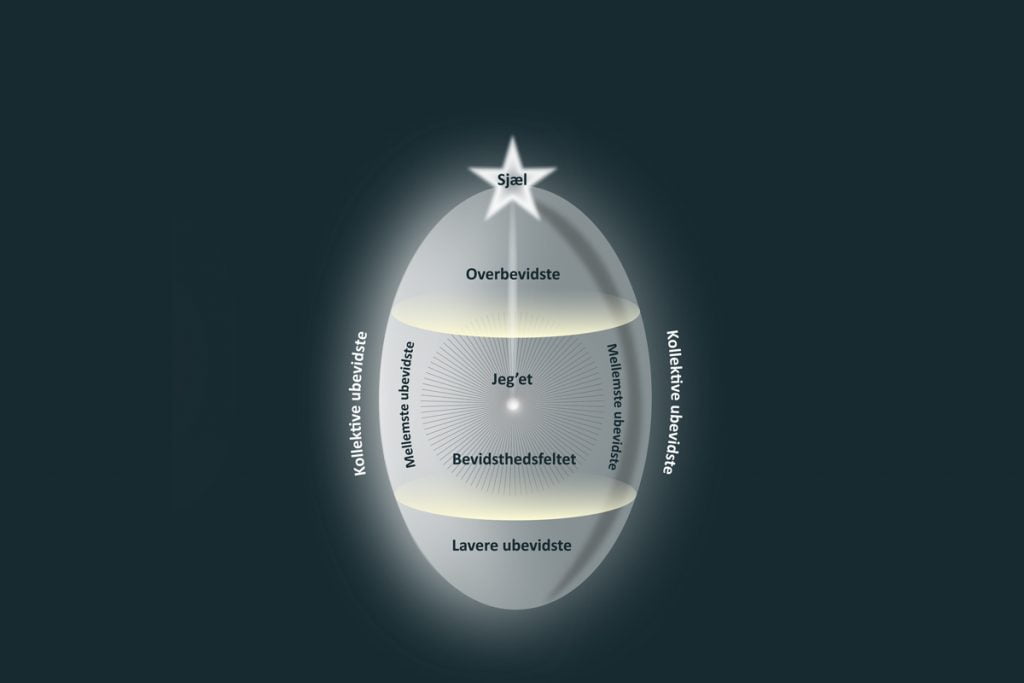 Vi vil skabe en syntese af alle dele af personligheden. Det betyder at psykosyntese er holistisk, global og inklusiv. Den er ikke modstander af psykoanalyse eller adfærdspsykologi for den sags skyld, men den insisterer på at behovene for mening, for højere værdier, for et åndeligt liv, er lige så virkelige som biologiske og sociale behov. Vi bestrider at der findes isolerede menneskelige problemer. Tag fx sex. Sex eksisterer ikke i sig selv. Sex er forbundet med alle andre funktioner. Såkaldte sex-problemer forårsages ofte af magtkampe mellem to personer, og kan kun løses ved hjælp af en udredning af det komplekse samspil mellem de to.
Keen: De kendetegn, De har nævnt indtil videre er stort set teoretiske. Er psykosyntesens terapeutiske teknologi på nogen måde forskellig fra psykoanalysens?
Assagioli: Psykosyntesen anvender flere øvelser og teknikker end vi kan komme ind på her. Vi har systematiske øvelser med henblik på udvikling af alle personlighedens funktioner. Allerførst udforsker vi personlighedens bevidste og ubevidste aspekter ved at lade patienterne skrive selvbiografier, dagbog, udfylde spørgeskemaer, og ved at tage flere forskellige tests som fx TAT, frihåndstegning etc. Som terapien skrider frem bruger vi afslapning, musik, kunst, åndedrætsøvelser, koncentrationsøvelser, visualisering, den skabende fantasi, evokative visuelle symboler og ord, samt meditation. Men jeg vil gerne understrege at alle individer er forskellige, og at ingen teknikker kan bruges pr. automatik.
Keen: Udviklede psykosyntesen sig fra psykoanalysen?
Assagioli: Ja. I 1910 var Freud ukendt i Italien. Komiteen der skulle bedømme min doktorafhandling, kviede sig ved at acceptere at jeg skrev om psykoanalyse, men gav mig lov til sidst. Jeg tog til Zürich for at studere hos Eugen Bleuler, som opdagede skizofrenien. Da jeg kom tilbage, praktiserede jeg psykoanalyse i Italien, men opdagede snart dens begrænsninger.
Keen: Hvilket forhold havde De til Freud og Jung?
Assagioli: Jeg mødte aldrig Freud personligt, men jeg korresponderede med ham, og han skrev til Jung, at han håbede at jeg ville arbejde for at fremme psykoanalysens sag i Italien. Men jeg blev hurtigt en kætter. Derimod havde jeg et hjerteligt og godt forhold til Jung. Vi mødtes mange gange i årenes løb og havde nogle dejlige samtaler. Af alle moderne psykoterapier er Jungs den der i teori og praksis kommer tættest på psykosyntesen.
Keen: Hvori ligner de hinanden, og hvori består forskellene?
Assagioli: Med hensyn til terapi er vi enige om at tage afstand fra ”sygeliggørelse”, altså at fokusere på sygdomstegn og symptomer på en formodet psykologisk ”lidelse”. Vi ser mennesket som en grundlæggende sund organisme, hvori der kan være en midlertidig ”funktionsfejl”. Naturen forsøger altid at genoprette harmoni, og i psyken dominerer princippet om syntese. Der eksisterer ikke uforenelige modsætninger. Det er terapiens opgave at hjælpe individet med at transformere personligheden, og med at integrere tilsyneladende modsætninger. Både Jung og jeg har understreget nødvendigheden af, at en person udvikler de højere psykiske funktioner, den åndelige dimension.
Måske illustreres forskellen bedst med et diagram over de psykologiske funktioner.
1. Sansning, 2. Følelse, 3. Begær, 4. Fantasi, 5. Tanke, 6. Intuition, 7. Viljen og selvet som iagttageren.

Jung skelner mellem fire funktioner: sansning, følelse, tanke og intuition. Psykosyntesen siger at Jungs fire funktioner ikke er en udtømmende beskrivelse af det psykologiske liv. Vores synspunkt kan beskrives således: Vi betragter forestillingsevnen eller fantasien som en særskilt funktion. Der er også en gruppe funktioner der tilskynder os til handlinger i den ydre verden. Denne gruppe omfatter instinkter, tendenser, impulser, begær og stræben. Her kommer vi til noget meget centralt og fundamentalt i psykosyntesen: Der er en fundamental forskel på drifter, impulser, begær og viljen. I menneskets indre er der ofte konflikter mellem begær og vilje. Og vi placerer viljen i en meget central position i selvbevidsthedens eller egoets kerne.
Keen: (Pas på – farlig grund – hvor begær står i modsætningsforhold til vilje, opstår en tragisk konflikt som kun kan løses ved at en stærk mand griber ind. Jeg har mistanke om at viljekraftens jernhånd lurer i syntesens fløjlsbløde handske.) Hvorfor placerer De viljen i centrum af egoet? Er De talsmand for en ny form for voluntarisme? (NOTE: Den opfattelse at viljen er livets inderste væsen) Skal vi ændre Descartes til: Jeg vil, og derfor er jeg?
Assagioli: Jeg mener at viljen er den moderne psykologis Askepot. Den er blevet forvist til køkkenet. Den victorianske idé om at viljekraft kunne overvinde alle forhindringer, blev tilintetgjort af Freuds opdagelse af den ubevidste motivation. Men uheldigvis førte det til at den moderne psykologi fik et deterministisk syn på mennesket som et bundt stridende kræfter uden noget centrum. Det står i direkte modsætning til menneskets umiddelbare oplevelse af sig selv. På et eller andet tidspunkt, måske i en krise hvor der er fare på færde, sker der en opvågnen som fører til at individet opdager sin vilje. Denne åbenbaring af at selvet og viljen er tæt forbundne, kan ændre hele en persons oplevelse af sig selv og verden. Han opdager at han er et levende subjekt, en skuespiller, som er udstyret med evnen til at vælge, til at skabe relationer, og til at skabe ændringer i sin egen personlighed, i andre og i sine omstændigheder. Denne oplevelse fører til en følelse af helhed, sikkerhed og glæde. Da den moderne psykologi har negligeret viljens centrale position, benægter den at vi har en umiddelbar oplevelse af selvet. Når man bliver overbevist om at man har en vilje, opdager man den tætte forbindelse mellem viljen og selvet. Det er den eksistentielle oplevelse af den rene selvbevidstheds umiddelbare opmærksomhed. Det er selvbevidsthed der adskiller mennesket fra dyrene. Menneskene er bevidste, men ved også at de er det. Vi kan udtrykke betydningen af selvbevidsthed, foreningen af villen og væren ved at sige (i modsætning til Descartes): ”Jeg er bevidst om væren og villen,” eller: ”Jeg er et villende selv.”
Keen: (Jeg tror at han smadrede det deterministiske korthus som den ”videnskabelige” psykologi har levet i, siden årsag og virkning overtog tronen. Min Gud, han prøver at gøre os ansvarlige for vores identitet! Overraskelse. Umage allierede. Introspektion og villede handlinger fører begge til opdagelsen af viljen. Assagioli opdager viljen ved at kigge indad.
Assagioli: Jeg tror at de fleste diskussioner om identitet løber af sporet, fordi akademiske psykologer ikke gør sig den ulejlighed at eksperimentere på passende måder. De lader rotter løbe gennem labyrinter, men de går ikke ind i det indre laboratorium og undersøger deres egen oplevelse af viljen. De kan lidt uærbødigt sammenlignes med de teologer der nægtede at se gennem Gallileis teleskop, fordi de var bange for at deres verdenssyn skulle blive forstyrret.
De negligerer introspektion, som er det bedste laboratorium en psykolog har.
Keen: Kan De beskrive viljen yderligere?
Assagioli: Nej. Den er ubeskrivelig. Det handler om umiddelbar oplevelse, ligesom oplevelsen af rød eller blå. Kan De fortælle mig hvordan det er at opleve blå?
Keen: (Det allerhelligste er altid tomt. I hjertet af alle tankesystemer ligger det ubeskrivelige. Spørg en rationalist om hvordan man spotter en klar og distinkt ide, eller en freudianer om hvordan man opdager et ødipuskompleks, eller en positivist om hvordan man verificerer verifikationsprincippet, og svaret vil være en stammen der dækker over en forlegen stilhed. Begyndelsespunktet er altid et mysterium) Ja…. Næsten. Blå er kølig som rindende vand og er forskellig fra rød, der er som kanel eller solen. Når De taler om viljen, er det så nærmest det som findes i en preussisk rygrad, eller som de varme væsker der løber gennem Henri Bergsons ”élan vital”?
Assagioli: Nej. Efter min mening er élan vital den sande libido uden den specifikke seksuelle betydning som Freud har givet begrebet. Den er dynamikken, kraften, energien som ligger til grund for livet. Viljen er mere ligesom den ’styrende faktor’ i personligheden, end den vitale kraft.
Keen: Men det forudsætter at der er en eneste vilje, en eneste styrende kraft. Fra Sankt Paulus til Sankt Freud har oplevelsen af den splittede vilje plaget menneskeheden. ”Det gode jeg vil, det gør jeg ikke”, og viljen til at leve står i modsætning til viljen til at dø. Hvordan vil De forene de modstridende viljer?
Assagioli: Det er ganske sandt – der er en mangfoldighed i selvet, men viljen er dybest set den aktivitet af selvet som står over mangfoldigheden. Den styrer, regulerer og afbalancerer personlighedens andre funktioner på en kreativ måde. Jeg tror ikke på at der er en fundamental splittelse, en uløselig konflikt, i mennesket. Jeg tror ikke på at viljen til at dø står i modsætning til viljen til at leve. Det, der upræcist kaldes den ”splittede vilje”, skal i virkeligheden ses som konflikten mellem den centrale vilje og en mængde drifter, begær og ønsker. Det er en almen erfaring. Konflikter findes i alle normale individer. Uden dem var der ikke brug for psykoanalyse eller psykosyntese! Ethvert valg indebærer konflikt: skal jeg blive inde eller skal jeg gå en tur – man kan ikke gøre begge dele på en gang. I neurotiske konflikter er der et desperat forsøg på at kunne opnå to uforenelige ting på samme tid. Men i en normal person kan viljen enten mindske eller eliminere konflikten ved at anerkende et hierarki af behov og ved at foranstalte en passende tilfredsstillelse af alle behov. Den centrale vilje uddelegerer opgaverne til andre dele af personligheden. Lad mig bruge en analogi som er central for min måde at tænke på. Viljen er som en dirigent. Han fører sig ikke frem, men er komponistens og partiturets ydmyge tjener.
Keen: (Jeg hører feminine stemmer i kulisserne: ”Filosofi og psykologi har i vesten altid været ”ophøjet til” mandeemner, ofte i selskab med cigarer efter middag og skjult mandschauvinisme. Hvad med det feminine perspektiv? Er det den mandlige psyke eller den menneskelige psyke han beskriver?) Røber placeringen af viljen i selvets centrum ikke et særligt maskulint perspektiv? I traditionelle vendinger anses styring, kontrol, assertion og aggression for at være maskuline egenskaber. Den kvindelige del af arten formodes at være mere imødekommende, omsorgsfuld og flydende. Mener De at der er en særlig ”feminin” komponent i selvet? En særlig feminin vilje? Hvordan afbalancerer De selvets maskuline og feminine elementer?
Assagioli: Viljen er ikke kun assertiv, aggressiv og kontrollerende. Der er også den accepterende vilje, den eftergivende vilje, den dedikerede vilje. Man kan sige at der er en feminin polaritet af viljen – den villede given afkald, den glædesfulde accept af personlighedens andre funktioner. Jeg kan sige det samme på en anden måde. I selvets kerne er der både et aktivt og et passivt element, et der handler og et der ser på. Selvbevidsthed indebærer at være vidne – et rent, objektivt, kærligt vidne – til det der sker indeni og udenfor. I den betydning er selvet ikke en dynamik i sig selv, men er et vidne, en der ser på, en iagttager som overvåger strømmen. Men der er en anden del af det indre selv – den villende eller den styrende aktør – som aktivt bryder ind for at orkestrere personlighedens forskellige funktioner og energier, som forpligter sig og igangsætter handlinger i den ydre verden. Så i centrum af viljen er der en forening af maskulint og feminint, vilje og kærlighed, handling og iagttagelse.
Keen: (Både/og i stedet for enten/eller. Sådan er det syntesiske princip, som forbinder det som sædvanligvis er adskilt. Østlig filosofi placerer essensen af mennesket i en ikke-af-denne-verden iagttager. Vestlig filosofi lægger den menneskelige værdighed- som følge af de teknologiske landvindinger – i evnen til at kontrollere verden, til at handle. Assagioli forener øst og vest. Fungerer blandede ægteskaber, eller skaber de filosofiske bastarder?)
Keen: Hvordan hjælper psykosyntese folk til at skabe denne olympiske holdning af ubunden styrke?
Assagioli: Teknikker knyttes altid til den enkeltes situation, så man kan ikke generalisere. Men jeg kan nævne to grundlæggende teknikker: disidentifikation og træning af viljen.
Jeg vil begynde med et fundamentalt psykologisk princip: Vi domineres af alt det, som vores selv identificerer sig med. Vi kan dominere og beherske alt det, som vi ikke identificerer os med. Normalt begår vi alle den fejltagelse at identificere os med et eller andet indhold i bevidstheden og ikke med selve bevidstheden. Nogle mennesker identificerer sig med deres følelser, andre med deres tanker, andre med deres sociale roller. Men identifikationen med en del af personligheden tilintetgør den frihed der kommer af at opleve det rene ”jeg”.
En krise berøver tit en person den funktion eller rolle, som vedkommende har identificeret sig med: en atlets krop lemlæstes, en elskendes elskede stikker af med en omvandrende poet, den dedikerede arbejder må trække sig tilbage. Derved påtvinges man disidentifikationsprocessen, og en løsning er kun mulig gennem en døds- og genfødselsproces, hvorigennem personen træder ind i en mere omfattende identitet. Men en sådan proces kan foregå ved et bevidst samarbejde. Øvelsen i disidentifikation og identifikation kræver at man praktiserer opmærksomhed og at man bekræfter: Jeg har et legeme, men jeg er ikke mit legeme. Jeg har følelser, men jeg er ikke mine følelser. Jeg har et job, men jeg er ikke mit job … Osv. Systematisk introspektion kan hjælpe med at eliminere alle begrænsede selv-identifikationer.
Keen: Denne teknik ligner den buddhistiske vipassana meditation hvor man blot iagttager tanker, følelser og billeder der kommer forbi.
Assagioli: Ja, og det fører til den erkendelse at iagttageren er forskellig fra det der iagttages. Derfor er det naturlige stadium for selvet efter disidentifikationen en ny identifikation: Jeg erkender og bekræfter at ”Jeg er ren selvbevidsthed. Jeg er vilje og i stand til at lede, styre og bruge alle mine psykologiske processer og mit fysiske legeme.” Målet med disse øvelser er at lære at disidentificere sig når man vil, og at adskille selvet fra alle overvældende følelser, personer, tanker eller roller, og at erhverve sig den ubundne og neutrale iagttagers overblik og udsyn.
Keen: Jeg forstår godt hvordan De kommer frem til den rene oplevelse af selvet som iagttager, men hvordan i alverden kan De påstå at viljen er i stand til at regere og styre alle de andre psykologiske funktioner? Viljen synes tit at være magtesløs overfor infantile drifter. Somme tider er den en magtesløs fange der regeres af en infantil tyran. Når depressionen sætter ind, vreden bruser op eller det seksuelle begær sprudler, forekommer viljeskraften at være svag, mere lig en aldrende forælder end personlighedens handlekraftige chef.
Assagioli: Viljen kan på samme måde som personlighedens andre funktioner udvikles og styrkes systematisk. Hvis den er svag, kan den optrænes gennem regelmæssig træning på samme måde som muskler udvikles gennem fysisk træning. Og hvis en person begynder med en svag vilje, kan han måske, på nærmest mirakuløs vis som følge af overkompensation, udvikle en vilje der er stærkere end normalt. Alle har tilstrækkelig vilje til at starte udviklingen af mere.
Keen: (Når nogen taler om at udvikle viljeskraft ser jeg to modstridende billeder for mig. 1) Den ”self-made” mand: Horatio Alger, Dale Carnegie, og ”Hvordan man udvikler et stærkt jeg på 30 dage”. Jeg nærer mistanke om overfladiskhed. 2) Offeret: Neurose er indre passivitet. Depression er tillært hjælpeløshed. Uden en stærk vilje forbliver et menneske offer. Måske. Ambivalensen i forhold til viljesbegrebet, eller rettere negligeringen af den, er i den moderne psykologi en afspejling af forlegenheden ved begæret efter personlig magt. Vores magtinstinkt er blevet udtrykt og kanaliseret ud i videnskab og teknologi, politik og krig. Hvorfor ikke have udviklingen af indre styrke som et åbenlyst mål?)
Keen: Hvilke andre teknikker bruger De til at udvikle viljen med?
Assagioli: Lad mig gøre det helt klart: Psykosyntese handler ikke primært om at udvikle viljestyrke. Styrke er en nødvendig viljestilstand, men den er ikke hele viljen. Det er lige så vigtigt at udvikle en intelligent vilje og en god vilje. Vi har mange teknikker til udvikling af alle disse kvaliteter. Jeg behandler dem grundigt i Viljens psykologi. En teknik er at visualisere den ”ideale model.” Se så levende som muligt for dig, hvordan dit liv ville se ud, hvis du havde en stærk vilje. Visualiser at du har både det indre og det ydre herredømme. Vi anbefaler også daglig brug af nogle ”unyttige øvelser” hvis formål er at styrke selvdisciplinen. Man kan beslutte sig for at stå på en stol i 10 minutter, eller løbe en mil om dagen, eller kontrollere et voldsomt temperament. Det er sværere at udvikle en intelligent vilje. Hvis viljen er i direkte opposition til stærke følelser eller drifter, vil viljen blive overvældet, og vi må derfor lægge en strategi, for at nå de mål vi vil nå. Lad os for eksempel tage en person som er i sine begærs vold og ønsker at befri sig for denne besættelse. Jo mere han tænker på besættelsen, jo stærkere bliver den. Men han kan trække sin opmærksomhed tilbage og erstatte den med en ny interesse. Han kan opdyrke en nyttig ”besættelse”. Hvis man holder nye billeder op foran sine øjne, er der en tendens til at skabe den virkelighed billedet viser. Det er en velkendt psykologisk lov: Billeder eller mentale forestillinger og ideer har en tendens til at skabe de fysiske tilstande og ydre handlinger som svarer til dem. Eller som William James sagde: ”Alle billeder har en drivkraft i sig.”
Jeg bruger blandt andet en meget simpel teknik med nogle kort, hvorpå der er trykt fremkaldende ord som: RO, TÅLMODIGHED, LYKSALIGHED, ENERGI, GOD VILJE. Når disse kort placeres rundt om i rummet, fremkalder de de holdninger og egenskaber de symboliserer. Jeg bruger også kunstværker på samme måde. For eksempel er Fra Angelicos Transfiguration et synligt symbol på den transformation af personligheden der finder sted, når en person kommer i forbindelse med det transpersonlige Selv.
Keen: (Er dette naivt, eller er det en klog anvendelse af vekselvirkningen mellem krop og sind? Jeg ved det ikke. Tilståelse: En aften stillede jeg et kort med ordet HERLIGHED op i mit hotelværelse og ventede på resultatet. Om morgenen vågnede jeg op i mugne, krøllede lagner til solskin der strømmede ind, lyden af kirkeklokker og en gylden dag fuld af florentinsk kaffe, Leonardo da Vinci, og – helt sikkert – herlighed. Men vi ved alle at sådanne holdningsmæssige indpakninger skyldes suggestion, gør vi ikke?)
Keen: God vilje hører vel egentlig mere til i religion end i psykoterapi. Kan viljen ikke være sund uden at være god?
Assagioli: Nej. En person er altid i en social kontekst. Han er ikke en isoleret enhed. Så jo mere konflikt der er, jo mere energi spildes der. Hvis vi skal opnå grundlæggende fred, må viljerne harmoniseres. Selv-centrering er utroligt ødelæggende for det samarbejde, som er nødvendigt for at en person kan leve et fuldt liv i samfundet. Hvorfor skal god vilje betragtes som en ’luksus’-dyd, som kun vedrører religiøse mennesker? Jeg vil endda gå et skridt videre. Det samme princip gælder for et individs forhold til naturen og universet. Ingen person kan være så arrogant at han betragter sig selv som uden forbindelse til universet. Om man kan lide det eller ej, så er mennesket en del af den universelle vilje, og det må på en eller anden måde indstille sig på og villigt acceptere det universelle livs rytmer. Harmoniseringen og foreningen af den individuelle og den universelle vilje – den kinesiske identifikation med Tao, den stoiske accept af skæbnen, eller den kristne Guds vilje – er et af de højeste menneskelige mål, selv om det sjældent realiseres.
Keen: Indtil Maslow begyndte at tale om metabehov, var psykologien i forlegenhed, så snart der var noget der lignede metafysik eller religion. Nu ser det ud til at mysticisme og medicin går hånd i hånd. Indebærer en sund selvbevidsthed nødvendigvis et religiøst engagement?
Assagioli: Ikke nødvendigvis. Det jeg kalder personlig psykosyntese, kan opnås gennem en forståelse af det lavere og det mellemste ubevidste. Men nogle mennesker oplever kedsomhed og en følelse af meningsløshed, når de grundlæggende psykologiske behov er blevet dækket, og der er opnået en vis grad af sundhed, og de begynder en søgen efter et højere formål i livet. Som Jung formulerede det, er det nok for nogle personer at være normale og tilpassede, hvor andre hungrer efter transcendens. Der er en ny ”fjerde kraft” indenfor psykologien – den transpersonlige psykologi – som forsøger at udforske de behov og aspirationer der ligger ud over selv-virkeliggørelse og humanistisk psykologi.
Keen: På Freuds tid var der en stærk kulturel sammensværgelse hvis formål var at undertrykke libidoen, at tvinge den til at forblive ubevidst. Mener De at der er en lignende sammensværgelse hvis formål er at undertrykke den religiøse impuls? Vi ser ud at skamme os lige så meget over vores begær efter mening, som det victorianske samfund skammede sig over erektioner og lyster der ikke kom fra hjertet.
Assagioli: Mange mennesker ser ud til frivilligt at have underkastet sig et spirituelt ”hvidt snit”, en undertrykkelse af det sublime og en total fornægtelse af det transpersonlige Selv. Derfor forbliver det højere ubevidste stort set ukendt for mange mennesker. En stor del af psykologien opmuntrer til at antage et nedvurderet selv-billede ved at hævde, at alle religiøse og åndelige impulser blot er sublimeringer af seksuelle instinkter. Denne form for reduktionisme ignorerer det faktum, at mange af de mest skabende mennesker i historien beretter om oplevelser af transpersonlig natur. Med hvilken ret kan vi benægte at åndelige drifter er mindre virkelige, grundlæggende og fundamentale end seksuelle og aggressive drifter?
Keen: Hvorfor skulle mennesker undertrykke det sublime? Hvad er det, der er så truende ved paradis?
Assagioli: Det er ikke mere mystisk end undertrykkelsen af seksuel ekstase. Vi frygter det sublime, fordi det er ukendt, og fordi vi, hvis vi lukker virkeligheden ind i form af højere værdier, forpligter os til at handle på en ædlere måde. Godhed, samarbejde, at slippe selvoptagethed og at tage ansvar for åndelig vækst, følger med anerkendelsen af det Højere Selv.
Keen: Hvilken natur har det transpersonlige Selv? Taler De om et væsen der er adskilt fra det selv vi har en direkte oplevelse af, når vi er selv-opmærksomme?
Assagioli: Min kære ven, jeg kan ikke fortælle Dem hvordan det transpersonlige Selv er. Maslow prøvede at beskrive det og højdepunkts oplevelsernes natur i The Psychology of Being. En direkte oplevelse af det transpersonlige Selv er sjælden, og forening med det ligeså. Men mange mennesker har en viden om det, som er formidlet af det højere ubevidste, eller overbevidstheden. Jeg kan beskrive nogle af virkningerne. Det manifesterede sig spontant i kreativiteten hos de store universelle genier som Platon, Dante og Einstein. Andre kommer i forbindelse med det gennem bøn og meditation. Eller de føler måske et kald eller en dragning fra en højere kraft. Sproget er altid utilstrækkeligt, når det drejer sig om transpersonlige og åndelige oplevelser. Alle udtryk er symbolske, og mange forskellige symboler er blevet anvendt: oplysning, psykens nedstigning til underverdenen, opvågnen, renselse, transmutation, psykospirituel alkymi, genfødsel og befrielse.
Keen: Jeg formoder at der findes teknikker i psykosyntesen til udvikling af det transpersonlige Selv.
Assagioli: Ja. Her virker teknikken med indre dialog fortrinligt. Man forestiller sig en viis person der kender svarene på de problemer man står overfor. Hvis man kunne få et interview med dette menneske, hvad ville det så fortælle? Det er din indre lærer…..
Keen: (Jeg er bange for at min indre guru er senil. Han giver mig modstridende råd: tag det roligt/arbejd hårdere, risiker alt/bliv hvor du er, tillad dig at skeje ud/vær fornuftig. Han kan aldrig beslutte sig for om han er på Dionysos’ eller Apollons side.)
Assagioli: Hvis man lytter efter et svar, kan det komme spontant gennem en tredje person, en bog man læser, eller gennem udviklingen i det der sker i og omkring én. Det er også altid godt at praktisere meditation. Sommetider foreslår jeg klienter at skrive et brev.
Keen: Til det transpersonlige Selv?
Assagioli: Ja. ”Kære transpersonlige Selv…” Prøv, og se hvad der sker.
Keen: Hvilken adresse skal jeg sende det til?
Assagioli: Til det sted hvor du sender dine vrede breve, når du fortæller en du elsker eller en fjende hvad du mener om ham.
Keen: Jeg kan aldrig helt gennemskue om psykosyntese teknikker er naive eller brilliante. De forekommer mig tit at være en smule for enfoldige. (Skal jeg indrømme, at jeg, efter gårsdagens møde og hans ”simple” analyse af neurose som værende en vaklen i beslutningssædet, da holdt op med at ryge cigaretter for tid og evighed?)
Der er en gammel tradition for at forbinde visdom og tåbelighed. Er et víist menneske enfoldigt? Er den forenkling der kommer med alderen visdom eller træthed? Og er psykosyntese en moderne version af en visdomsskole? Hvad er forskellen på et vist menneske og en tåbe?
Assagioli: Visdom er endnu mere umoderne end viljen. Den oprindelige betydning af visdom har intet at gøre med tåbelighed. Selvfølgelig indebærer visdom åndens større enkelhed, men det er ikke enfoldighed. På kinesisk er tegnet for visdom en kombination af vind og lyn. Det vise menneske er ikke et der er uforstyrreligt og udbrændt, men et der som vinden ikke mere kan fanges, og som slår ned som et lyn, når det er nødvendigt. Visdom er forbundet med intuition, (det er derfor den er blevet opfattet som en kvinde – Sophia) og med at se tingenes helhed, og på den måde knytter den an til det transpersonlige perspektiv. Det er evnen til at lege med modsætningerne og til at skabe en syntese. Jeg formoder at alder hjælper med at opnå noget af det perspektiv der er nødvendigt for at skabe harmoni mellem de tilsyneladende modsætninger.
Keen: Hvilke begrænsninger har psykosyntese? Hvis De skulle kritisere deres eget system, hvad ville de så kritisere?
Assagioli: Det må være Deres opgave, men jeg skal nok. Mit svar er paradoksalt. Psykosyntesens begrænsning er, at den ikke har nogen grænser. Den breder sig for meget ud, er for omfattende. Dens svaghed er at den accepterer for meget. Den ser for mange sider på samme tid, og det er et minus.
Keen: (Det er mit ”selverkendelses” spørgsmål. De fleste ”berømte” mennesker får højst 8. Jeg giver Assagioli et rent 13-tal. Han ser ind bag sine egne øjne.)
Keen: Hannah Arendt siger at tilgivelse er nøglen til handling og frihed. Uden tilgivelse styres livet af gentagne tvangshandlinger og en endeløs cyklus af bitterhed og gengældelser. Alligevel letter kun få psykoterapeuter på hatten for den. Nogle, som Janov, synes at opmuntre til bitterhed og vrede mod forældre og samfund, fordi de er kilden til den oprindelige smerte. Fortæl mig hvad psykosyntesen har at sige om tilgivelse, ansvar og taknemlighed.
Assagioli: I psykosyntesen lægger vi vægt på individuel ansvarlighed. Lige meget hvad der er sket en person, må vedkommende tage ansvar her og nu for de ændringer som han ønsker at foretage i sin personlighed, og ikke bebrejde sine forældre eller samfundet. Jeg er imod mange ting i det moderne samfund og er revolutionær, men vi må ændre det indefra, fordi det er vores samfund. Jeg anbefaler forståelse for og medlidenhed med de mennesker der har såret én. Måske er man ikke såret så meget som man tror. Selvfølgelig er vi betinget af fortiden, men vi har evnen til at forstøde den, til at gå væk, til at forandre os. Forældre sårer for det meste deres børn af uvidenhed og ikke fordi de er ondskabsfulde, og det er frigørende at tilgive dem, der ikke ved bedre i stedet for at gemme på krænkelser og selvmedlidenhed. Tilgivelse bliver også nemmere, når man kommer i kontakt med menneskehedens virkelige lidelse. Jeg har et forslag som går ud på, at unge mennesker som led i deres uddannelse, skal besøge hospitaler, institutioner for sindslidende og slum, så at de kommer i direkte kontakt med menneskelig lidelse uden at teorier, statistikker eller politiske ideologier kommer imellem.
Keen: Efter religionens forfald i Vesten og tabet af overgangsritualerne – fødsels- og dødsritualer – er det blevet psykologiens opgave at hjælpe mennesker med at klare overgangskriser og skelsættende situationer. Hvordan har De det med døden? Som 85-årig, hvordan ser den ud for Dem?
Assagioli: Døden er for mig først og fremmest som en ferie. Der er mange hypoteser om døden, og ideen om reinkarnation forekommer mig at være den mest fornuftige. Jeg har ikke nogen direkte viden om reinkarnation, men med min tro kommer jeg i godt selskab med hundreder af millioner af Østens mennesker, med Buddha og mange andre i Vesten. Døden er en normal del af en biologisk cyklus. Det er mit legeme der dør, og ikke hele mig. Så det bekymrer mig ikke så meget. Jeg kan dø i aften, men jeg vil gladeligt tage et par år mere for at udføre det arbejde der interesserer mig og, tror jeg, gavner andre. Jeg er til rådighed. Humor hjælper også, ligesom proportionssans. Jeg er ét individ på en lille planet i et lille solsystem i en af galakserne.
Keen: (Det er ikke så let at vide hvad der beviser et verdenssyns gyldighed og den terapi der bringes til torvs. Alle former for terapi har dramatiske successeer og lige så dramatiske fiaskoer. Et bevis for succes i psykosyntesens tilfælde kunne være dette alment fattelige: Da Assagioli talte om døden var der ingen ændring i hans stemme eller tonefald, og lyset spillede stadig i hans mørke øjne, og hans mund var hele tiden lige ved at smile.)
Roberto Assagioli døde den 23. august, gammel og mæt af dage.
Sam Keen, der er konsulterende redaktør på Psychology Today har en mastergrad i teologi fra Harvard Divinity School og en Ph.D. i filosofi og religion fra Princeton. Han har undervist ved Rutgers University, Louisville Presbyterian Seminary og Prescott Colleges Center for the Person i Arizona. Han er freelance skribent og underviser, hans bøger indbefatter: Apology for Wonder, To a Dancing God, Telling your Story og Voices and Visions.
Sådan kan du komme videre
Her kan du modtage syv gratis meditationer, hvor du udvikler forskellige sider af dig selv
Læs også artiklen Psykosyntese en integral psykologi og biografien om Roberto Assagioli
Læs introartiklen om integral meditation
