

Communication in the couple – interplay and communion: Assagioli’s late talk on the couple as an interplay of two multiplicities, the obstacles to union and the ways to agreement

By Roberto Assagioli
Source: transcript of a talk given on Friday, 18 August 1972, Italy
Editorial Note
The abstract and contextual subtitle in this online edition have been added by the editor, Kenneth Sørensen, to support readability, navigation, and archival consistency. The original wording has not been altered. This text belongs to a series of Assagioli’s talks and lectures on the psychosynthesis of the couple (1957–1972), edited by Jan Kuniholm and Catherine Ann Lombard.
Abstract
In this talk of August 1972, one of his last on the subject, Roberto Assagioli begins with a striking claim: the communion of two individuals does not exist, because the individual as a unified being does not exist; each partner is a multiplicity of subpersonalities with two unifying centres, the personal ego and the Transpersonal Self. With simple diagrams he distinguishes the extent of communication in the couple, its levels, from chiefly physical and emotional to chiefly higher, and its degrees of intensity: communication, interplay and communion. He names the great obstacles, projection of parental images and the drive to dominate, warns against criticism and debates about who is right, and offers ways to agreement: respect for the other as a human being in his own right, the acceptance of disagreement and ambivalence, and the recognition and use of differences, as Robert and Elizabeth Browning did. A final diagram shows what lies beyond the couple: children, common tasks, individual relations with others, and transpersonal communion.
The psychosynthesis of the couple is immensely difficult. The interplay and communion of two individuals does not exist. Why? Because the individual as a unified being does not exist. But instead each person is a multiplicity of subpersonalities and has two unifying centers the personal ego and the Transpersonal Self. Therefore a couple is an interplay of relationships between multiplicities. That’s a starting point.
Reason for Difficulties
At present difficulties are increased by the rapid changes going on at present. But let us make the best of this situation. I am speaking for those who are willing to work at the task of psychosynthesis in the marriage. Sometimes both partners are willing to cooperate; sometimes only one is willing, but if only one is willing it is still possible to achieve the psychosynthesis to some degree.
Various Types and Degrees of Psychosynthesis
I. Extent or Amount of Communication
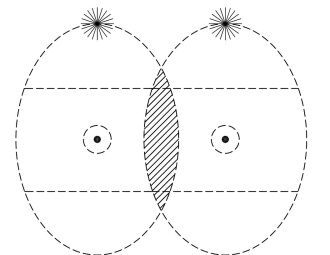
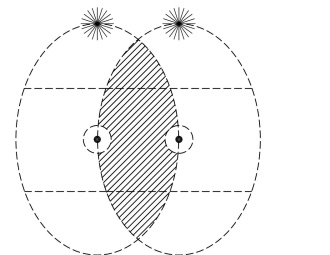
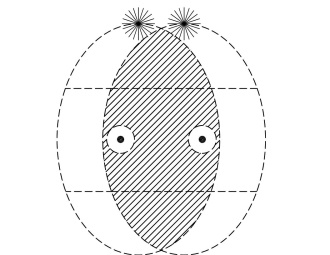
Little communication – Greater amount – Higher
II. Levels of Communication
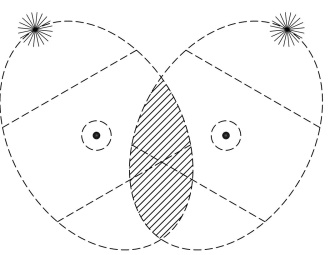
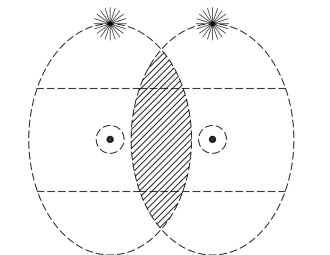
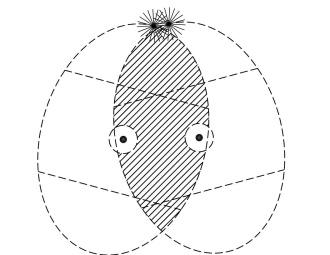
A. Chiefly on lower levels – B. All levels the same – C. Chiefly on higher levels
Level A is mostly physical and/or emotional;
Level B has about the same communication on all three levels;
Level C is chiefly at the higher levels. This is the level of communion.
Differences in intensity
1. First communication – 2. Interplay – 3. Communion
Each requires the previous one but not the higher; there can be communication with little interplay and no communion. Communion in its highest stages reaches to identification.
Elimination of Obstacles
- One great obstacle is due to projection. There is a natural tendency to project the “images” that are in us onto the partner. The man projects on his wife the feminine image of his mother or of other women from early life, or the ideal image of what he thinks women should be. The woman projects her image of her father upon her husband. She is often looking for a “father” or her ideal image – a “Prince Charming.” Both are doing the same thing – a “Comedy of Errors.” To be aware of projections clears the ground and is a constant process.
- Next and more genuine in a sense is the drive to dominate. It is based on self-assertion and self-centeredness and often results in aggressive behavior. There is a close relationship between self-assertion and sex. Sex is used as a means of self-assertion as the man tries to conquer the woman and the woman attracts the man to dominate him. There is a constant interplay between these two drives – domination and sex. We may become aware of this but the awareness alone is not sufficient because the drive to dominate is so strong we have to work on it all the time. The Good Will comes in here – the giving up, willingly, the dubious satisfaction of dominating and dictating.
In this area the most common mistakes are 1) criticism of others, 2) debates about who is wrong. That is fatal. It gets us nowhere. “If you’re wrong you’re a fool; if you’re right the other becomes furious. What is worse?” It is “nonsense” to do this; moreover all debate about “rightness” is futile because there is no perfect” right” or “wrong.” 3) Another cause of trouble is expecting consistency in the other partner. This is a psychological mistake; no one is consistent, nor should they be. To be consistent is to be frozen—static. We are always changing and we cannot be consistent. It is foolish to ask it in a mate. We should always try to change for the better. People feel it is not right to be expected to be consistent, but they do not know how to express it, so they get furious. When you give up consistency a great obstacle is eliminated.
Ways to Agreement and Synthesis
The basic attitude is the recognition, acceptance and respect of the other as a human being in his own right. This may seem obvious, but we don’t do! We want others to be as we wish them to be, but again, this is nonsense. Respect for the individual in his own right is the basis of mutual freedom. On this basis one can deal intelligently with differences and real disagreements. So the first thing is to “agree to disagree.” People sometimes sentimentally\ try to agree but it is artificial. Disagreements should be allowed, it is part of the existential condition. It is the starting point for mutual adjustment, concessions and right compromise. Of course this will be different in each case. It is summed up by the saying used by a monastic order, “In what is necessary—unity; in what is doubtful—freedom; in everything—spiritual love (charitas).” But, what is necessary? Very, very few things are really necessary. Then there is a further step: we can recognize and utilize the differences. It would really be tiresome if we were all alike. Therefore, the task is how to utilize the mutual integration of differences in the psychosynthesis of the couple and make a rich unity composed of integrated different polarities and differences. All this requires a basic good will, a loving attitude in spite of the imperfections of the other. Blind passionate love is unrealistic and brings disillusionment, but it is not as common as in the past. We are more critical and analytical. Good will and love lead to understanding, to understanding each other.
One great cause of difficulty is the fundamental ambivalence. There are many ambivalences in each of us. They have been pointed out but have not been given enough emphasis. Any impact of a situation is apt to arouse an ambivalent reaction. Then there is the multiplicity of reactions caused by the different subpersonalities. We are a multiplicity of subpersonalities, each wanting its own way. When both partners are psychologically sophisticated they can play with them and consciously deal with them, and in frank conversation admit the problems. For example, one partner says, “This is your childish personality. You can do better.” or “I think this is an image of your father.” So, if both are sophisticated, and are of good will, much can be explained and got rid of. There must be a constant watchfulness.
Another point, I’m going back to another recognition of the other as an individual, which is well emphasized by Martin Buber in I and Thou. A good example of graciously agreeing to disagree is that of Elizabeth and Robert Browning, one of the best examples of psychosynthesis of the couple. They had love for each other, and many common activities, but they also had individual activities. She went to séances and he didn’t approve but he didn’t interfere, though he disagreed. The point is to let the other do things which we don’t like. This brings up the question, which often comes up when one is spiritually inclined and the partner is not, or may be antagonistic to it. This is difficult but can be dealt with. This difficulty is based generally on the difference of evolutionary stages and inner maturity.. The less developed one is not at fault and must be accepted. The more evolved one should be more understanding and generous and should refrain from talking to the partner about these things. The partner is not ready and should be given time to be prepared. Meditation and study should be kept to oneself. One can say, “This is my hobby, but there are worse hobbies like collecting expensive items. You are free to have your hobbies.” Say this with no superior attitude, but not renouncing your own life.. Moreover, one can be more mature on one level and less mature on another, e.g. mature intellect but primitive emotions, or vice-versa. When the partner is hostile consider this as a life difficulty that we need in order to grow.. The partner can be seen as “an instrument of God” for us to learn by. This forces us to develop certain qualities as a result of the pressure. Then one should think: “Perhaps I may be ’an instrument’ of God for him (her) too!”
Beyond the Couple
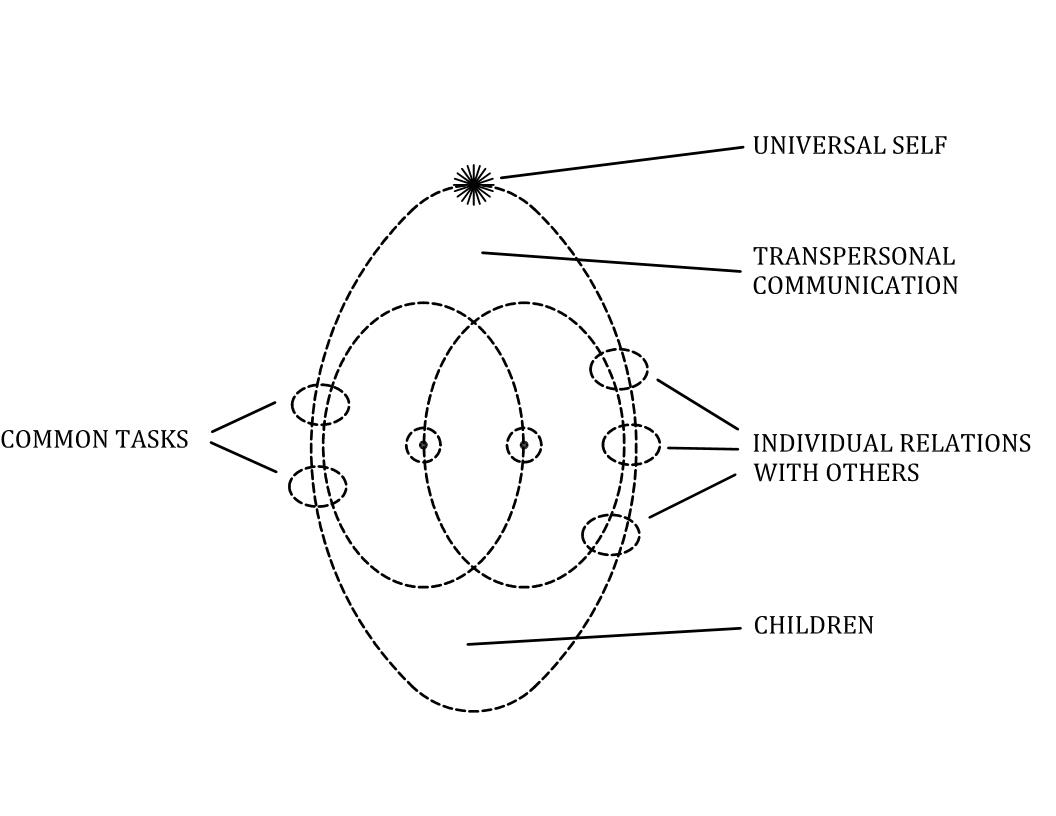
This diagram deals with what is beyond the couple. The couple does not exist in a vacuum. First, there are children for most couples. The main problem is to educate the children and help to understand the different but complementary role of each parent. Second, common tasks. Third, individual relations with others. Fourth, transpersonal communion. Transpersonal is upwards into one’s Self and the Universal Self.
