

Assagioli at twenty in Oxford: a report on the 1908 congress that marked the arrival of the historical and scientific study of religions
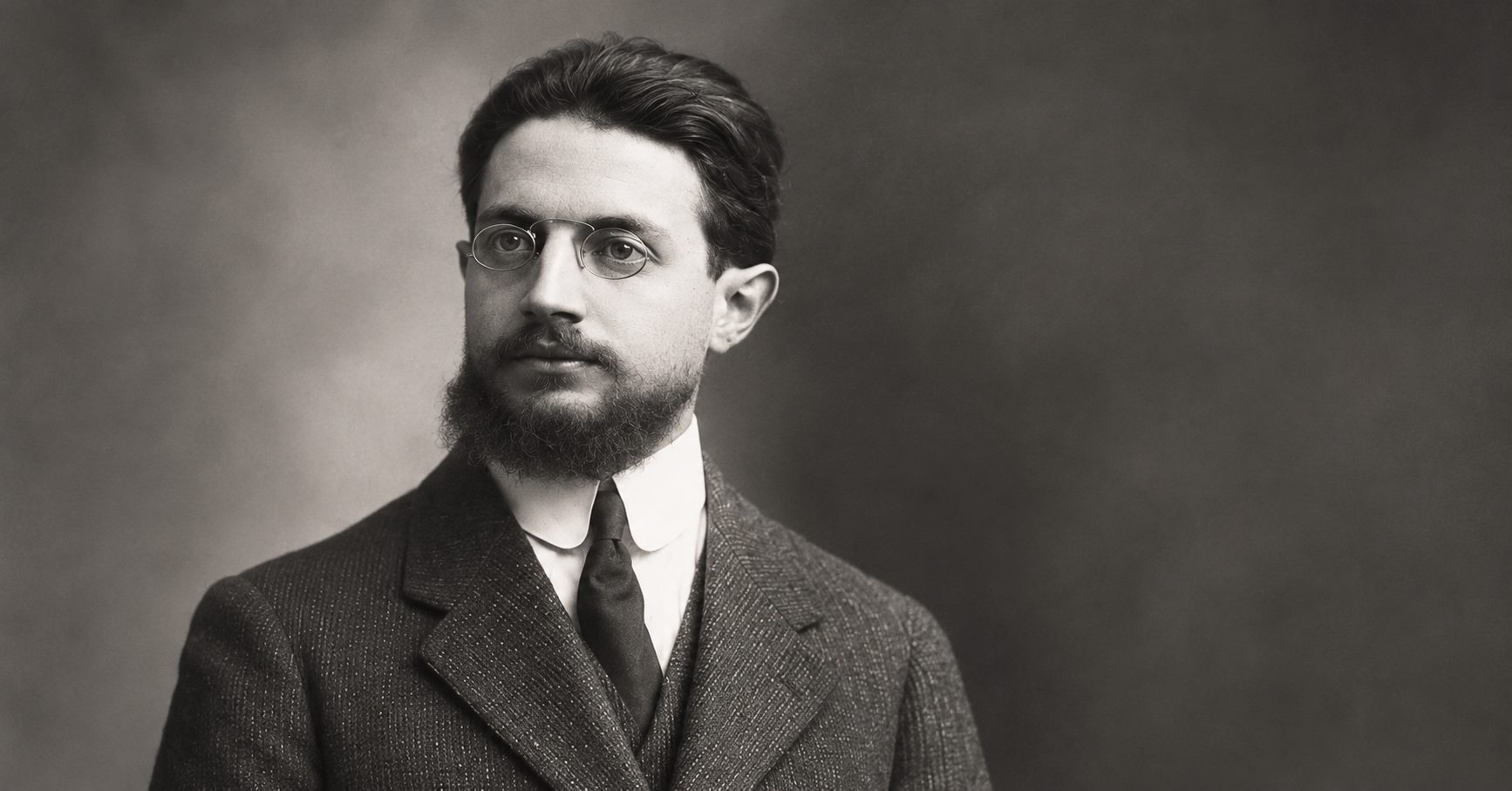
By Roberto Assagioli
Source: report signed “R. G. Assagioli” on the congress held in Oxford, 15–18 September 1908, Scientia, vol. IV, year II (1908), no. VIII (offprint printed in Bologna by the Cooperativa Tipografica Azzoguidi [Azzoguidi Printing Cooperative]); Archivio Assagioli, Florence, Doc. #22470
Translated from the French by Jan Kuniholm
Editorial Note
The abstract and contextual subtitle in this online edition have been added by the editor, Kenneth Sørensen, to support readability, navigation, and archival consistency. The original wording has not been altered.
Abstract
In this early report for the international journal Scientia, the twenty-year-old Roberto Assagioli describes the Third International Congress on the History of Religions, held in Oxford in September 1908. He notes the significance of such a congress taking place in traditionalist Oxford, as a sign that the historical and scientific method for the study of religions had become established, and surveys its nine sections, from the religions of “less-developed peoples” and the debates on totemism, animism and magic, to Buddhism, Hinduism, early Christianity, Semitic religions, Persian Sufism and the Bahá’í faith. He gives particular attention to the new ninth section on the method and purpose of the history of religions, including the contribution of psychology, and to the growing European interest in Buddhism, with papers by D. T. Suzuki and others. The report documents Assagioli’s early, wide-ranging engagement with comparative religion; his participation in this congress, and in the congress on moral education held in London the same year, is also recorded in the Short History of Psychosynthesis.
The fact that this Congress was held in Oxford had special significance, which several English newspapers noted with satisfaction. Indeed, Oxford is an essentially traditionalist and conservative center, and a few years ago, a Congress on the History of Religions would have been impossible in this city, as the Times observed. Thus, it can be said that this year’s Congress marks the definitive establishment of the historical and scientific method for the study of religions.
The proceedings of the Congress began with a speech by the President, Sir A. C. Lyall, on the relationships between the four major historical religions (Christianity, Islam, Buddhism, and Hinduism) and the political powers or absolute rulers with whom they have successively come into contact in various nations. The final part of this address addressed the question, of particular interest to the English, of the British government’s attitude toward the various religions currently existing in India.
The work of the Congress was divided into nine sections. The first eight sections dealt with the various past and present religions; the ninth section, which constituted a timely and well-received innovation of this third Congress, addressed general questions concerning “the method and purpose of the history of religions.”
The section chairs each delivered a speech to open the proceedings of their respective sections. Some of these presidential addresses were of a general nature; that is, they provided a summary of the various trends currently existing within the specific field of study under consideration. Others, however, reviewed the progress made in this field over the past four years, that is, in the period following the Second Congress, held in Basel. Most of these presentations were given in general sessions. Thus, E. S. Hartland spoke on “The Religions of Less-Developed Peoples”; Prof. H. A. Giles on “The Religions of the Chinese and Japanese”; Prof. Flinders Petrie on “The Religion of the Egyptians”; Prof. Morris Jastrow Jr. on “The Religions of the Semites”; Prof. T. W. Rhys Davids on “The Religions of India and Iran”; Salomon Reinach on “The Religions of the Greeks and Romans”; Sir John Rhys on “The Religions of the Germans, Celts, and Slavs”; and finally Rev. Prof. W. Sanday on “Christian Religion.”
The president of the ninth section, Count Goblet d’Alviella, chose as the subject of his opening address, “The Auxiliary Sciences of the Comparative History of Religions,” in which he successively analyzed the contributions that ethnography, folklore, prehistoric archaeology, philology, psychology, and sociology have made to the history of religions.
Here is some brief information on the work of the various sections.
The lively discussions that took place in the first section showed that, while the study of the religions of primitive peoples is highly fashionable, there is no less disagreement among those who pursue it: the most varied theories on totemism, animism, and the relationship between magic and religion were defended and attacked with conviction. Among the most renowned scholars who delivered papers, we may mention: E. Clodd, Dr. K. Th. Preuss, F. B. Jevons, and A. van Gennep.
In the second section (Religions of the Chinese and Japanese) and the fifth (Religions of India and Iran), the papers on Buddhism were particularly numerous and interesting, which is further evidence of the growing interest this religion is generating in Europe. We will mention the papers by the Japanese scholar D. T. Suzuki, Dr. W. A. de Silva (of Ceylon), Prof. P. Oltramare, Prof. de la Vallée Poussin, Mrs. Foley Rhys Davids (wife and valuable collaborator of the famous orientalist), and finally that of Bhikkhu Ananda Metteyya, a Scotsman who became a Buddhist monk, resides in Burma, and edits the well-known journal Buddhism.
The other Indian religions were also thoroughly studied by several of the most renowned Indologists, such as Professors P. Deussen, A. Hillebrandt, H. Jacobi, J. Jolly, etc.
In the sixth section (Religions of the Greeks and Romans), most of the papers dealt with the prehistoric period, and it was rightly noted that they would have been better placed in the first section.
In the third section (Christian Religion), the discussion focused primarily on the origins of Christianity. A particularly lively debate arose regarding the significance of the eschatological aspect in the Gospels and in Paul’s epistles; participating in this discussion were Professors Peabody, von Dobschutz, Sanday, Gardner, Burkitt, and Lake. The period stretching from the origins of Christianity to the Middle Ages, on the other hand, was almost completely neglected. In this section, Prince Caetani di Teano, the well-known Roman orientalist who undertook the monumental work Annals of Islam, spoke on “The Great Church of Damascus.”
In the fourth section (Religions of the Semites), the papers covered the field more evenly, ranging from Babylonian astrology (Prof. Morris Jastrow Jr.) to Persian Sufism (Prof. D. S. Margoliouth and R. A. Nicholson) and various issues in Judaism (Professors Bertholet, P. Haupt, Mr. H. Skipwith, etc.) to the modern religion of the Baha’is (Miss E. Rosenberg).
In conclusion, the unanimous impression of those who attended was that this year’s Congress was an extraordinary success in terms of the number of its members (approximately 600)—a figure particularly remarkable given the seriousness of the Congress’s subject matter—as well as the number and quality of the papers presented and the importance of the issues addressed.
It has not yet been definitively decided in which city the next Congress will be held; the International Commission will have to choose between Brussels and Hamburg.
