

From untapped potential to a complete self, the core talents reveal how will, feeling, and thought blossom into practical capacities for personal wholeness

By Kenneth Sørensen, MA Psychosynthesis
Based on Kenneth Sørensen’s book The Seven Types: Psychosynthesis Typology – looks at how we can access these core talents. ( The Seven Types is available as a hardback, paperback or ebook at Amazon )
Also visit our YouTube page and watch our videos discussing the seven types and talents and how the types can develop your empathy .
Abstract
In this essay, Kenneth Sørensen introduces the seven core talents that arise from the seven psychological functions and their corresponding personality types. Each core talent represents a fundamental life skill: leadership from will, empathy from feeling, ingenuity from thought, harmony from imagination, knowhow from logic, enthusiasm from passion, and productivity from action. Sørensen explains how these core talents develop from immaturity through to mastery, offering practical guidance on cultivating each one through meditative exercises and engagement with daily challenges. Drawing on psychosynthesis typology and the Talent Mandala, he argues that integrating all seven core talents is essential for becoming a whole and self-actualised individual, connecting this vision to the broader frameworks of Assagioli, Maslow, and Wilber.
We have also created an online typology profile where you can discover your personality and soul type and receive an extensive report on how to develop your essential qualities as a human being. Visit the profile here. www.jivayou.com/en/

 Diagram 1. The Talent Mandala: How the seven psychological functions create the seven core talents
We each have untapped potential and inner resources that we could access to create a better life for ourselves and a better world. These untapped talents are part of an ‘inner toolbox’ that we each possess as part of our human inheritance.
According to psychosynthesis typology, there are seven core talents, with each talent related to one of the seven psychological functions, which, in turn, are related to the seven psychological types. So let’s see how the talents, functions and types are linked.
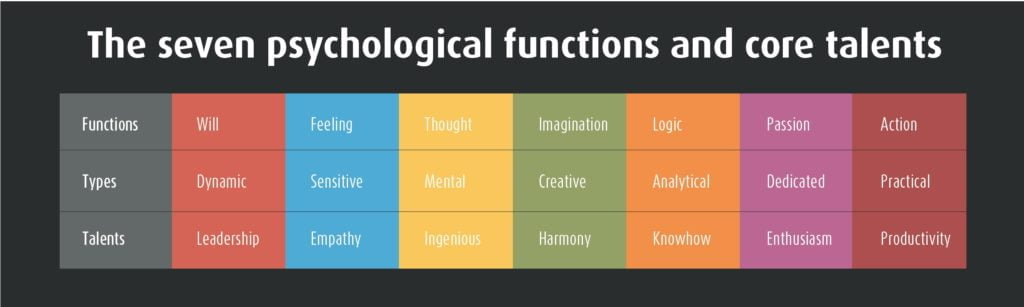
The seven functions are will, feeling, thought, imagination, logic, passion and action. Each function creates a set of behaviors that make up the seven psychological types, namely the dynamic type (behaviors associated with the function of will); the sensitive type (feeling); the mental type (thought); the creative type (imagination); the analytical type (logic); the dedicated type (passion); the practical type (action) – see Diagram 2. (You can read a fuller introduction to the seven types here: What is the seven types )
Each of the seven types offers a core talent that can be developed from immaturity to maturity to mastership. These seven core talents are:
1. Leadership (arising from the psychological function of will and the dynamic type)
2. Empathy (feeling and sensitive type)
3. Ingenuity (thought and mental type)
4. Harmony (imagination and creative type)
5. Know-how (logic and analytical type)
6. Enthusiasm (passion and dedicated type)
7. Productivity (action and practical type)
Diagram 2: From psychological functions to core talents
 Diagram 2. From psychological functions to core talents
It is important to note that we each possess all seven functions, types and talents, but they are not all equally developed – some manifest as primary influences in our lives, others as secondary, while others seem to exert no influence at all.
Manifesting the seven talents will help us to function as integrated human beings able to take leadership in our lives and create good relationships. The talents can enable us to take leadership, have empathy (or emotional intelligence), have new ideas (ingenuity), create harmony, have know-how, and have enthusiasm about the things we find meaningful. The talents can also help us to organize our resources so that we can be productive and achieve our goals.
The seven psychological functions: The circle diagram
Diagram 3 describes how the seven psychological functions relate to each other. So let’s examine these functions in more detail, noting how each function offers the basis for the development of one of the core talents.
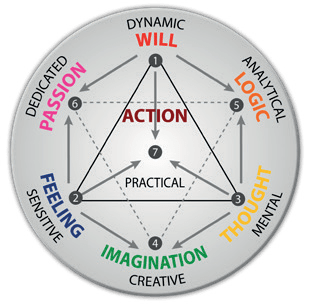 Diagram 3. The Seven Psychological Functions
WILL : This is the ability to make decisions and choices. The will provides information about the purposes behind our actions. The core talent related to this function is leadership .
FEELING : This is the ability to sense what is happening for people emotionally. Our feelings tell us whether we are finding an experience to be pleasant or unpleasant. The core talent related to this function is empathy .
THOUGHT : This is the ability to reflect and create understanding. Thought provides information about our experiences by giving us words and concepts to describe what we have sensed. The core talent related to this function is ingenuity .
Will, feeling and thought are the three primary psychological functions, combinations of which generate the four other functions: imagination, logic, passion and action.
IMAGINATION : This is the ability to combine thought and feeling in a form of imagery that can either perceive future possibilities or recall past experiences. The imagination opens us up to creative solutions. The core talent related to this function is harmony .
LOGIC : This is the ability to combine will and thought via an analytical, deep and purposeful form of thinking that is sequential and concrete. Logic enables us to differentiate between correct and false factual knowledge. The core talent related to this function is know-how . (We can differentiate between abstract and concrete thinking, what we call ‘thought’ and ‘logic’, respectively.)
PASSION : This is the ability to combine feeling and will in order to attain a one-pointed and passionate devotion to something that moves you deeply. The core talent related to this function is enthusiasm . (We can also call this function for ‘impulse-desire’.)
ACTION : This is the ability to combine will, feeling and thought with the body to produce an orchestrated physical action. The core talent related to this function is productivity . (We could also call this function ‘sensation’, relating it to the body’s ability to perceive the world through the senses and act in it.)
By this point, you may have sensed which of the functions are most developed in you.
The Seven CoreTalents
The seven core talents describe the skills that can be found in an integrated life – they are basic life skills that an individual must develop to become whole. It is important to emphasize that we need to develop all the core talents to become an integrated individual – this is an integral perspective of human development that is emphasized everywhere in the new psychology: it has been called personal and transpersonal psychosynthesis (Roberto Assagioli), self-actualisation (Abraham Maslow) and integral psychology (Ken Wilber).
The core talents are seeds that want to grow and unfold fully. Let us now examine the core talents in more detail and consider how they can be discovered and developed through psychological work and through embracing life’s challenges.
CoreTalent: Leadership
Developing the psychological function of will and the dynamic type will lead to the discovery and development of the core talent of leadership. We must all learn to stand in our own center of being and identity – from here, I-power emerges and we know ourselves; from here, we master life’s manifold influences, especially those that come from the world of the senses, the emotions and thought – all of this demands that we become leaders of our own lives. We must be able to answer the questions “Whoam I?” and “What do I want?” as a prerequisite to owning our personal sense of leadership.
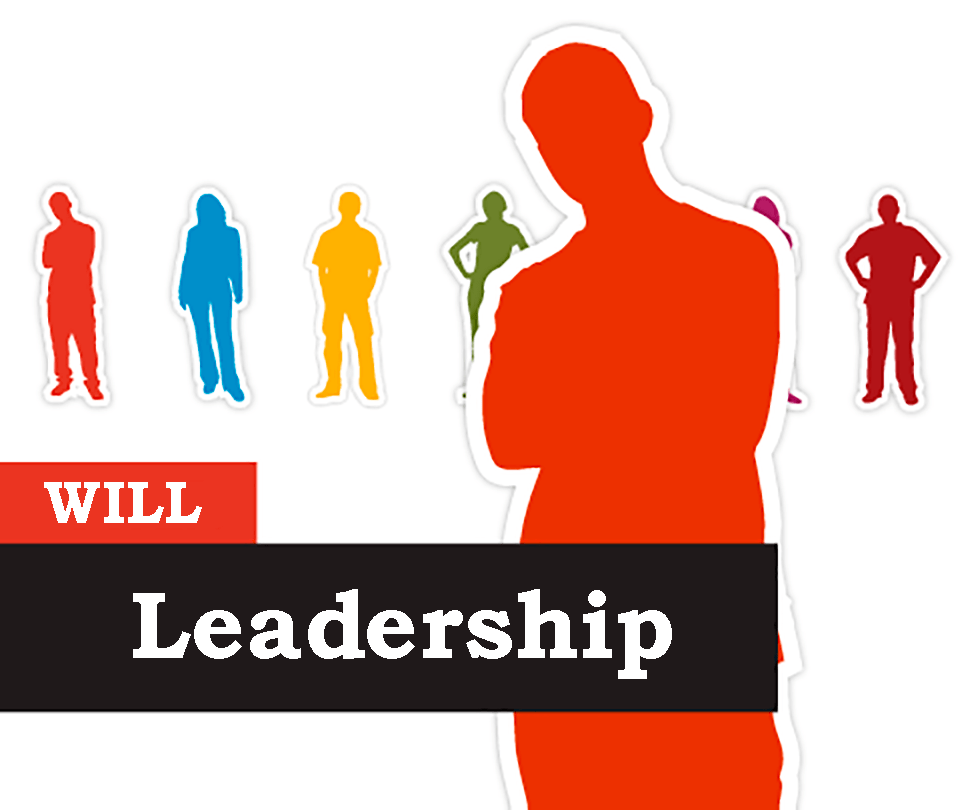
The core talent of leadership is very much about developing our identity through the discovery of our needs and values and how we want to express them. Seen from a psychosynthetic perspective, you are a consciousness with a will that is gradually learning to handle various energies. The most important step on this journey is to realize that you are something different from – something more than – your thoughts, feelings and senses. This is because being identified with our thoughts, feelings and senses will draw us out of our center of consciousness and will because we are controlled by what we identify with. By contrast, we can learn to master that from which we have disidentified.
Finding the will implies stepping backwards in consciousness and discovering that we can perceive the content of consciousness. As an observer – as a presence that is disidentified from thoughts and feelings – we can begin to choose how we think, feel and act. In this way, we become the director of our own life; we can learn to lead and govern our many sub-personalities (inner voices) and needs such that these different parts of us will take charge but become employees and co-creators of our best life. Outwardly, this development gives us the ability to lead others too: we become individuals who have the courage to travel in new directions, becoming pioneers.
The core talent of leadership offers an inner strength that arises when we have a sense of our own worth, and when we are aware of our purpose and goals in life and are not afraid to take responsibility for them. Leadership will lead us deeper into an exploration of our innermost identity and give us the will to express it creatively in a true show of outer leadership because we are pioneers and people of strength and power.
The practical work for developing this core talent involves discovering our will and our various core needs and values, and by setting goals for our lives. This can happen through meditative and psychological methods that help reveal and dismantle false identifications. Perhaps, most importantly, leadership will emerge when we engage fully with life by accepting challenges with a resounding ‘Yes’. When we do this, it is obvious that the will is at play, helping to develop the core talent of leadership.
Core Talent: Empathy
Integrating the core talent of empathy will lead to a compassionate understanding that is derived from the sensitive type and the psychological function of feeling.
Empathy is the ability to contain and accept everything we experience and to witness it without condemnation. When we develop this talent, we create empathic relationships to everything we encounter and we achieve deep insight.
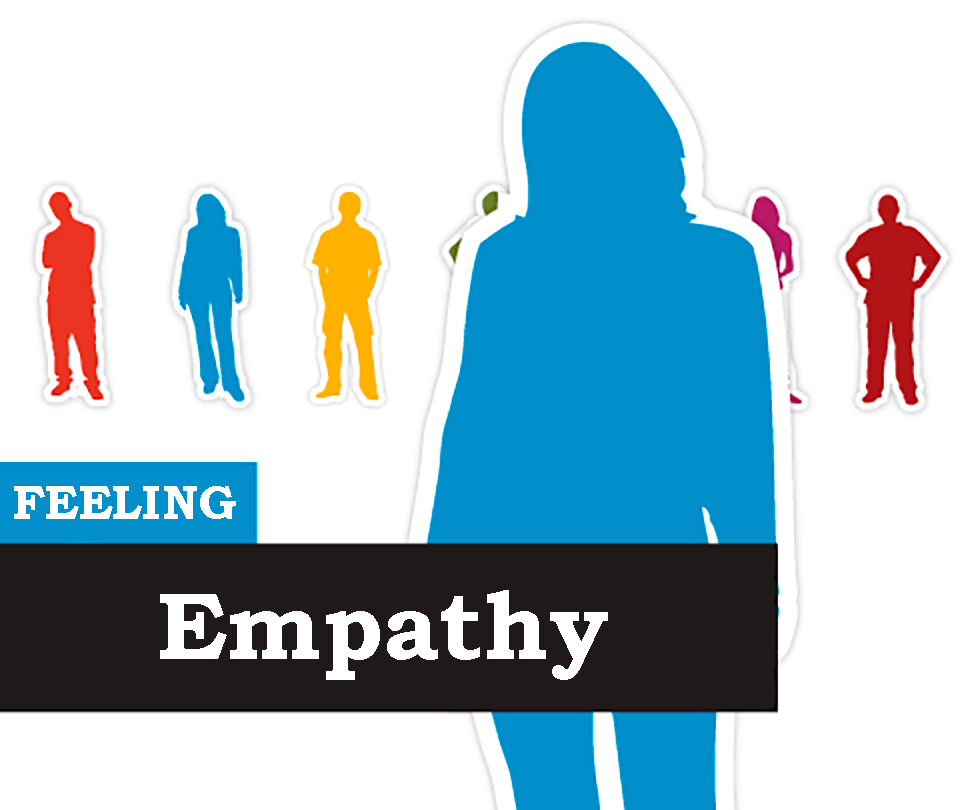
Empathy includes the ability to contain anger and frustration with wisdom. Anger is a combative energy that we typically use to protect our borders and integrity – sometimes, this anger can be expressed in a measured way, especially if we fully own it, but, at other times, repressed anger can lead to sudden outbursts that ruin relationships. Therefore, while empathizing with others, it is also important to set limits on others’ inexpedient and hurtful behavior – in this way, empathy must collaborate with the core talent of leadership. Put another way, deep understanding and empathy is not the same as being receptive of everything we encounter.
Developing the core talent of empathy will expand our inner space and our capacity to hold a space for the subconscious and superconscious, while also providing us with a deep sense of acceptance for all living beings and the world as a whole. Empathy can make us into skilled guides and true helpers in human affairs – this is because that which we can hold and accept in ourselves, we can hold and accept in others. When this ability is expanded to include not only people but animals, plant life and the whole earth, we become a true friend of nature.
This core talent is developed through exercises that strengthen the natural empathy of the heart, or what Buddhism calls loving-kindness. But our empathy is truly tested and developed through the practice of daily life. Again and again we are exposed to challenging experiences, perhaps via our children, social contacts or life circumstances. In a very direct way, these encounters push our limits, providing us with opportunities to hold or even expand our borders.
Core Talent: Ingenuity
Developing the mental type and the psychological function of thought will lead to the integration of the core talent of ingenuity. Ingenuity provides an ability to develop diverse perspectives in the mind that can be translated into practical results. Ingenuity is an ability to generate new ideas that can be implemented in practical terms – this requires an ability to think in wholesand to see how one area of knowledge connects with everything else. When we develop the function of thought we become curious about all aspects of life inits manifold complexity and start to see how the world works. Often, we are so identified with just a few areas of life that we miss the greater meaning of the whole.
The core talent of ingenuity stimulates us to think in new ways, enabling us to step out of the daily routine and look at our life, work and relationships from a higher perspective – many of our problems arise from the fact we cannot see the wood for the trees. Through mental reflection, we can develop a creativity and resourcefulness that can be translated into new discoveries and inventions. However, ingenuity is not only concerned with invention and developing new products, it involves our ability to renew ourselves and everything we engage with using creativity and intellect.
Ingenuity and reflective thought can show us how to live in harmony with the greater whole, while a lack of ingenuity can lead to greedy exploitation of people and nature. Genius is an expression of the highest unfoldment of ingenuity, providing insight into the causal laws and principles that govern the world in culture, science and commerce.
The ability to reflect creatively, plan and get things to function through strategic insight are the fruits of this talent. Ingenious types tend to express themselves through the roles of thinker, strategist or pioneer. Ingenuity can be developed through reflective meditation (done individually or in groups) on ‘great perspectives’ or on topics such as business, art, science or religion that demand abstract thinking and an interest in larger perspectives. Wheningenuity is present, there will always be an accompanying interest in translating new ideas into solid and tangible results and interventions. But what really helps to develop ingenuity is to grapple with life’s practical problems, such as when something ceases to function.
Core Talent: Harmony
Developing the psychological function of the imagination and the creative type will enable you to integrate the core talent of harmony, which refers to the ability to harmonize conflicting forces. This process of integration must start with ourselves: we must address the many conflicts we can encounter within, whether these conflicts are reactions to external experiences or conflicts between different sides of our personality. We don’t have to look far for conflict because there will always be an inner battle between conflicting forces, for example, a familiar conflict is the battle between our need for safety and our need for renewal.

Through the core talent of harmony we can manage the dynamics of conflict by introducing a higher balancing factor that can hold and channel energy in creative ways. This is necessary because a conflict can never be resolved on the level at which it arises – rather, a higher balancing value or insight is required, and this is true for both inner conflict and conflict between people. When applying the core talent of harmony, we can use our imagination to find a third factor that works as a compromise or as a completely new angle to unify two conflicting sides. Often in life, we can be stuck in patterns because we do not dare to use our imagination to see new opportunities, but through the qualities of harmony we can engage emotionally with conflicts, sensing their nature and substance in order to find a third way. It is not surprising that many psychotherapists and other agents for change have developed this core talent.
By living through turmoil and discord, we have an opportunity to develop the core talent of harmony, which is an ability to see new possibilities and potential combined with a preparedness to risk engaging with the unpredictable. When we live like this – having the courage to be spontaneous and pursue the unforeseen – we will discover great beauty through pursuing new possibilities.
We know that life involves constant change, therefore this core talent must be continually developed and used to keep life in balance. The well-known conflict between comfort and new challenges can only be resolved by giving space for new opportunities while simultaneously developing a higher form of safety.
In terms of human endeavour, harmony is expressed through the artist, the psychologist, and those who work creatively with people – they are all seeking to create harmony by balancing opposing forces, whether between people or ideas. This core talent is developed by engaging with life’s conflicts with an open and brave heart. Harmony can be seen at work when humor, playfulness or relaxed presence helps to resolve frozen situations.
Core Talent: Know-how
Integrating the analytical energy type and the psychological function of logic will develop the core talent of knowhow, which offers the ability to process knowledge in an objective and neutral manner.
The core talent of knowhow is concerned with objective knowledge – as opposed to knowledge generated by subjective experience. Knowhow is based on inaccurate observation and logical analysis. When developed, this core talent creates a cool, clear and penetrating intelligence that can thoroughly examine the substance of a theme and explore it in detail. Our experience and world views are often based on assumption, prejudice and superstition, and this distorts our perception of reality. By contrast, the core talent of knowhow is rooted in objective reality and offers a critical sense and the ability to see through confusion so that we can debunk false knowledge and discern where claims are merely based on emotion or supposition. With knowhow, we are able to call a spade a spade, with no need to dress it up.

The core talent of knowhow finds natural expression in the work of the probing researcher, specialist or technician. When we use this talent, we want to know how things work in practical terms, based on direct experience, experimentation or comparison. Psychologically, know-how can be developed through reflective meditation with a concentrated focus and observation of a given theme. When we are able to maintain a clear and sustained focus, we will obtain the clarity that is inherent in this psychological quality.
If we want to make a correct interpretation of what we see and experience in the world, then we must be able to evaluate objectively in order to attain solid knowledge. For this to happen, we need to manifest the core talent of knowhow, which enables us to acquire concrete knowledge and understanding. We can develop this talent in life whenever we take part in serious study, research or fieldwork, or when we take part in exercises that place an emphasis on precision and objectivity. Put simply, knowhow is a skill of discernment that can separate fact from fiction.
Core Talent: Enthusiasm
The core talent of enthusiasm moves you to find areas of life in which you can express yourself with faithfulness and a sense of commitment. Enthusiasm stems from the psychological function of passion, giving us a capacity to believe in something and dedicate ourselves to it fully. Exploring this core talent will help us to understand our values and needs and how they can be expressed. When this core talent manifests, we will find something to which we can offer our heart – perhaps our children, a project, a charity – no matter what it is, the object of our enthusiasm will be a guiding star that gives our lives meaning and purpose.

Enthusiasm provides the ability to say a wholehearted ‘Yes!’ to whatever strikes us as good and true. However, the less we understand about the nature of our values and priorities, the more we will be tossed around by the needs and wishes of others or by the demands of life and circumstances – so we need to have clarity about our goals. This is essential because enthusiasm draws its energy from a passion and desire for whatever gives meaning. Accordingly, those who are strongly characterized by this core talent will typically be activists, romantics or idealists.
We develop this core talent whenever we take responsibility and engage with those things we care deeply about – when we do this we will receive a sustainable and durable supply of the energy from the psychological function of passion.
Enthusiasm is a strong impulse that needs to find expression, which is why it is essential to establish a clear image of who we are and what we are living for. To help achieve this, we can consciously visualize ideal models for our goals, establishing realistic images of who we are and how we want the world to be. In other words, true and lasting enthusiasm requires authenticity; there are superficial forms of enthusiasm but these are not authentic and will fade.
We can develop this core talent by becoming an advocate for a cause – which is something that will also helpfully serve to test and develop the quality of our enthusiasm.
Often, enthusiasm will appear as a sense of dedication, joy and passion: an energy that inspires others to stay focused and seek a better world.
Core Talent: Productivity
The core talent of productivity manifests when we express the psychological function of action, and shows itself in the ability to organize ourselves with a clear purpose and well-structured planning. When we express this core talent, we do so through the practically-oriented will and a thoughtfulness that enables us to move ideas and wishes from intention to implementation.
This talent is active in the area between dreams and reality, and is focused on how dreams and desires can be turned into reality. The core talent of productivity enables us to see the connection between what we want (our goal), why we want it (our needs and values) and how we will obtain it (planning and action). When we operate in this way, we are truly able to orchestrate our lives.

While the core talent of leadership is concerned with accessing our power and expressing it in dynamic action, the core talent of productivity is a cooler energy that is focused on finding practical solutions for actualising the things we want. With productivity, we can establish an organized and integrated lifestyle in which there is a strong consistency between what we say and what we do; productivity is the talent that enables us to use our will to turn a wish into concrete action. With this core talent, we can systematise, coordinate, organize and manifest our ideas so they are fully expressed. Through this talent, we can learn to master details and establish meaningful and cooperative relationships. Accordingly, people who strongly express this talent will be managers, coordinators and organizers.
It could be said that productivity turns us into ‘magicians’ because we will know how to make things happen, which may seem like an act of magic to those who are not as practical. However, we know our productivity comes from the exercise of practical and strategic actions that we know will achieve results. With productivity, we are working with all the core talents (see Diagram 1). Start with a clear idea (1 in Diagram 1), a valuable purpose (2) and a thorough understanding (3) of the available resources; we have an ability to inspire people to collaborate (4); we also have knowhow (5), an enthusiasm (6) that seeks to fulfill a goal, and an ability to take action (7). This shows that when we develop our productivity, we will be utilizing all the talents to turn dreams into reality – which is the magic of manifestation.
In this article, we have only touched on some of the basic elements in the philosophy and psychology of the SevenTypes. We now invite you to continue studying this unique perspective on human nature – and on all of life – to discover more for yourselves. Enjoy!
Background:
The seven psychological functions according to Roberto Assagioli
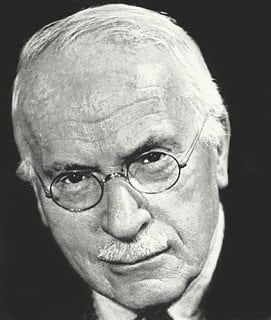
The seven types and talents arise out of seven psychological functions – see Diagram 2. Many people are familiar with the personality model developed by CG Jung which suggests there are four psychological functions, namely thought, feeling, intuition and sensation – these being the tools of perception that we use to understand ourselves and the world we live in.
 Roberto Assagioli
The Italian psychiatrist Roberto Assagioli (1888-1974) proposed a different model containing seven psychological functions, and this model forms the basis of psychosynthesis typology, where we also learn about the seven psychological types and seven core talents.
 C.G. Jung
The seven functions provide the self – or conscious “I”, in psychosynthesis theory – with the intelligence and skills needed to navigate life. By conscious “I”, we mean self-awareness – with the seven functions being seven tools (or ‘brain centers’ or bits of intelligence) that produce and channel the seven talents.
Our starting point is to note that all people possess the psychological functions of will, feeling, thought, imagination, logic, passion, and action .
You may be surprised to notice that we are not referring to intuition, which both Jung and Assagioli considered to be an important function. We also think so. However, in keeping with Assagioli, we see intuition as a transpersonal function, which is available to all of the seven types should they open up to the transpersonal dimension, and this article will be focusing on the psychology of personality, not the psychology of the transpersonal. For a deeper analysis of intuition please see chapter 3 of The Seven Types – you can download the chapter here: The Seven Psychological Functions and the seven types.
Literature
The Seven Types: PsychosynthesisTypology , by Kenneth Sørensen, Kentaur Publishing, 2019. https://kennethsorensen.dk/en/product/the-seven-types/
Integral Meditation: The SevenWays to Self-Realisation , by Kenneth Sørensen, Kentaur Publishing, 2017. https://kennethsorensen.dk/en/produkt/integral-meditation-en/

Where can I get the ebook of the seven types please?
You can get it here: https://kennethsorensen.dk/en/shop-en/
please send me the book
Hi Diana, you can buy the e-book here: https://kennethsorensen.dk/en/product/the-soul-of-psychosynthesis/ and the paper copy here: https://www.amazon.com/Soul-Psychosynthesis-Seven-Core-Concepts/dp/8792252176/
Best, Kenneth
Thanks a lot for this write up.
I’m blessed 🙏
Thank you for the feedback 🙂