

Assagioli at twenty in London: a report on the first international congress on moral education, its narrow focus on schools and the debate between religious and secular moral teaching
By Roberto Assagioli
Source: report signed “R. G. Assagioli” on the congress held in London, 25–29 September 1908, Scientia, vol. IV, year II (1908), no. VIII (offprint printed in Bologna by the Cooperativa Tipografica Azzoguidi [Azzoguidi Printing Cooperative]); Archivio Assagioli, Florence, Doc. #22469
Translated from the French by Jan Kuniholm
Editorial Note
The abstract and contextual subtitle in this online edition have been added by the editor, Kenneth Sørensen, to support readability, navigation, and archival consistency. The original wording has not been altered.
Abstract
In this short report for the international journal Scientia, the twenty-year-old Roberto Assagioli describes the First International Congress on Moral Education, held in London in September 1908. He finds that the congress partly disappointed expectations: it dealt almost only with moral education in schools, leaving aside the moral education of adults, of people suffering from nervous and mental illness, and the psychological questions that link the education of the will with the formation of character. He notes the unusual organisation, with the papers printed before the congress opened, the long debate on whether moral teaching in schools should rest on a religious foundation or remain secular, and the practical lessons in ethics given in French, German and English. The report is a companion to his account of the Third International Congress on the History of Religions, held in Oxford a week earlier; his attendance at both is recorded in the Short History of Psychosynthesis.
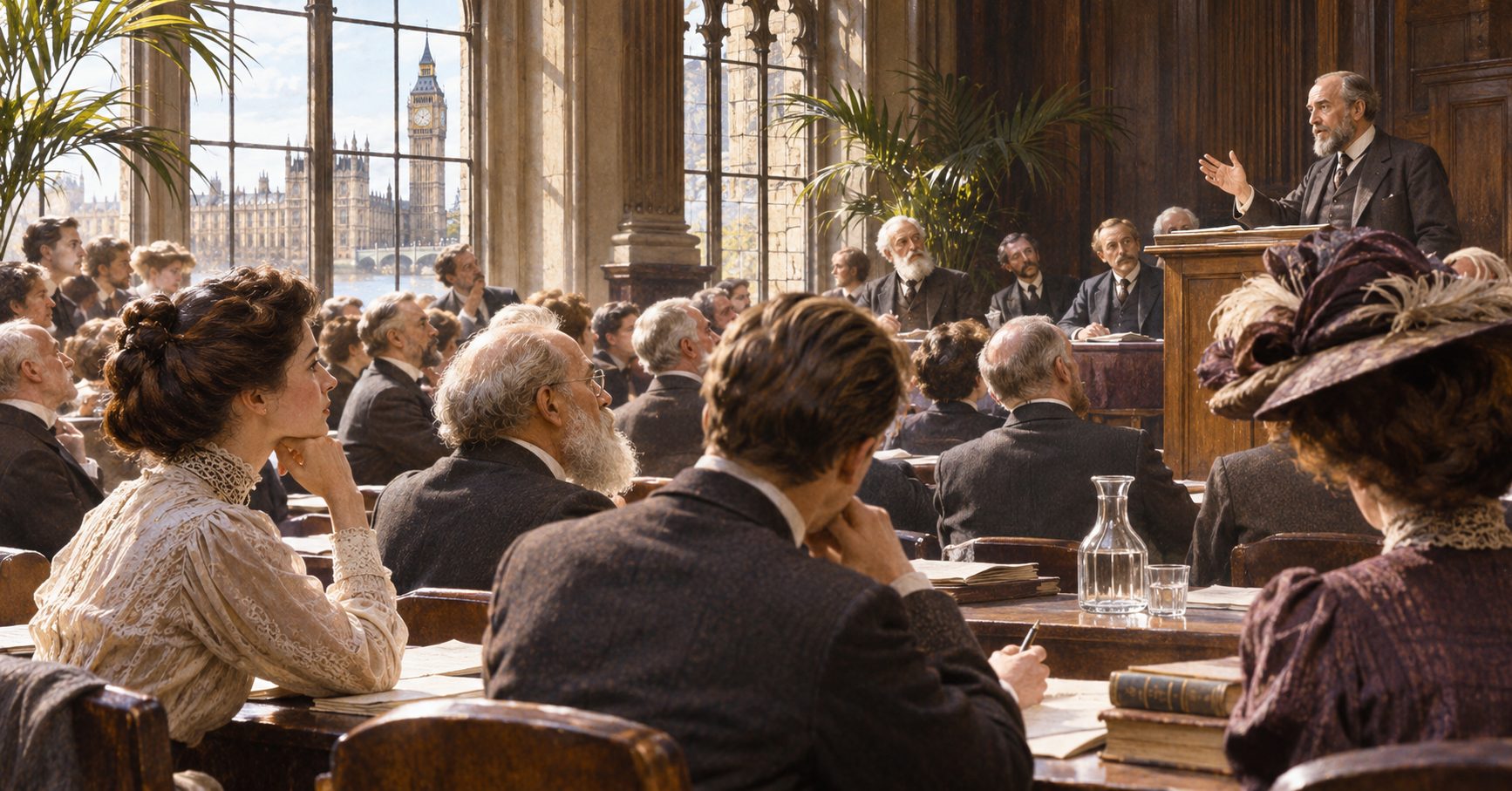
We must note at the outset that this Congress, which had been awaited with keen interest, partly disappointed the expectations of those who attended. In fact, only part of the Congress’s subject matter was addressed, namely moral education in schools, while other very important issues, such as the moral education of normal adults, the moral education of adults suffering from nervous and mental illnesses and, in general, all psychological problems that are closely connected to moral education, due to the close relationship between the education of the will and the formation of character [were neglected]. Félix Adler, professor of applied ethics at Columbia University and founder of the “Ethical Societies” so well known in America, unwittingly voiced the harshest criticism of the Congress when he said in his speech that “the tendency to confound ethical education with moral education in schools is to be deplored and must be corrected.”
The organization of the Congress differed markedly from the usual practice. First, the papers were printed in a volume distributed before the Congress opened; second, all sessions were general in nature, with the exception of only two meetings held by a special section.
All issues of moral education in schools were thoroughly addressed, ranging from coeducation to biological questions related to morality, from the appropriateness of rewards to manual labor, from sports to aesthetic education, and so on. Long and lively discussions took place on the important and difficult question of the relationship between moral education and religion. Most of the English speakers argued in favor of giving moral instruction in schools a religious foundation, while the French group, speaking with one voice and with typical Latin passion, defended the case for secular schools.
Three practical lessons in ethics, delivered respectively by Pastor Charles Wagner in French, by Miss Lilli Jannasch in German, and by Mr. Gould in English, were particularly interesting as examples of the methods followed in different countries.
Professor Michael E. Sadler served as President of the Congress. Mr. Gustav Spiller served as Secretary. The delegates from the Italian government were Prof. V. Puntoni, Rector of the University of Bologna, and Prof. F. Oresta, who presented a report on “Moral Education in Italian Public Elementary Schools” (Educazione morale nelle scuole elementari pubbliche italiane).
The next Congress will be held in four years in a city yet to be chosen by the International Committee.
