

Schools stuff the vessel and forget the fire: psychagogy proposes a lifelong art of harmonious development, drawing on therapy, mysticism, and the trained will alike.
By Roberto Assagioli
From La Voce, Year I, No. 11, February 25, 1909
Translated from the Italian by Jan Kuniholm, February 2022
Editorial Note
The abstract and contextual subtitle in this online edition have been added by the editor, Kenneth Sørensen, to support readability, navigation, and archival consistency. The original wording has not been altered.
Abstract
In this 1909 essay, Assagioli critiques contemporary education as destructive to personality and proposes psychagogy, a new applied science devoted to the harmonious development of the whole person across the entire lifespan. Replacing the child-centred scope of pedagogy with a lifelong conception of formation, he argues that psychological laws governing inner growth apply equally to adults and children. Assagioli draws practical methods from psychotherapy, mysticism, religious educators such as Ignatius of Loyola and Francis de Sales, Eastern contemplative traditions, and the Anglo-American New Thought movement. The essay calls for coordinating these heterogeneous sources into a unified discipline of character formation and the cultivation of higher human energies.
The voices proclaiming the need for a radical reform of the present educational systems are now numerous and insistent. In fact, any intelligent person free of preconceptions who turns his attention to pedagogical problems immediately realizes how harmful, indeed truly destructive, the methods now in force are for the personality of the young.
The systematic gorging with an olla podrida (a rotten pot ) of useless knowledge (useless for its own sake and for being inevitably destined to oblivion); the exasperating pedantry; the complete disregard for the different aptitudes and needs of the pupils; the absence of a courageous and wise enlightenment on sexual life, which could avoid so much misery and so much shame; the daily martyrdom inflicted on young people (often the most intelligent) whose sensitivity is excessive and whose nervous systems do not adapt well to the slouching toil of dockside porters, but which is necessary for them to be in the limbo of “respectful and diligent children who are the consolation of their good teachers and dear parents:” This is only a small part of the long and terrible column of “liabilities” in the balance sheet of contemporary education.
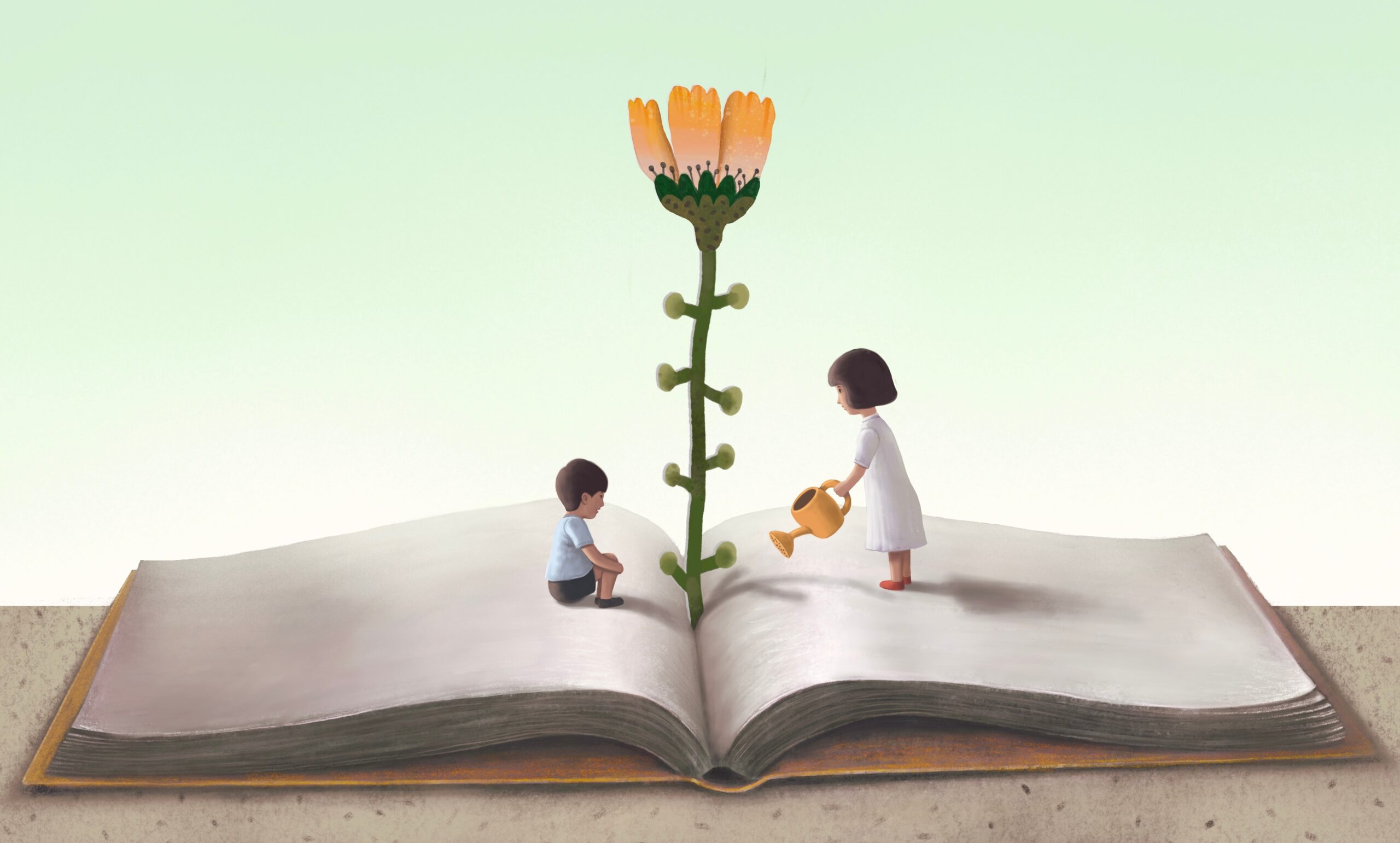
As usual, even here it is easier to point out errors and deficiencies, to deplore inconveniences and abuses, than to propose feasible improvements and truly effective remedies. Thus many people — who have understood very well that (in the beautiful words of Plutarch) “the soul is not a vessel to be filled, but a fire to be ignited” — still have the illusion that the crisis in education can be resolved with partial reforms and are anxious to propose modifications to programs, schedules and so on.
With all due respect to these good people (whose intentions are excellent and whose efforts are often admirable), it is time to open our eyes and to recognize and shout loudly that warm towels are not enough, but that a new practical approach to the entire pedagogical problem is necessary. In fact, it is not enough to admit theoretically — as all the best teachers of the past have done, and as is increasingly being done in our time — that education consists essentially in fostering the harmonious development of young people’s personality, in tempering their character, in making a continuous appeal to their noblest energies and in showing them their highest possibilities. Nor is it enough that a small minority of people endowed with the innate talent of educating, who are in every generation, instinctively put this talent into practice. It is not enough, first of all precisely because these people are a small minority, and then because their beneficial activity is hindered in every way by the absurd current regulations and by the hostility of their short-sighted or envious colleagues.
Therefore, something more is urgently needed: that the practical methods of true education be studied and coordinated; that what pedagogy has not been able to do be carried out: in short, that an applied science be established, which, for several reasons that we will examine in a moment, should be called psychagogy.
Since language is unfortunately the cause of errors, misunderstandings and misconceptions, the choice of a new term is not indifferent, but rather of great importance. The often undeserved vogue, or the failure or distortions, of certain scientific doctrines and certain philosophical theories have depended in large part on the terminology used for them, and on the “summary formulas” with which their principles and conclusions were expressed. It could be amusing and instructive to have a whole study (similar to what has been done in part on the power of ideas) based on the power of words or on the power of formulas.
So it is certainly not superfluous to stop and examine the word psychagogy a little, in order to define its meaning well, thus dispelling some possible misunderstandings from the outset. This word is not one of the many neologisms that scientists and philosophers love to invent on purpose and inappropriately to give greater importance to their lucubrations, or to mask their ignorance. This word has all the qualities of nobility: it was in fact used by the ancient Greeks and we find it in Plato and Aristotle. Then it fell into disuse, and only a few years ago it was taken up again, very appropriately, by Colozza, who gave the subtitle: “Notes on psychagogy” to his excellent book La Meditazione (Naples, Pierro, 1903).
But even if it were new, that word would not be less suitable, because it shows clearly in its constitution exactly what the new discipline wants to be: a happy combination and fusion of the best in psychology and pedagogy. First of all αγωγία and not λογία; this immediately indicates an essential character of psychagogy: that of being an applied science or, if others prefer, an art; in short a complex of practical methods, of rules for action and not a theoretical science or a part of philosophy. This practical character was highlighted by Professor Lombardo-Radice in a small article dedicated precisely to the examination of the word “psychagogy.” (La Critica, year 5, Issue 5).
Then ψυχή and not παῖς; this substitution, too, Professor Lombardo-Radice justifies with excellent reasons. One of these is particularly noteworthy, because very important practical consequences follow from it. Professor Lombardo-Radice says: “… why the arbitrary limitation to παῖς? why pueri educatio when one must deal with hominis educatio? The spirit (man) is formation: and there is never a formed spirit, in the sense of being historically perfect and complete… The limitation of the concept of education to the παῖς is quite empirical, and rationally unjustifiable. The spirit is always perfect and never perfect, depending on whether it is considered ideally or historically, … The humanity of one is always, and never fully exists.” With this Prof. Lombardo-Radice has indicated at the same time, both from a general point of view and in Hegelian language, the greatest defect of pedagogy and the most fruitful task of psychagogy.
In fact, two of the most important reasons for pedagogy’s poor performance are: the failure to consider the child as the future person, and the interruption of one’s action at the very age when it would begin to be truly fruitful. Just when the youngster is most capable of being educated, because on the one hand he has not yet lost the great plasticity of childhood, on the other hand his more mature mind and his greater capacity for attention, his greater energy make him able to take advantage much more than the child of every help and advice — just then, modern education can give him nothing but a flood of knowledge and impose on him the obligation to be “obedient, composed and diligent!”
But psychagogy goes much further. It says that since a person is never something definite, static, or complete, but is in continuous formation, education must continue throughout life: that the same psychological laws which regulate the psychic life of the child also regulate that of the adult, and that therefore the same methods which serve for the education of the one serve, with appropriate adjustments, for the education of the other; that the lower flexibility of the adult is amply compensated for by the greater strength and intelligence with which those methods can be applied in adulthood, and by the greater experience of life and self-knowledge, which allow the adult to avoid many errors into which the youngster falls.
Even from these first and fleeting hints, the vastness of the task and the great general importance of psychagogy appear clear. But let it not be thought that the attempt to form this new and much broader art of education is too bold and doomed to failure. It is not a matter of a creation ex nihilo; fortunately, most of the necessary elements already exist and it is enough to know how to take them from the various disciplines in which they are scattered, to know how to coordinate and harmonize them; but above all it is necessary to persuade people of the possibility and the opportunity to systematically apply in their lives certain principles and certain methods, most of which have been known and accepted theoretically for a long time.
So let us briefly see which are the disciplines that can make the greatest contributions to psychagogy.
Of course the basis of this is psychology; but let’s be clear: it is certainly not experimental psychology, a useless form of scientific Byzantinism and a vain pastime of adult children, who play with smoked and rotating cylinders and electric machines, as they used to play with lead soldiers and wooden horses. Nor will psychagogy make use of that part of theoretical psychology that is confused with metaphysics and is pleased to formulate more or less solid and ingenious hypotheses about the relationship between soul and body, about the purpose of psychic facts and so on. As we have mentioned, psychagogy, being an art, must remain completely neutral with regard to purely theoretical questions, and not bind itself to or rely upon any metaphysical hypothesis.
Psychagogy will use precisely that part of psychology that is most neglected by scientists and philosophers, and that is derived, from the intelligent observation of life, from works of art, from pedagogical practice, rather than from manuals or treatises.
As for pedagogical writings, they can certainly provide valuable contributions to psychagogy; but among them are more works of the great educators than attempts at theoretical systematization of pedagogy and certain pretentious treatises on “scientific pedagogy.”
Even modern psychotherapy — which by now has triumphantly entered, through the irresistible eloquence of facts, into the hortus conclusus (“enclosed garden”) of official science — will be able to help a great deal in the formation of psychagogy. In fact, various methods of “re-education,” by which beneficial effects are obtained in many psychoneuroses, especially in psychasthenia, [1] can very well be used, with the necessary modifications, to correct the countless defects and weaknesses of so-called healthy and normal persons. We must not forget, however, that psychotherapy is still a young discipline and that there are many gaps and confusions in it, so that psychagogy, after taking advantage of the lessons learned from psychotherapy, can in turn easily come to the aid of psychotherapy, opening up new paths and shedding light on many controversial points.
In addition, the writings of mystics and religious educators are another generous source of important lessons that positivist prejudices have wrongly neglected. In Pascal, St. Ignatius of Loyola, St. Francis de Sales, and in Molinos we find true treasures of practical psychology and a series of precise methods; it is sufficient to translate them into modern language and apply them in a more general and neutral way, so that they are ready to render surprising services in the culture of the highest energies of the spirit.
And not only should the western mystics be studied, but also the eastern ones; especially the Indian ones. They are true geniuses of introspection and internal action; they can give us lessons which are unknown even to those civilizations, like ours, that consider inferior all those who have not known the glories of railways, parliaments and starched shirts. Finally, we must not forget the various very modern Anglo-American movements, known under the general names of “new thought” and “mental science,” which, along with exaggerations and naiveté, contain ingenious psychological insights and offer very practical and effective methods.
With this I have enumerated only the main sources from which psychagogy can draw; they are many and very disparate and it will not always be easy to harmonize such heterogeneous elements, but the importance of the work amply compensates for our studies and efforts, and we should be encouraged by the fact that now we can glimpse many fruitful integrations, many appropriate and natural combinations, and many useful applications of all kinds.
In a future article, I will examine in more detail the fundamental characteristics that will be characteristic of the future psychagogy. In the meantime, I will be happy to receive through the Directors of La Voce, impressions, suggestions, and proposals from readers who are interested in any attempt to encourage people not to be content with being fragments, sketches or abortions of human beings; and any counsel to remember the high possibilities latent in their souls and the duty they have to implement them.
Notes:
[1] Psychasthenia was a psychological disorder characterized by phobias, obsessions, compulsions, or excessive anxiety. The term is no longer in psychiatric diagnostic use, although it still forms one of the ten clinical subscales of the popular self-report personality inventories MMPI and MMPI-2. —Wikipedia.
