

From conference practice to the craft of an inner autobiography, how Assagioli’s guidance shaped self-knowledge and co-operative training among practitioners
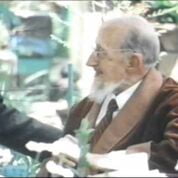
By Roberto Assagioli
Opening Address to the International Conference on Psychosynthesis, Val Morin, Quebec, August 1973
Delivered by Fred Rosenzveig
Editorial Note
The abstract and contextual subtitle in this online edition have been added by the editor, Kenneth Sørensen, to support readability, navigation, and archival consistency. The original wording has not been altered.
Abstract
In this lecture, delivered on Assagioli’s behalf at the 1973 International Conference on Psychosynthesis, the opening address outlines practical priorities for the psychosynthesis movement. Assagioli urges practitioners to minimise theoretical exposition in favour of co-operative planning, short focused interviews, and guided homework rather than passive instruction. The address includes detailed talking points on competence, teamwork across professions, international linking, and the training of those in the helping professions. A substantial section presents guidelines for writing an inner autobiography, a reflective exercise designed to reveal how the past shapes present conduct. Companion guidelines on identifying and working with subpersonalities complete the lecture, offering concrete tools for self-knowledge and disidentification.
It is gratifying and encouraging to see so many gathered here under the wings of psychosynthesis. A gathering of this kind can have special meaning and usefulness, and presents a great opportunity. Dr. Assagioli regrets not being able to join us here in person; but he sends a warm welcome to all of you, and his best wishes for the success of the Conference.
He has asked me to convey to you some suggestions concerning the best way to carry on meetings such as this one, based on his extensive experience in attending international conferences. First, he thinks that it would be well to reduce to a minimum the exposition and discussion of theories; instead, giving the maximum of time and attention to the exploration and clarification of common goals, methods, and policies, and to establishing plans of co-operation for the further diffusion and the more extended application of psychosynthesis. Concerning theory, he would like to remind you, as a warning, of the sad fate of that word. In Greek, theoria means to keep, to contemplate, and this means to have a direct perception of some truth. Instead, now the word theory is used to mean a mental concept or construct about something. And this is an obstacle to the direct, intuitive perception! What really matters is ascertaining, through experiment, what are the most apt ways or approaches towards the safe achievement of the expansion of consciousness .
He has asked me to mention another point, also based on his long experience. He has found that often the most effective method in dealing both with patients who are not too ill and with students is that of short interviews, giving definite homework–such as writing a diary, free drawing, various exercises–to be done between sessions. He regards these as training, not teaching. Most teaching consists of giving information, which is a waste of time and energy, because information can be obtained by people themselves. There are all kinds of means for getting it – even too many! Our role in this respect is to provide a guide to selected information. If patients and students are in earnest, they can find it and, from what they read, they can prepare questions related to their problems to be dealt with in later sessions. This gives us the opportunity to find out which are the specific needs of each person at the present moment , and consequently to give the required help through the interpersonal relationship and through training in the use of appropriate techniques.
And last, but not least, Dr. Assagioli thinks it would be well to make the utmost use of the opportunity offered by the Conference for establishing friendly human relations among ourselves with the purpose of mutual understanding and increasing co-operation in meeting the great need of humanity for psychological and spiritual help.
Talking points and Perspectives
for a Conference of Psychosynthesis Practitioners (Dr. Roberto Assagioli with Fred Rosenzveig)
These are some of Dr. Assagioli’s suggestions and some of the questions where clarification and hard thought among psychosynthesis practitioners seems to be needed. They emerged during conversations I had with Dr. Assagioli this August. The problems raised are in brief form: they are not meant to be exhaustive, but to focus thought and exchange on these and related issues. This might serve as part of the groundwork for the Psychosynthesis Conference to be held in 1974, and it is hoped that thought could be given to these questions before then.
The problem of competence:
a) What constitutes competence in psychosynthesis and how can this be certified, as a general rule , in each of the fields in which psychosynthesis can be applied?
b) Are there exceptions to a general rule of training in the case of individuals with special background or endowments?
c) What is the right perspective on the question of competence, given (1) the great need of so many at the present time for at least an introduction to psychosynthesis in their own lives and work, and (2) the need for psychosynthesis to be presented in a competent, qualitatively high, and professionally acceptable way?
The problem of establishing co-operation with medical doctors for therapeutic psychosynthesis . This relates to the following point.
Ways of working in teams:
(eg, MD, social worker, clergy, psychologist). Individual team members can be trained in psychosynthesis or could work in collaboration with a “psychosynthesist”, someone with training in this approach. Such teams would provide fluid resources to respond to individual and community needs. Another possibility is to have such groups teach other groups, ie, groups teaching groups.
Division of work between informers/organizers, on the one hand, and psychosynthesis practitioners (trained in specific fields) on the other hand. Perhaps different kinds of abilities and training are needed here, analogous to the different work and preparation of concert pianists and piano teachers.
Specific preparation and abilities for the different fields:
(a) educational
– children (detecting the particularly gifted)
– adolescents and young adults (detecting the particularly gifted)
– adults (continuing education, community education)
(b) therapeutic
(c) inter-individual relationships
(d) wider social applications
(e) other specific fields (eg, organizational development, etc.)
How to organize each center or nucleus:-
First, a deposit of material (lending library, with PRF and other psychosynthesis pamphlets on sale – the “tools of the trade” to be given out when specific problems arise, even by a secretary); a center might be first only a center of information and diffusion, then later or concurrently offer training in psychosynthesis when someone already trained is available.
Mid-range perspective:
Years, decades (not too engrossed in the immediate or lost in the lure of the Millenial Plan). One middle range goal is reaching out and linking.
Linking internationally:
- with other psychosynthesis centres, co-workers;
- with other professional groups, through conferences, etc. Whom to reach with information, T raining:-
Priority on training those in the helping professions; spreading the word at professional conferences – reaching out to show how psychosynthesis can serve as a middle ground to professionals on the one hand and to esoteric groups (new eastern groups, theosophists, etc.) on the other (bringing psychosynthesis to these groups-but not their characteristics into psychosynthesis).
NB Basic principles of psychosynthesis to stress to professionals and others (all those who ask, “What is psychosynthesis?”):-
- existential inner attitude;
- uniqueness of each case; and
- availability and application of specific techniques . In other words, stress the neutrality and usefulness of psychosynthesis (inner attitude plus specific techniques) to all groups and individuals, and in professional applications.
Sharing methods of work:
eg, Dr. Assagioli’s method – short interviews, giving specific selected reading and having the person prepare his or her own questions between interviews. This is good for teaching (don’t give information, guide the student to find it for himself!), and for therapy.
Techniques:
Don’t feel every technique must be used in psychosynthesis. Find your own congenial techniques and methods, and call in people with other skills, forming flexible, fluid teams.
New therapeutic techniques (primal, etc.) can be useful in the context of more general treatments, but are not sufficient in themselves; their application depends upon to whom, who gives them, how, when, etc.
GUIDELINES FOR WRITING A PSYCHOSYNTHESIS AUTOBIOGRAPHY
PURPOSE OF THE AUTOBIOGRAPHY
The major purpose of this task is to get in touch with the ways in which our present has been shaped by our past and is still influenced by it, thus freeing ourselves to move beyond conditioned behavior which is no longer appropriate. We are concerned primarily with an inner autobiography rather than a record of external events for their own sake, with a study of those conditions, events, and people which have shaped our lives and the ways in which we have interacted with them. It is helpful to indicate briefly important external facts for the sake of others who may read your autobiography, including such things as date and place of birth, ethnicity, socio-economic status of family of origin, number of brothers and sisters and your place in family, and the general social and natural environment in which you lived. Attempt to indicate the effect of these facts on your development. Whenever external facts are included, make explicit the effects you believe they had on you.
WRITING STYLE
People have different styles of approaching the autobiography. Some find it helpful to use a chronological approach, considering each year of their life in turn, while others prefer to dip in wherever they feel attracted to start. Either approach may be effective. Sometimes a combination of the two works best, making an outline of the main themes on a chronological basis and then elaborating these in amore spontaneous way and coming back to the outline as a checklist so that important points will not be forgotten. It is desirable to write in the way which is easiest for you, even if this means neglecting the rules of grammar and stylistic elegance. The key is to get the flow started by writing in any way you can. It may be helpful just to let things come to you in a “stream of consciousness” approach, allowing the major themes and patterns to emerge after this is done rather than attempting to impose a preconceived schema on the data.
Try to describe your life with as much honesty and detachment as you can, avoiding the tendency to censor points that you feel would present you in an unfavorable light. You will find it instructive to note those aspects of your life you feel ashamed of and are tempted to censor, and it is useful to mention where the “sore points” lie as you write. The attempt to reach as honest and objective a viewpoint as possible will help you to make connections with the material and to deal with it more constructively.
If you find that you have written a very long and rambling autobiography, it would be preferable to write in addition a more abbreviated and organized version to give to your psychosynthesis guide and to help yourself see the patterns more clearly. The longer version can help to free you up and bring out the material and is valuable for your own use, while the shorter version can facilitate communication to others and help you organize your thoughts.
TOPICS TO INCLUDE
The following points are considered important to include, although they need not be taken up in the order given. Please feel free to write, in addition, on any other topics which seem important to you.
RELATIONSHIP WITH FAMILY
What kind of people were your parents or the people who raised you? If you were raised in a non-orthodox family, describe the significant adults of both sexes in your life. If you were not raised by your natural parents, describe the fantasies you had about the missing parent(s). Give a character sketch of each parent (or parental substitute) as you perceived him or her at various stages of your life: early childhood, middle childhood, adolescence, young adulthood, and the present time. Also describe yourself as you believe each parent perceived you at different stages- Did your relationship with your parents change as you grew older?
What do you see as the major strengths and weaknesses of your mother and of your father (or of the male and female parent substitutes in your life)? How are these reflected in you, including both the positive and negative qualities? Remember that we often reflect the qualities of our parents by our rebellion against them, by our attempt to cultivate and express the opposite qualities. It may help you to get in touch with this material to imagine (even if you do not remember the actual happening) your mother criticizing your father and your father criticizing your mother. How did you feel as a child when your parents were in conflict? Did you take sides? Do you see the situation differently today?
What roles did you play in your family and did these change as you grew older? Did you feel that you were “cast” to play a certain role in the family and expected to do this? If so, how did the family convey its expectations to you? Did you act out these expectations or rebel against them?
Make a drawing of your family group as you experienced it 1. in early childhood; 2. in middle childhood; and 3. in adolescence. Make a fourth drawing expressing the way you experience your relationship to your family of origin today.
RELATIONSHIPS WITH OTHER KEY FIGURES
Describe any other significant relationships you have had with people: eg brothers and sisters, teachers, friends, enemies, lovers, spouses, your own children, business partners. Indicate only those which have marked you significantly or which you feel have reflected important aspects of your personality. If you are familiar with the concept of subpersonalities, indicate those which you believe were manifesting in these different relationships.
Make a drawing of your relationship with each of these persons.
YOUR GENERAL DEVELOPMENT
What kind of person were you at different stages in your life? How have you changed? Did others perceive you in the same way you perceived yourself? What kinds of masks did you wear for the world? How did you distort yourself in order to be accepted by others or to defend yourself against others?
Make drawings to illustrate all of these points. Draw a “lifeline”.
How did you resolve your psychosexual identity? How have you felt about being male or female, and has your attitude changed on this? What do you like and dislike about the sex you were born with? What would you dislike or prefer about being of the opposite sex? In what ways do you feel that you are masculine and feminine?
Describe any developmental crises or turning points in your life which were the occasion of a shift in attitude or in level of consciousness. Frequently such events are experienced as a “trial” or “initiation” and may take the form of a crisis or test of strength.
What recurring patterns do you notice in your life? Are there particular conflicts that you have acted out repeatedly in different situations? Are there certain lessons that you seem to have learned through your life experience?
SPECIFIC QUESTIONS
What is your earliest memory? It does not matter if this is an actual memory or an imagined one.
Describe any recurrent childhood dreams
Indicate any traumatic events in your life: eg illness, accident, death, separation, violence, sexual abuse, etc. How did these affect you?
LIFE PATTERNS AND MEANING
As you tell your life story, what sort of archetypal pattern does it seem to express? Outline or write a myth or fairy tale about your life. What title(s) and subtitle(s) could you make up for it? Illustrate, by drawing pictures of the key figures in archetypal form.
What do you understand about the meaning of your life experience? How much of it can you accept as having been valuable and how much of it do you reject?
GUIDELINES FOR WRITING UP SUBPERSONALITIES
A. How to become aware of your subpersonalities
Start by asking yourself what different “faces” you present to the world under different circumstances. You will find clues if you consider the different roles you play with different types of people (eg authority figures, younger people, your peers, a companion of the opposite sex, your subordinates, someone you admire, etc.) and under different conditions (eg at home, at work, on vacation, at church, etc.)
Although you may find the concept difficult to grasp at first, start to write anyway and, as you do so, the subpersonalities generally start to become clear.
You may use any of the techniques for “answers from the unconscious” to get in touch with subpersonalities you may have difficulty contacting from conscious levels. To do this, you can ask the question “What important subpersonalities have I missed?” and work with any of the following techniques to find the answer: the Review exercise focused on subpersonalities of the day or from a recent period of time; mental imagery (visual, in the form of pictures or of words written on a screen, or auditory, in the form of words spoken or heard, or a combination as in the technique of addressing your question to a Sage or other symbol of inner wisdom); spontaneous movement, drawing, writing, or sounding.
It is a good idea to start by listing as many subpersonalities as you can and then make a selection from among these to focus on. You may find that several subpersonalities you have listed are different versions of the same thing and could be considered together. Choose those which seem to play the most important role in your life and those which cause the greatest conflict to make a detailed analysis of.
B. Questions to answer about your subpersonalities
For each subpersonality, consider the following questions, but do not feel obliged to answer each question for each subpersonality if it does not seem appropriate. You may find other relevant questions to ask or discover additional techniques to help you in making contact with your subpersonalities.
- Naming
Give your subpersonality a descriptive name – eg “The Guru”, “The Clinging Vine”, “Bitchy Bertha”, “The Doormat”, “Harry the Haggler”. A humorous name is helpful if it seems appropriate, as humor facilitates detachment and disidentification from the subpersonality, making it less overwhelming and more subject to your conscious direction. - General character sketch
Describe the subpersonality. What does it look like? How does it behave? What feelings does it have? What thoughts does it think? What does it tell you? What does it tell others? What image does it try to project? What physical posture does it assume? How does it feel inside its body? Where does it experience tension? What expression does it wear on its face? How does it dress? What does it like to do? What would your life be like if this subpersonality had its way all the time? How would this subpersonality like to live ideally?
- Needs and desires
What are the needs and desires of this subpersonality? How does it seek to fulfill them? Does it use direct or devious, effective or ineffective, constructive or destructive ways to fulfill its needs? Can you think of more constructive ways it might use to fulfill them? - Drawing
Make a drawing that expresses the essential qualities of this subpersonality. - Circumstances that evoke the subpersonality
Under what circumstances does this subpersonality tend to emerge? In what social roles does it express itself? What specific people in your life does this subpersonality interact with? What is it about these people that evokes the subpersonality? Is the “demand” to behave in this way coming from the other person or from within yourself? - Strengths and weaknesses
Every subpersonality has both valuable and limiting or negative aspects. What are the strengths of this subpersonality and how can you use them more effectively? What are its weaknesses and limitations, and how can you learn… to overcome them? - Centrality and prominence
How important a role does this subpersonality play in your life? What proportion of the time is it on stage? Is it a long-standing subpersonality that has been part of you for many years or is it fairly recent? Do you remember when and under what circumstances it began to manifest itself? Does it seem to be a fairly deep and basic aspect of your personality structure or is it something more superficial and transient? To what degree do you feel identified with this subpersonality? – ie is it something you think of as really “you” or is it something you can stand back from and see as a pattern over which you have control, which you can choose to act out or refuse to act out? - Interaction with other subpersonalities
How does this subpersonality interact with other subpersonalities? Which ones does it come into conflict with? How are these conflicts resolved? Which subpersonalities reinforce this one? How do the subpersonalities in conflict with it help to sustain it- ie are they in some ways like opposite sides of the same coin? - Integration
To what degree and in what ways do you, as the Self, take an active role in mediating the conflicts that involve this subpersonality? How is this related to the extent you feel identified with or disidentified from it?
In looking at this subpersonality from the standpoint of an objective yet compassionate observer, what suggestions would you have to give it? -eg What might it be able to learn from other subpersonalities? How could it interact more harmoniously with other subpersonalities? How could it develop and use its strong points more effectively? How can it overcome its weaknesses? How could it express more fully the will of the Self?
There are a number of techniques that you may find helpful for carrying on a dialogue between the subpersonalities and the Self. These include correspondence (writing letters from the Self to the subpersonality and from the subpersonality to the Self); spoken dialogue (speaking aloud or silently to the subpersonality and as the subpersonality to the Self); and role-playing (acting out in a more complete way the two parts. It is helpful in doing this to switch back and forth between seats as you alternately play the two roles, and to assume the physical posture, tone of voice, expression, etc. of the subpersonality. Attempt to become centered and aligned in playing the role of the Self.
