


The soul gets sick, not the flesh: a newspaper encounter with psychic diagnosis, the neuro-psycho-spiritual equation, and a Florentine healer likened to St. Francis Article by V. De Santo Published in Chicago Tribune, April 22, 1923 Featuring Roberto Assagioli Original headline: Soul Gets Sick, Not the Body, Says This Specialist Editorial NoteThis text is a […]
Archives for April 2021
The Art of Synthesis 4

We admire in others exactly what lies undeveloped in ourselves – this lecture reveals the psychological polarity between the sexes and the unification it makes possible By Roberto AssagioliOriginal title: Tipi E Gradi Della Psicosintesi I (Types And Degrees Of Psychosynthesis I)Assagioli Archive in Florence.Translated from Italian by Gordon Symons Editorial NoteThe abstract and contextual […]
The Art of Synthesis III

Soul motherhood belongs to every woman who tends and protects, whether or not she has children of her own: Assagioli sees it in the teacher, the nurse, the social worker. By Roberto AssagioliOriginal title: Tipi E Gradi Della Psicosintesi III (Types And Degrees Of Psychosynthesis III)From the Assagioli Archive in Florence.Translated from Italian by Gordon […]
The Art of Synthesis – II

Warrior, merchant, poet, wife: an inner vocation turns any worldly role into a path of growth, provided we do not let it become a prison By Roberto AssagioliOriginal title: Tipi E Gradi Della Psicosintesi II (Types And Degrees Of Psychosynthesis II)Assagioli Archive in FlorenceTranslated from Italian by Gordon Symons. Editorial NoteThe abstract and contextual subtitle […]
The Journey of Psychosynthesis

Forty years at the door of a house in Belsize Park: bifocal vision and the alchemist’s art of holding both the wound and the emerging whole in one gaze By Will ParfittFirst published in: Thresholds, BACP, Winter 2011 Editorial NoteThe abstract and contextual subtitle in this online edition have been added by the editor, Kenneth Sørensen, […]
The Art of Synthesis

A passion or a social role can become the synthesizing center of a whole life: Assagioli weighs what that makes possible against what it quietly costs. By Roberto AssagioliFrom the Assagioli Archive in FlorenceOriginal Italian title: Tipi E Gradi Della Psicosintesi – (Types And Degrees Of Psychosynthesis)Translated from Italian by Gordon Symons. Editorial NoteThe abstract […]
The Four Basic Types And Their Sub-Types
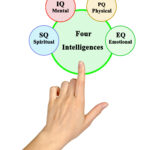
Four people look at the same landscape and describe four different worlds: Assagioli’s four psychological types trace how perceiving, feeling, thinking and intuiting each build a reality. By Roberto AssagioliOriginal title: I Quattro Tipi Fondamentali EI Loro SottotipiTranslated from Italian by Gordon Symons Editorial NoteThis is unfinished notes from an early manuscript; Assagioli later developed […]
How To Develop Your Types

A stone-breaker at the roadside can outshine a famous sculptor: higher manifestations depend not on talent but on the purity of motive behind the work By Roberto Assagioli1932Original title: I Quattro Tipi FondamentaliTranslated from Italian by Gordon Symons Editorial NoteThis is unfinished notes from an early manuscript; Assagioli later developed his sevenfold typology called The […]
The Four Psychological Types – Extroversion, Introversion, subversion and Supraversion

Turning outwards or inwards is not the whole story. Vital interest also probes the lower unconscious and reaches for spiritual experience, one like diving, the other like mountaineering. By Roberto AssagioliOriginal title: Addendum Ai Tipi PsicologiciTranslated from Italian by Gordon Symons.Assagioli Archive Florence Editorial NoteThe abstract and contextual subtitle in this online edition have been […]
Individual And Differential Psychology

No single label captures a living soul: four vital centers reveal why we think, feel, and act in a pattern that belongs to no one else By Roberto Assagioli1932Original title: Psicologia Individuale E DifferenzalieTranslated from Italian by Gordon Symons Editorial NoteThis is an extract from an early manuscript (1932), Assagioli later developed his sevenfold typology […]
