

Lectures, Conversations, and Notes by Roberto Assagioli (1933–1973)
By Roberto Assagioli
(Doc. #23894, #23895, #7533, #7599, #7569, #4856, #23896 – Assagioli Archives – Florence)
Originally delivered 1933, 1963, 1973
Translated and Edited With Notes by Jan Kuniholm
Editorial Note:
The subheadings in this online edition have been added by Kenneth Sørensen for clarity and navigational purposes. They were not part of the original archival documents and do not modify or interpret the original content.
Abstract
This collection of lectures, handwritten notes, and conversations by Roberto Assagioli explores the transformation and sublimation of psychic energies within the framework of psychosynthesis. Drawing analogies from physics, chemistry, and alchemy, Assagioli describes how instinctual, emotional, combative, and spiritual energies may be redirected, refined, interiorized, expanded, or elevated. He distinguishes between horizontal transmutation and vertical sublimation, examines applications in psychotherapy and education, and discusses religious and metaphysical dimensions of energy transformation. These texts collectively outline what Assagioli called a new science of psychodynamics.
Part I
Institute of Psychosynthesis Year VI. May 14, 1933
(Culture and Therapy)
Course of Lectures on PSYCHOSYNTHESIS – LESSON XV
Doc. #23894 – Assagioli Archives – Florence[1]
Original Title: La Trasformazione e sublimazione delle energie psichiche
Translated and Edited With Notes by Jan Kuniholm
The Problem of Excess Psychic Energies
We are dealing with the problem of excessive[2] vital and psychic energies: how to free ourselves from them and use them. We have talked about their release; today we will see how they can be transformed and sublimated so that they no longer constitute a burden, a torment, a danger, but rather a source of wealth.
Physical and Chemical Analogies
Physical energies are constantly transforming into one another, either spontaneously, following their natural laws, or through the active intervention of man. Thus, for example, heat is transformed into motion (as in a steam locomotive) or electricity (as in hydroelectric plants) and motion (as in motors).
Chemical combinations between substances produce other substances that have properties very different from those of their components, often resulting in the chemical process known as “sublimation,” which consists in the transition of a substance from a solid state to a vapor state and its subsequent crystallization, leaving waste and impurities at the bottom of the container.
Now, similar transformations and sublimations occur continuously in the psyche. An idea, changing into a desire or a feeling, triggers an impulse, and then a series of external acts. For example, the desire for wealth, accompanied by the idea of a profitable business deal, produces the impulse to take a trip, or to draw up a business plan, or to design a building, etc. Love for a woman, combined with consideration of the conditions necessary to marry her, can give rise to the impulse to pursue certain studies and the decision to accept a job.
Forms of Psychological Sublimation
Psychological sublimation also exists. Its characteristics are:
- ELEVATION — PURIFICATION — REFINEMENT
- INTERIORIZATION — SPIRITUALIZATION
- EXPANSION — “SOCIALIZATION”
- ACTIVE EXPRESSION
- Elevation can transform human love into mystical love, passionate and possessive love into generous and selfless love, and love into friendship.
- Interiorization can transform human love into mystical love; personal self-assertion into spiritual affirmation; material power into spiritual power; vanity and pride into spiritual dignity; the thirst for sensual pleasures into aspiration for intellectual and spiritual joys. St. John of the Cross said, “It is necessary that the appetite for the transitory and sensible things of this world be transported to the invisible and eternal.”
- Expansion is the passage, for example, from selfish love to love of family, then to love of country, and finally to love of humanity. A paternal and maternal love that has not found its normal expression due to the lack of children of one’s own can be poured out on the children of others, raising and educating groups of children and young people.
- Active Expression corresponds to the “crystallization” of sublimated matter. Thus, compassion is expressed in philanthropic activity; or combative tendencies are used in the fight against social evils. Artistic creation is also often a form of sublimation.
However, one must beware of pseudo-sublimations, which are a substitute, a counterfeit of the real thing, and consist of a label, an ideal veneer over impulses and activities that are not truly sublimated.
Sometimes a partial sublimation is achieved. For example, a passion or personal feeling is partly sublimated and partly remains in its raw state. Even in certain genuine mystics, a part of passion that is not well sublimated sometimes remains. In these cases, sincere intention counts, even if the sublimation is not complete. In cases of pseudo-sublimation there is hypocrisy, whether it is overt or not. To distinguish partial sublimation from pseudo-sublimation, a good touchstone is humility.
Sublimation is a natural process: therefore, it is often spontaneous, unconscious, and sometimes necessary. Not infrequently in our lives, there are impediments or prohibitions against applying some of our energy: indeed, usually, the manifestation of one of our energies implies the restraint from expressing another, since we have only one body and cannot do more than one thing at a time. However, sometimes we can have a double life: for example, an artist forced by the practical demands of life to devote several hours of the day to an undesirable occupation can nevertheless devote the remaining time to his art, especially since during his work he unconsciously elaborates artistic elements that will emerge at the moment of creation.
When we think of a loved one, we can sublimate our love by elevating the inner image of that person into an inspiring force (such as Dante’s Beatrice[3]). Even an unfulfilled love can, through the sublimation of that feeling, become the driving force behind some noble action, some noble work, such as Richard Wagner’s opera Tristan and Isolde, which germinated from his “unlived” passion for Matilde Wesendonk.
Voluntary Sublimation and Its Methods
But there is also voluntary sublimation: to facilitate what is imposed by circumstances, to better achieve one’s own psychosynthesis.
Such sublimation requires:
1. The inhibition of the tendencies to be transmuted; the renunciation of the lower for the higher.
2. An ardent aspiration towards the “High,” which corresponds to the fire placed under the crucible. Sublimation inevitably involves suffering; a sense of dryness, of painful inner turmoil. There are often alternatives: momentary results followed by relapses. However, one must not be discouraged, but persevere, for this is not a real defeat. Transmutation occurs gradually, little by little, in cycles, until complete transmutation is achieved — which can be more or less lengthy and painful depending on the varying degrees of “hardness” or plasticity of the “psychic masses,” and depending on the different inner “temperature” necessary for transmutation. Sublimation can be promoted in two ways:
Internal and External Means of Transformation
I. INTERNAL MEANS
- The use of evocative images representing the ideal of perfection that one aspires to achieve. Symbols are highly effective, but this is not yet sufficiently recognized and methodically used in inner culture. As Jung rightly says: “The psychological machine that transmutes energy is the symbol.[4]
- Repetition of words or phrases affirming what we want to achieve. This method is explained in the book: The New Mysticism (1906) by Adela Curtis, Chapter IV, “The Power of Words.”
- Meditation and Contemplation
II. EXTERNAL MEANS
- Psychic and spiritual contact with those who have achieved what we aspire to achieve. Just as there are chemical catalysts that promote combinations by their presence, so elevated people act as psychic and spiritual “catalysts.”
- Reading, especially biographies, autobiographies, and diaries.
- Art, which should be returned to its origins as a symbolic medium of spiritual forces. Bach, Beethoven, Fra Angelico, Wagner, Dante, and other great artists are always ready to offer us this help.
- Action. Active, elevated, and beneficial expression, such as writing, artistic creation, and social action, greatly help to transmute and sublimate inner energies. For some, it is actually the easiest means.
There are, therefore, various ways to achieve sublimation. Let us use them willingly, for the good they can bring us is great. Sublimation eliminates and attenuates painful conflicts; it uses energies that would otherwise remain sterile and even harmful; it promotes the implementation of PSYCHOSYNTHESIS.
Part II
PSYCHOSYNTHESIS LECTURE COURSE
Lecture X May 26, 1963
Doc. #23895 – Assagioli Archives – Florence
Original Title: La Trasformazione e sublimazione delle energie psichiche
Translated and Edited With Notes by Jan Kuniholm
Psychodynamics as a New Science
The topic I will discuss today is one of the most important, given its usefulness, indeed the urgent need for its practical application both individually and collectively; and also given its importance for the psycho-spiritual evolution of humankind. It concerns the discovery and use of psychic and spiritual energies, their transmutation and sublimation.
What man has done and is doing with regard to natural energies, to the forces of the material world, offers suggestive analogies. Until quite recently, man knew very little about how to use the powerful physical energies he was aware of, such as those of water and the sun, and was even ignorant of the existence of other, even more formidable forces, such as electricity and intra-atomic energy. Thus, he allowed most of the enormous amount of energy represented by the descent of water along a thousand rivers from the mountains to the seas to be wasted; indeed, he suffered the damage caused by periodic floods. Only gradually did he begin to channel water to irrigate the soil, and only recently has he learned to transform the power of water into electrical energy. And yet he still does not know how to exploit the heat enclosed in the depths of the earth, the underground forces that produce volcanic eruptions.
Furthermore, civilized man has lived for centuries in dwellings and covered with clothes that prevented the sun’s rays from invigorating and healing his body, and only recently has he begun to utilize, and still to a limited extent, the unlimited amount of energy that the sun radiates onto the earth. The discovery and thousand uses of electricity have given man wonderful and unexpected possibilities, and the possibilities of the intra-atomic energy that he is only now beginning to unleash and use are immensely greater.
Well, the same can be said of the biological, psychic, and spiritual energies existing in man, and even outside him. He allows his internal and superphysical energies to be dispersed, or even ignores their existence, or makes bad use of them.
Man is aware of the intense instinctive energies that urge him on, but he often does not know how to control them, and even less how to transform them and make good use of them. This is especially true of the fundamental sexual and combative energies.
There are enormous amounts of emotional and affective energies in men and women, which mostly dominate and overwhelm them, while they could turn them to beneficial purposes and creative activities. For example, the immense amount of devotion and admiration inherent in human beings, which they need to express, is currently directed mainly towards movie stars or soccer players. We are just beginning to discover, or rediscover, the power of imagination and thought when they are concentrated and directed. And we are still in the Stone Age, so to speak, with regard to the knowledge and scientific use of the highest parapsychological and spiritual energies.
Even a course of many lessons would not suffice for a reasonably adequate treatment of this subject. It is a whole new science: psychodynamics, the science of the knowledge and use of psychic energies.
Combative Energies and Their Transmutation
Today I must limit myself to mentioning only a few general principles of this science and one of its applications, because it is one of the most necessary and urgent at present: the transformation and sublimation of combative energies. It is also one of the simplest and easiest to understand, if not to implement. It is within everyone’s reach and can be applied at almost every moment of daily life, while at the same time contributing effectively to averting the current dangers of disastrous collective conflicts.
Let us return to physical analogies. Let us begin by recalling that in the fields of chemistry, physics, and biology, energies are constantly transforming into one another. This occurs both spontaneously, through the laws of nature, and as a result of active human intervention. Chemical combinations between bodies produce other bodies that have properties completely different from those of their components and often cause the release of heat and energy. Then there is the interesting chemical process called “sublimation,” which consists of the transition of a body from a solid state to a vapor state and its subsequent crystallization, leaving waste and impurities at the bottom of the container.
In the field of technology, man is increasingly exploiting the countless possibilities of transforming natural energies. To limit myself to the simplest examples, he transforms heat into motion (as in a steam locomotive) and into electricity (as in thermoelectric machines), electricity into heat (as in electric stoves and cookers) and into motion (as in motors).
Now, in humans, there are constant transfers, transformations, and sublimations of biological, psychic, and spiritual energies, which are very similar to those of physical and chemical forces. These energy processes usually take place spontaneously, regulated by corresponding laws, but precisely because of our knowledge of these laws, they can also be induced, directed, and used by appropriate methods.
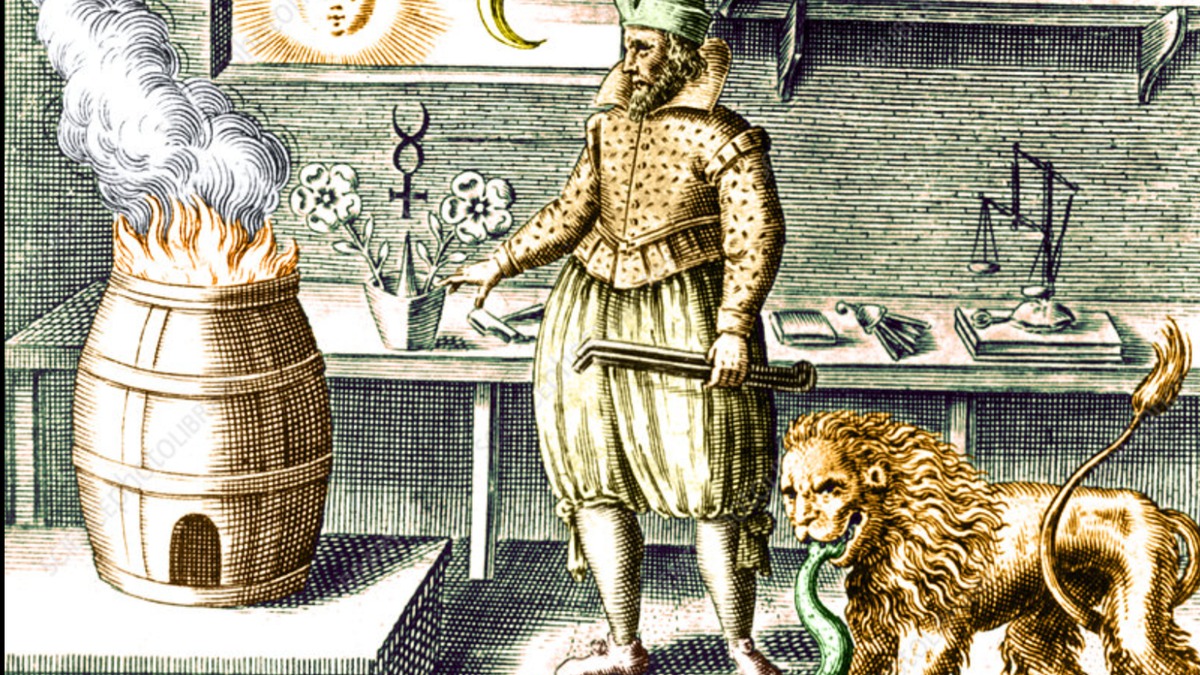
Psycho-spiritual transformations and sublimations were known in the past, especially in the East, and are part of various yoga methods of psycho-physical and spiritual development and regeneration. In the Middle Ages, there were alchemists (at least some of them) who, under the guise of seemingly chemical terminology, described processes of psychological transmutation. These were astutely interpreted by Jung and some of his students.
In modern psychology, psychic transformations have been “rediscovered” and extensively studied by psychoanalysis, especially with regard to sexual and emotional energies. Other notable contributions have been made by Janet,[5] Carpenter,[6] and Jung.[7] In Italy, we have a clear and balanced critical exposition on sublimation in a chapter of Sante De Sanctis’ book, La Conversione Religiosa [Religious Conversion].[8]
With regard to applications to the theme we have chosen, the fighting instinct, I will first quote a significant statement by the great American scholar of adolescence, Stanley Hall.[9] He says: “It is an instinct (the fighting instinct) that we cannot eradicate or suppress; the only hope we can have is to sublimate it.”
A fairly comprehensive treatment, especially with regard to educational applications, is provided in the book L’Instinct Combatif [The Combative Instinct]by the Swiss educationalist Pierre Bovet.[10] Great importance was attached to the tendency toward self-assertion by a dissident psychoanalyst, Alfred Adler,[11] who based his method of psychotherapy largely on his treatment.
Horizontal Transmutation and Substitution
Let us briefly examine the various forms of transmutation and sublimation. The first, which is only transmutation, is “horizontal” derivation or channeling. It consists of directing or using combative energies for harmless or useful purposes through physical activity in the outside world. Any muscular exercise can fulfill this function, from manual labor to any form of sport. In a biography of the former German Kaiser Wilhelm II, it is said that when, after the First World War, he lived in [exile], secluded in a castle in Holland, his favorite occupation was chopping wood. In this coarse and violent activity, he evidently discharged the anger and aggression that he could no longer vent as before.
Sport offers numerous and varied ways of using combative energy. There is mountaineering, in which man, alone or in small groups, struggles against natural difficulties and overcomes other instinctive tendencies within himself, namely laziness and fear; there are well-regulated collective competitions, such as the Olympics. Then there are all the struggles against the obstacles, forces, and dangers that nature poses to those who try to dominate and exploit it: exploration, the reclamation of jungles and unhealthy swamps, the struggle against gravity (aviation), etc. All this is obvious and requires no comment.
Another way of transmutation is imaginative satisfaction. Introverts, for whom imaginative life is more intense and seems more real than external life, are prone to this. However, this is often an incomplete satisfaction that can have drawbacks; it can even be dangerous and have the opposite effect. Consider the case of a man who has suffered an injustice, a wrong, and feels resentment toward the person responsible. But this person is stronger than he, socially or physically, and he cannot use his fighting energy against him: so he can give himself imaginative satisfaction, for example, by “treating them badly” within himself, or by writing a nasty letter in which he says everything he feels inside, without sending it.
He imagines scenes of revenge in which he humiliates the other, in which he finds himself in a superior position. Now, for rather introverted types, this is enough and is often satisfying, precisely because they live more in their inner world — external relationships are nothing more than opportunities, pretexts for their inner life. But if an extrovert does the same thing, it is dangerous because, given the driving power of images, the idea of attacking or mistreating this adversary can stimulate the impulse to external action. It is well established that many crimes have been the conclusion of a long period of imaginative preparation in the person who hated and resented the other — they began to imagine attacking the other and, through the power of imagination, this became an aggressive impulse and they acted on it. Therefore, imaginative gratification is a method to be used with great caution and self-control. However, there is no sublimation in it, no internal overcoming of hostility; it is simply, ‘faute de mieux’ — a substitute that is a lesser evil than external action.
A third way is “vicarious satisfaction” through substitution or identification. In the best cases, it produces catharsis or purification of the passions — already pointed out by Aristotle — which occurs in the spectators of dramas and tragedies. This is a convenient method because it provides release and the resulting satisfaction without the effort and dangers of action. Therefore, it is willingly practiced by the masses, as demonstrated by the growing popularity of soccer and other sports. The spectator participates emotionally, and sometimes even physically, in the struggle of “his” team, thus releasing his combative energy. This too can have adverse effects. Emotional participation can turn into violent action (throwing objects, invading the field, attacking the referee). A large category of films, novels, and violent narratives — many “thrillers,” for example — lend themselves to this substitute gratification, and this is one of the main reasons for their success. The viewer or reader identifies with the violent characters and temporarily discharges their own aggressive energies and adventurous tendencies. But here too, the effects can vary depending on the type of person; some return reconciled to the dullness of everyday life, while others, especially young people, who are generally extroverted and impulsive, are encouraged to actively imitate the violent actions depicted or described.
The fourth method is the elevation and refinement of the means of struggle. Here there may be sublimation, but not always. The expression of combativeness can occur on an emotional and mental level.
The most direct form of struggle in this field is discussion, both individual and collective in forums, assemblies, and parliaments. Indirect forms are those that take place outside the presence of the opponent; one of these is satire — as a Latin satirical poet said, “Facit indignatio versus” (indignation turns into poetry, into verse). Expressions that are not elevated but which, within certain limits, constitute useful “safety valves” are jokes, humorous newspapers, and comic magazines. (Everyone will remember the small satisfaction provided by anti-fascist jokes during the “twenty years” [of fascist rule in Italy]). Then there are certain games in which competition is strictly mental, e.g., chess.
Criticism as Misused Combative Energy
A form of non-physical combativeness that deserves a less fleeting mention due to its universal spread and consequences is criticism. It is an aspect of the combative spirit that may seem more or less harmless but which, on the contrary, has very harmful effects. It is the general tendency, I would almost say mania, to judge, blame, and condemn others. Why is it so widespread and so strong? Why do so many people, even though they are endowed with good moral qualities in other respects, devote themselves ardently, almost enthusiastically, to criticizing others and derive pleasure from doing so, which shines through their whole being, from the inflection of their voice to the animation of their gestures and the sparkle in their eyes? A psychological analysis can easily explain this; in fact, we can see that many fundamental human instincts and tendencies find great satisfaction in criticism. First, criticizing satisfies our tendency toward self-assertion; highlighting the shortcomings and weaknesses of others gives us a pleasant sense of superiority, pleasantly tickling our vanity and presumption. Secondly, it offers an outlet for our combative energies, an outlet which, while giving us all the satisfaction of an easy victory without exposing us to any danger, at least in the immediate term — since the “enemy” is absent — seems harmless, even necessary, and escapes all internal restraint and censorship, deceiving our moral conscience. Add to this that for many people, who have to endure the impositions of others without reacting, who have to suffer situations and conditions that are unpleasant for them but against which they cannot rebel, criticism is the only, or the main, way in which they can give vent to their hostility and repressed resentment: the only safety valve to reduce their internal tension. This fact also explains why criticism is even more developed in women than in men (this observation is not mine; I am merely reporting it, and “the messenger is not to blame”!). But I would add immediately that men have other, worse ways of expressing their combative tendencies and make ample use of them; therefore, they have no superiority, far from it: war is worse than criticism.
Finally, criticism, curiously enough, also satisfies, albeit partially and imperfectly, the same tendency toward communion with others. This apparent paradox should not be too surprising: it is not difficult to observe that what most easily unites people, human groups (parties, nations, etc.) is a real or presumed common enemy. No wonder, then, that people easily obtain the pleasure of harmony and agreement by speaking ill of others. Of course, in such cases, these are not true unions, but illusory and superficial associations, because they are based on separateness and not on unity. Thus, such negative bonds usually dissolve very quickly, and former allies easily become strangers and even hostile to one another. Thus, in the field of criticism, it is not uncommon for Tom and Dick to speak ill of Harry, and shortly afterwards Tom and Harry criticize Dick, which does not exclude the possibility that Dick and Harry, if they find themselves together, will in turn speak ill of Tom. This is the psychological attitude of the systematic critic, with all his ridiculous presumption, and it is characterized by a phrase that a witty English anecdote puts into the mouth of one of them: Two old Scotsmen are complacently reviewing the follies of their acquaintances, and when they have finished this lengthy review, one of them remarks by way of conclusion: “Well, my friend, it can truly be said that all men are mad except you and me — but even you have a little bit of it.”
The reasons we have mentioned serve to explain the widespread nature of criticism, but they certainly do not justify it. It is not at all true that it is harmless and that we can therefore freely indulge in it as a pleasant intellectual sport and as an outlet for our combative energies. If we realized the true effects of criticism and insinuations that are made lightly and rashly, if we could see the painful wounds, the deep bitterness, the despondency, the resentment, and the violent reactions that our expressions provoke, that are spread and often magnified and exploited by the malice of others, we would have a real sense of horror. And if we also understood how the habit of criticizing tends to sterilize us, to sour us, to blunt our most vivid and noble feelings, we would see how dearly we pay for the fleeting pleasures of criticizing.
Interiorization and Higher Sublimation
A fifth method of transmuting combative energies is “interiorization” or “subjectivation.” This is largely a form of sublimation. To some extent, this also happens, as I mentioned, in sports, where part of the combative energies are used against other tendencies and resistances of the subject, not only laziness and fear, but also impulsiveness and the desire to win, which would tend to violate the rules of the game, leading to penalties and disqualifications.
But a full and superior internalization occurs when the struggle is consciously and deliberately brought within our soul through a psychagogical action against our lower, selfish, antisocial tendencies.[12] But even in these struggles, however noble, we must be on guard against the use of wrong methods, such as violent repression, and instead use true sublimation. Self-condemnation can be harmful because it is exercised against something that is not really our true being but is formed of energies and tendencies that have their natural justification. It is a matter of transmuting, for example, selfish and possessive love into generous and beneficial love, passionate love into spiritual love, ambition into spiritual elevation, pride into dignity, criticism into objective and serene judgment and discrimination.
It is important to understand that not criticizing does not mean not seeing the shortcomings of others; it is not blind optimism or naiveté. Everyone has shortcomings, no one is perfect; and it is right to make an objective assessment of others. But it is one thing to “assess,” to recognize shortcomings calmly and even benevolently, and quite another to persist in criticizing the person as if they were entirely to blame for not being perfect. This happens especially when we have initially “put someone on a pedestal,” idealized them, and created a fictitious, ideal image that we have projected onto that person, who has no obligation to live up to our “ideal.” Naturally, sooner or later disappointment sets in, the idol with feet of clay falls and shatters, and then we criticize that person because they are not what we believed and wanted them to be. These mistakes can and must be avoided by seeing the person’s shortcomings clearly from the outset, but without criticizing them. This mistake was made — especially in the past — by many children with regard to their parents; first they idealized them, then they discovered that they were “human,” even too human, and then they turned against them. The same thing happens in romantic love; at first the object of love has all the perfections, then it is discovered that it has none, and then love turns into aversion. It is therefore necessary to consider others objectively and realistically for who they are and accept them kindly, indeed generously, with all their faults—knowing that we perhaps have even greater faults, albeit different ones.
A sixth way of transmuting and sublimating combative energies is through expansion and social utilization. Strong, courageous natures that are rich in combative energies have a vast and noble field of action here in the struggles for the common good against a culture of shame and social injustices. There is, for example, the fight against prostitution, and by this I mean against those who profit from it and against all those who cynically exploit sexuality for commercial purposes. There is a whole pseudo-art with which this is done. But if one dares to say so or, worse, tries to fight it, those concerned — and not only they — rise up in the name of the “freedom” of art! Then there are the struggles against drug traffickers, and against all forms of exploitation and individual and collective injustice in all fields. There are the struggles in favor of the numerous reforms that new living conditions make useful or necessary.
Religious Sublimation and Symbolism
A seventh way is religious sublimation. It is interesting to note how sacred texts abound with expressions of a warlike nature used as spiritual symbols. Without mentioning the Psalms, which are full of them, I will recall how frequent such expressions are in St. Paul: he speaks of “army,” “campaign,” “combat,” “comrades-in-arms,” and “prisoners.” Clement of Alexandria speaks of “phalanxes” and “generals;” thus we arrive at the concept of the “Militia of Christ” formed by all the faithful, and that of the “Church militant.”[13]
Interesting and significant are the individual cases in which we can follow the various stages of the transformation and sublimation of combative energies; among these, the most characteristic is that of St. Ignatius of Loyola.[14] Before his conversion, he was a soldier, handsome and vigorous, who cared greatly about elegance and was determined to pursue a military career. While fighting at the siege of Pampalona, he broke his leg and was unable to perform any activity for several months. To distract himself, he wanted to read and asked for Amadigi, a chivalric work full of descriptions of battles;[15] but instead of this book, he was given “The Flowers of the Saints”[16] and “The Life of Christ.” These shook him deeply and, after fervent meditation or a vision, he underwent a complete inner transformation; he renounced his dreams of worldly glory and decided to devote himself entirely to the service of God, emulating the virtues of the saints he had come to know. He consecrated his inner transformation in March 1522 with a symbolic act, significant from our perspective. He carried out a vigil of arms at Monserrat, inspired by the customs of chivalry, in which he hung his temporal weapons (sword, dagger, baldric) in the chapel, and came out clothed in “spiritual weapons” (a beggar’s habit, a sackcloth, a rope belt, and a knapsack) and from then on he was a soldier, and then a “general,” fighting for the glory of God. The very name of the order he founded, “Society of Jesus,” was taken from military life.[17]
There are also modern religious movements that have adopted military terminology. The first is the religious-philanthropic Salvation Army, which took military forms and methods to extremes in the field of ethical-religious action.[18] Another, more discreet in this sense, is the “Moral Rearmament” movement (formerly called the “Oxford Groups”), promoted by Frank Buchman, in which great emphasis is placed on inspiration and inner guidance, but which carries out intense social action, operating in teams and groups that conduct ‘campaigns’ with the general aim of “Moral Rearmament;” that is, replacing material weapons with a rearmament of consciences in the struggle for good.[19]
But with regard to this form of sublimation, we must avoid an illusion: the combative energy that claims to be dedicated to the service of ideal causes is not always truly sublimated. Sometimes it is a disguise, under which aggressive tendencies manifest themselves in subtle and refined ways, but are inspired by motives that are no less personal and divisive. All manifestations of intolerance, fanaticism, and religious persecution can be called “pseudo-sublimations” and should be considered as such.
Applications in Psychotherapy and Education
I will conclude with a few remarks on some specific applications of the methods of transmutation and sublimation of aggressive and combative tendencies. First of all, in psychotherapy. Psychoanalytic investigation of neuropsychiatric patients has shown that many of their disorders are produced by these tendencies. The ways in which this occurs are varied. In some cases (and these are frequent), the patient’s more or less conscious aggression towards others leads them to believe that it is the others who have hostile feelings towards them, who are trying to harm them with malicious acts or thoughts. This is a psychological “projection” and at the same time a self-justification; it can lead to a real persecution complex. In other cases, the impulses are condemned by the subject and repressed into the unconscious, producing a guilt complex, psychosomatic disorders, fear of not being able to control oneself, and therefore producing phobias and various neurotic defense mechanisms. Treatment consists of making the patient aware of all this and then giving them a way to “release” those aggressive energies. This happens first and foremost in the relationship with the doctor, who initially accepts being the target of those energies without reacting, but explaining to the patient what they are doing. The same can be achieved in ‘group psychotherapy’ and ‘psychodrama’ (Moreno).[20] But more can be done: the patient can be encouraged to release these energies through suitable physical activities (gymnastics or various sports are ideal for this) or to transform them and use them in the useful ways already mentioned, and in others.
The same applies to education. Here, in fact, the use of these methods has a broader, more general scope and is made necessary both by the laws of child development and by the particular conditions of modern life. In psychological development, ontogenesis repeats phylogeny; that is, just as the human embryo rapidly repeats the pre-human stages of evolution in a few months (e.g., at a given moment, gills form), so the child and then the adolescent must retrace the various stages of psychological development undergone by humanity, from its primitive level to the present. Ignorance or disregard of this “law of recapitulation” is a source of serious educational errors, as it leads to the imposition of forms of life, activity, and learning that are unsuitable for the evolutionary stage of children or students. New methods of education, based on spontaneity, activity, and autonomy, have modified and are modifying the restrictive and repressive methods that prevailed in families and schools; but there is still much to change and renew in this field. Furthermore, living conditions in cities are unfavorable. Children need to be in contact with nature — earth, plants, animals. They need to move around and make noise, and they cannot do this in modern homes. Urban planners and designers should take this into account; they are beginning to do so, but it is still insufficient.
As for school systems, they are still very backward, especially in middle schools. The effects they produce — we have the sincerity and courage to say so — are that in those schools, much of the combative energy of students is directed against teachers and curricula. In classrooms, there is a subtle or open struggle between students and teachers; students tremble at having to memorize an excessive amount of things unrelated to their vital interests; therefore, they try to do the minimum necessary to pass, and then they no longer care. A truly radical, revolutionary reform is needed. Indeed, thinking of the incalculable amounts of psychic energy thus wasted, our fighting spirit is reawakened!
In social and political life, both national and international, it is necessary for leaders to feel the tremendous responsibility they assume when they arouse and feed the already exuberant combative tendencies of men, as they often do. They present the image of a “scapegoat,” an external enemy, to prevent the combative energies of citizens from turning against them. Instead, they should channel and use them — as is possible, and as is already being done to some extent in certain cases — for constructive purposes.
In conclusion, there is a great work of renewal to be done in all fields of human life. It is a work of elimination and transformation of old mental and institutional forms, of old methods, in order to create a new civilization and a new culture, responsive to the profoundly changed psychological and external conditions of today. The field is therefore immense, and there are countless opportunities to make good use of individual and collective energies. Everyone, to some extent, can participate in this great mobilization of humanity’s dynamic energies for constructive and creative purposes. In this way, and only in this way, can we prevent those powerful forces from exploding into wars or destructive social struggles. On the contrary, this mobilization can make more certain and rapid the success of the attempt now being made by men of enlightened minds, generous hearts, and good will to unite all in a harmonious planetary organism, to create a world synthesis, to bring about a new and higher civilization that is truly human.
Part III
Notes on Psychodynamics:
Transformation of Psychic Energies
Roberto Assagioli
Translated by Jan Kuniholm
1. Doc. #7533 & 7599 – Assagioli Archives – Florence
Hand-written Notes in French, Undated
Notes on Psychodynamics: Theoretical Distinctions
Broadly speaking, we can distinguish between two types of transformation:
- Sometimes the thwarted instinct seeks outlets in acts other than those for which it was intended, but remains essentially active (e.g., the fighting instinct is channeled into sports).
- Sometimes the instinct simply “regresses” (Freud), or ‘introverts’ (Jung), or “objectifies” (Bovet) itself in the emotional and imaginative world (e.g., the fighting instinct diverting itself into epic imagination).
The distinction corresponds to that between play and dreams; moreover, because there is no lack of intermediates stages between play and dreams . . . it is not difficult to imagine that this dream-play called “art” has the same function for humanity as dreams and play have for the individual. Art is not only an outlet for unfulfilled tendencies; it is also a game, an exercise, in which these tendencies seek new objects and imagine the various possibilities for their future evolution. “Could we not propose to define high art as the dream of a direction taken by humanity in search of itself?” — Charles Baudouin, Introduction à l’analyse des rêves [Introduction to the Analysis of Dreams] (1944), pp. 52-53.
2. Doc. #7569 – Assagioli Archives – Florence
Hand-written Notes in Italian, Undated
Vertical and Qualitative Transformation
Transformation of psychic energies: Two types:
- “Vertical” transformation = elevation of plane = sublimation (e.g., transmutation of energies within the Manipura [from one of its focal points to another] or from the Manipura to the Anahata.[21]
- Qualitative transformation (after sublimation). For example, transfer of energy from the Manipura to the Sahasrara, its transmutation, and its transfer to the Vishuddha[22]: Transmutation of emotional energies into practical and creative efficiency.
2. Doc. #4856 – Assagioli Archives – Florence
Hand-written Notes in Italian, Undated
Part IV
Ideas – Positive Religions – Evolution
(Doc. #23896 – Assagioli Archive – Florence)
Conversation with friends following Dr. Assagioli’s lecture
on “The Use and Transformation of Energies” on June 23, 1973.[23]
Original Title: Idee – Religioni Positive – Evoluzione
Translated and Edited With Notes by Jan Kuniholm
Ideas, Religion, and Evolution
Q: I have a striking example that confirms what the Professor has said, of an individual who became what he became by converging his energies in one direction rather than another. When he returned after the First World War, disoriented — as were so many individuals returning from the war — living in near Via Toscanella [in Florence], he was a hoodlum, and he became more and more of a hoodlum, and he himself confessed this. Once he tried painting, because he felt some inclination within himself, and he began to paint. He often said, “If I hadn’t found painting, I’d be in jail.” He felt this great tendency towards aggression, towards a way of being — something that led him to rebel against certain social laws, which could have ended very badly. “Painting is what saved me, otherwise I would have become a criminal.”
Dr. Assagioli: Thank you for confirming this. All means of expression lend themselves to releasing excess energy; and after releasing that excess energy, I would say that, on a personal level, you open up a channel for the higher energies. But first, it is necessary to eliminate the excess energy from the lower or middle levels that block the descent of the higher energies.
Q: Could this be related to the decrease in aggression, the descent into the personal self?
Dr. Assagioli: By decreasing inner aggression, space is made, according to a religious expression, “making room for God.” We would say, “making room in the field of consciousness for the energies of the Self that descend.”
Q: May I, Professor? Has Ms. Lucia ever wondered if there was a spiritual entity above her, guiding her?
Dr. Assagioli: No, actually she was also guided by me to some extent; she left this a mystery; she did not specify the source because (and this is important) at the superconscious level, the distinctions and separations between individuals, between individuals and their environment, and what can be called the universal superconscious, are attenuated to the point of almost disappearing. Not disappearing completely, but they are attenuated. So [the energy] flows from the collective and from the mystery of some entity can converge into the individual superconscious. It is best not to specify too much, especially since “personifications” often occur; that is, the Self or the superconscious personifies itself for the purposes, I would say, of easier communication, but [that personification] is not an autonomous entity. This does not exclude the possibility that an autonomous entity may exert an influence, but it is very difficult to ascertain, for the reason I have mentioned. So it is best to be very diagnostic, in a good sense, about the true nature of the center that transmits. The important thing is the quality of the message, not so much its origin.
Q: I find a correspondence between the drawings, your personality, and your guide.
Dr. Assagioli: Thank you for the compliment. It’s nothing special of mine; on a certain level, they are universal truths that each of us grasps. Thank you for pointing that out.
Q: You said that it is better, in essence, to maintain an agnostic position regarding the higher origin. Now, at this point, I see a religious problem arising, in this sense: is a person who identifies God as the origin and source of their good inspirations and higher aspirations at an advantage or disadvantage compared to someone who maintains this rather agnostic attitude? It’s a very subtle question, in my opinion.
Dr. Assagioli: You see, we need to distinguish. In psychological and scientific terms, an agnostic attitude is appropriate, but this does not prevent anyone from having their own convictions, a faith in the nature of the force that inspires them. It can be said that in a general sense it is always God, because God is everything, and therefore in a generative sense everything comes from God; it is just that God uses numerous instruments and intermediaries. So a simple and religious spirit can very well say that it is an inspiration that comes from God, is grateful for it, and responds with love. And this is true in a general sense. As for the means God uses, the intermediaries — let’s call them the “spokespersons of God” — here things get complicated. But this goes beyond the field of psychosynthesis and psychology: it enters the field of philosophies, religions, and metaphysics. This is why I say that psychosynthesis leads to the threshold of mystery, but stops there. The important thing is not to get carried away, not to consider oneself a messenger of God, a prophet, or a universal missionary, as many do. There is a tendency to get carried away. The fact that we can all be messengers of God, in a general sense, and often are without realizing it, puts things into perspective.
Q: I wanted to ask how ideas are formed, what analogy there is between the evolution of the universe and the idea of reincarnation.
Dr. Assagioli: That’s not an easy question. You can’t say that ideas are formed. There are a lot of ideas existing at various levels of the unconscious, the superconscious: all the Platonic ideas and all the great concepts. It’s up to us to perceive them or not, to accept them or not, so you can’t say how they are formed. In a certain sense, great ideas are already formed; new ideas are a mystery, like everything that comes from the superconscious. How was Mozart’s music formed? No one knows, least of all him. He heard it and wrote it down. And so it is with ideas and intuitions; we don’t know. It is good to leave room for mystery.
Q: With regard to the idea of reincarnation, one could also refer to the collective consciousness, which in certain religions, in certain religious traditions — perhaps limited mainly to the East, but not only to the East — has expressed this idea since ancient times and repeatedly thereafter. So the idea is not so much something that comes and arises in the mind of a single individual, but is like a current that runs through all of humanity at times, and finds greater expression in some individuals.
Dr. Assagioli: You could say that too. Faced with the mystery of death and survival, the number of hypotheses is limited: there are heavens and hells in the various positive religions; there are more or less vague presences, survival in subtle bodies that are not well defined; and finally there is the hypothesis of reincarnation; that is, that a human being, after losing his body, returns to life in another body after a certain period of time. Here one can really ask oneself — even in a philosophical sense — which of these three hypotheses seems more plausible, more probable?
a) That of eternal heaven or hell, angels playing the harp or singing; no one seriously believes this anymore, and even believers try to get there as late as possible.
b) Survival in a psychic and subtle world, as supported by parapsychology with evidence of survival, but this is vague; we do not know what happens next. It is already comforting that everything does not end, but there would be no point to it. Philosophical hypotheses: therefore, not belief, not doctrine, but in my personal opinion, this is not psychosynthesis. I will give my personal opinion, as the French say, “without any authority,” just as a friendly conversation. It is worth mentioning first the many difficulties that many people have with the disparity of fates: some are reborn into a favorable environment, others into an unfavorable one, some suffer apparent injustices, others enjoy apparent favors in life. This difference in human fate is difficult to explain; it is the inscrutable will of God and there is nothing more to say: it is simply a mystery.
c) Or we can hypothesize that it is all a series of causes and effects that follow one another from life to life, considering a life as a short day in the life of the soul. And this seems, in fact, a plausible hypothesis. As a hypothesis, it seems the most plausible to me. But this is a purely personal opinion. Of course, I share it with several hundred million living human beings and billions if we consider all those who have held it in the past. So I am in good company!
Q: So, with regard to ideas about life, it would be like experiencing what already exists. That is to say: all the ideas that can arise in a mind, all the circumstances that exist in life, are related to one’s degree of evolution. Ideas, everything that a mind can imagine, already exist; human beings do nothing more than experience them at a more or less evolved level.
Dr. Assagioli: Ideas, I would say, are almost all pre-existing; how, why, or whether they are brought from another life, whether the collective unconscious works, whether there is some higher being that puts them there, is difficult to say: but it doesn’t matter. What matters is whether the idea is right or wrong, and what use we make of it; that is what counts. This reaffirms the pragmatic nature, in a good sense, of science in general, and of psychosynthesis in particular. Do not argue about hypotheses and doctrines that divide and are difficult to be certain about, when there are so many urgent humanitarian and humanistic tasks to be carried out, with knowledge of the facts and laws of psychology. This is the point I always insist on. Then there are many other forums where these issues can be discussed. I am not saying not to do so, but to do so in other intellectual forums. If we enjoy it, that’s fine, we can do worse, as the French say — but not here. The exception I have made confirms the rule.
Q: What are positive religions?
Dr. Assagioli: Positive religions are churches with their doctrines, institutions, and ceremonies. This has been clearly highlighted by Bergson on the true sources of morality and inspiration.[24] A distinction must be made between the original inspiration and enlightenment of the founder of a religion and the historical evolutionary process that took place afterwards. This evolutionary process is fully justified because the human masses need forms and well-defined teachings. There is nothing artificial about it, as it corresponds to certain needs of human nature, but of normal human nature, not transpersonal nature. The origin, that is, through the great founder of a religion, is transpersonal; but then its introduction into normal life takes place as an expression of human understanding. There is nothing to criticize, only to distinguish. And remember that there are many latent faculties and energies in the human psyche, and that they are ignored and are not given the necessary conditions to manifest themselves.
Good, thank you!
Notes:
[1] According to the notes in the Assagioli Archives, this lecture from 1933 was reprinted in Chapter 14 of the book (in Italian) Psychosynthesis, Harmony of Life in the 1971 version of Edizioni Mediterranee. It appears as Chapter 10 in the English version, Creating Harmony in Life: A Psychosynthesis Approach published in 2022, however it does not appear to be reprinted in its entirety. —Ed.
[2] The Italian word used here is “esuberanti” which can mean lively, spirited, instinctive, often excessive, or uncommon, excessive, or superabundant. It is often translated as “exuberant” but the author seems to be focusing on energy that needs to be released, and so implying the meaning of “excessive.” —Tr.
[3] Beatrice was the ideal beloved who inspired the journey recounted in Dante’s Divine Comedy. —Ed.
[4] C. G. Jung, Energetik der Seele, (1928) p.76. English translation is titled On Psychic Energy. In the Collected Works of Jung, Vol.8, it is titled “The Structure and Dynamics of the Psyche.” —Ed.
[5] Pierre Marie Felix Janet (1859-1947), pioneering French psychologist, physician, philosopher and psychotherapist. —Ed.
[6] Edward Carpenter (1844-1929) was an English poet, philosopher and anthologist. —Ed.
[7] C.G. Jung (1875-1961) was a Swiss psychiatrist who for a time joined in Freud’s psychoanalysis, but left the Freudian group and the Psychoanalytical Association, forming his own version which he called analytical psychology. He and Assagoili were colleagues at the Burgholzli Hospital in Switzerland. —Ed.
[8] Sante De Sanctis (1862-1935) was an Italian physician, considered one of the founders of Italian psychology and pediatric psychiatry.—Ed.
[9] Granville Stanley Hall (1846-1924) was a pioneering American psychologist, first President of the American Psychological Association and first President of Clark University, and author of Adolescence (2 volumes, 1907). —Ed.
[10] Pierre Bovet (1878-1965) was a Swiss psychologist and teacher. —Ed.
[11] Alfred Adler (1870-1937) was an Austrian medical doctor, psychotherapist, and founder of the school of Individual Psychology. He was a member of Freud’s circle until he and his supported formally disengaged from Freud, being the first of the “great dissenters” from Freudian psychoanalysis. —Ed.
[12] As Assagioli noted in another essay, Greek philosopher Plato was one of the first to use the term psychagogy, or “soul guidance,” coming from the roots meaning “to lead” and “the soul” — what Assagioli calls “the art of inner action.” “Psychagogy” was Assagioli’s preferred term for his work until he settled on the term “psychosynthesis” in the late 1920s. —Ed.
[13] The Militia Jesu Christi or Militia or Order of the Holy Faith of Jesus Christ was in fact a short-lived military order formed in the 13th century in France. It was connected with the Albigensian Crusade to wipe out a supposedly heretical sect. The “Church Militant” was an aspect of both Catholic and Protestant churches as taught by certain theological approaches and catechisms, consisting of Christians who struggle on Earth as “soldiers of Christ” against “sin, the devil and spirits of wickedness.” —Ed.
[14] Ignatius of Loyola (1491-1556) was a Basque Spaniard who became a priest and theologian, founder of the Society of Jesus (Jesuits). —Ed.
[15] An epic poem written in Italian by Bernado Tasso, first piblished in 1560. —Ed.
[16] The Flores Ecclesia is a devotional calendar that associates saints with specific flowers and highlights their symbolic or spiritual connections and meanings. —Ed.
[17] The name of the Jesuit order in Latin, Societas Jesu, is led by a “superior general,” was reflected in their self-reference as the “Companions” or “Company” of Jesus, reflects the idea of a military company. The Spanish word for “company” would have been translated into Latin as Societas. —Ed.
[18] The Salvation Army is a Protestant Christian church and international charitable organization headquartered in London. It was founded in 1865 in London by former Methodist preacher William Booth, who became its first General and introduced military structure to the organization, which is now one of the largest non-government provider of social services in the world. Its members are required to subscribe to a “Soldier’s Covenant.” The “extremes” referred top by the author are the organization’s thoroughgoing military structure, language and internal practices, which include military-type uniforms and salutes. —Ed.
[19] The Moral Rearmament movement was headed by American minister Frank Buchman until his death in 1961. In 2001 the movement was renamed “Initiatives of Change.—Ed.
[20] Jacob Levy Moreno (1889-1974) was a Romanian-American psychiatrist, psychosociologist, and educator or founded the practice of psychodrama and was a pioneer of group psychotherapy. —Ed.
[21] “Manipura” is the third or solar plexus chakra, and “Anahata” is the fourth or heart chakra in the yogic system of energies. —Ed.
[22] “Sahasrara” is the seventh or crown chakra, and “Vishuddha” is the fifth or throat chakra in the yogic system of energies.
[23] I have not been able to locate the transcript of this original lecture, so the personal references in it are unknown. —Ed.
[24] There was a misprint in the original manuscript which reads “Berenson.” This is clearly a reference to The Two Sources of Morality and Religion by French philosopher Henri Bergson (1859-1941), whose work was frequently cited by Assagioli. —Ed.
