

Hermann Keyserling, Master of Life: how a divided, untamed nature became a living psychosynthesis and founded the School of Wisdom
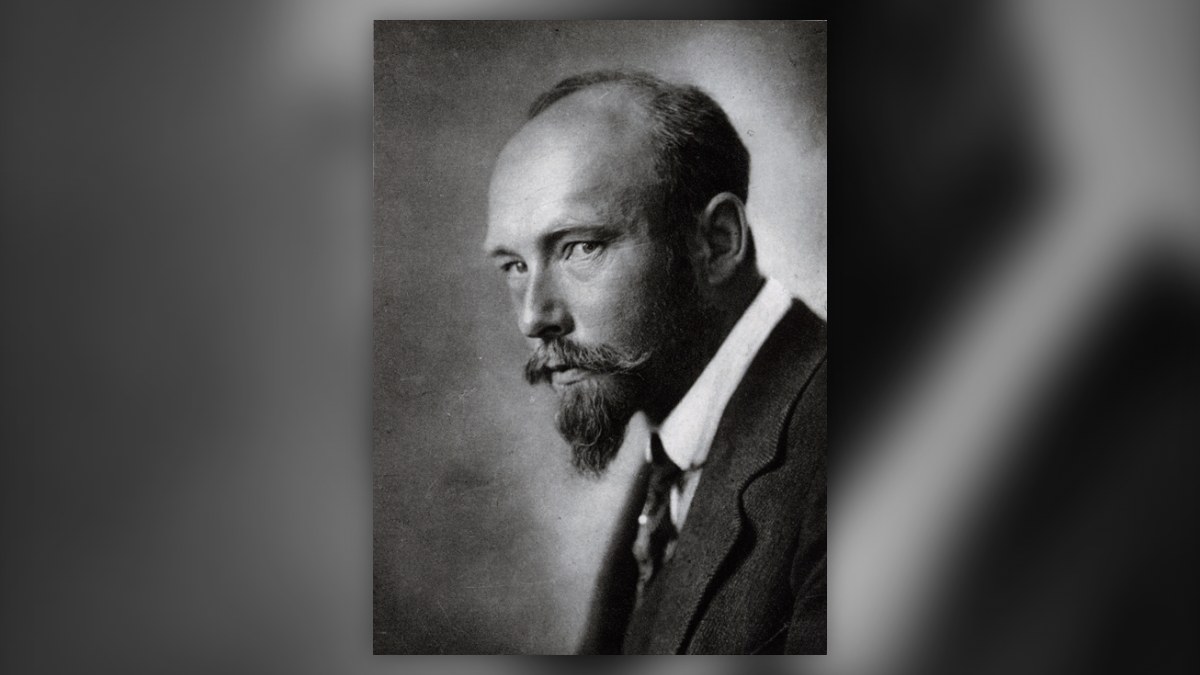
By Roberto Assagioli
Source: Ultra, no. 5–6 (1928), pp. 20–28 (Italian original: Archivio Assagioli, Florence, Doc. #23606); English typescript of 1971, Doc. #21897
Re-translated and edited with notes by Jan Kuniholm [1]
Editorial Note
The abstract and contextual subtitle in this online edition have been added by the editor, Kenneth Sørensen, to support readability, navigation, and archival consistency. The original wording has not been altered, apart from the correction of a few obvious typing errors. This article, originally published in 1928, reflects perspectives of its time, including the attribution of character traits to hereditary lineages (“German, Russian and even Tartar and Mongol”) and the description of sensitivity and receptivity as “feminine.” Contemporary psychosynthesis and related fields have continued to develop and refine these framings.
Abstract
Hermann Keyserling (1880–1946) is presented by Roberto Assagioli, in this portrait from 1928, as a “Master of Life”: not because he founded a new philosophical system, but because of the example he gave of a divided and conflict-ridden nature brought step by step into a conscious psychosynthesis. Drawing on Keyserling’s autobiographical sketch, Assagioli traces the stages of that inner formation: the early repression of his instinctive and active side, the discipline of form learned in Paris, critical philosophy, the management of the family estates in Estonia, the journey round the world that produced The Travel Diary of a Philosopher, and a year of introspective self-analysis that released the energies he had repressed. The loss of his fortune in the Russian revolution turned him toward public service and the founding of the School of Wisdom at Darmstadt. Assagioli closes with Keyserling’s two duties: to live for humanity rather than for oneself, and to work unceasingly at one’s own perfection.
Hermann Keyserling was one of the most original and significant figures to appear in the world of culture in the 20th century.[2] It is not easy to characterize him, for his complex personality did not fit into any ordinary categories. He was at once an original thinker, an artist in language, and a vigorous man of action. But the designation which suits him best, and which he certainly found acceptable, is “Master of Life.” He truly deserves this title of spiritual nobility, although not in the same sense or way in which it can be attributed to exalted Masters of humanity, such as Jesus, Buddha or Lao-Tzu. But a master he was, though with all his humanity he was not devoid of flaws and excesses; indeed with all due respect, he was all the more admirable precisely because of these imperfections. In fact, he may be termed a Master of Life primarily by virtue of the example he offers us of a complex and uneven nature, full of conflicts between disparate elements — some of them violent and almost savage — which he was able gradually to take in hand and consciously utilize, by making the very inner tensions aroused by their opposite polarities fruitful. The story of the process of his inner formation — a true psychosynthesis — is both highly instructive and encouraging to those who find themselves facing (as we all do to some extent) analogous problems during the arduous task of taking possession of oneself.
Hermann Keyserling was thus a Master of Life because in his writings he does not advance a new intellectualistic and abstract system of philosophy, but aims rather at helping us adopt the right attitude towards ideas, institutions, events, and persons by eliminating prejudices, limitations and illusions. He seeks to lead us to consider everything from a high, comprehensive and truly spiritual perspective, revealing its profound meaning and at the same time urging us to participate fully in life, to accept our specific tasks, whatever they may be, and to give of the best that is in us in performing them. This he does by showing us their dignity and revealing how each one of them can serve as a medium for expressing and manifesting the Spirit.
He was, finally, a Master of Life in a more immediate, precise and personal way by virtue of the School of Wisdom he founded at Darmstadt, Germany. This was an institution that, as we shall see, was most original in conception — indeed, unique of its kind — which has since given proof of corresponding closely to the aims of its inspired founder.[3]
Hermann Keyserling, a descendant of an aristocratic Baltic family,[4] combined in himself elements of a wide variety of lineages: German, Russian and even Tartar and Mongol. This mixture of disparate hereditary influences is reflected in the complexity of his psychic constitution, in which two groups of characteristics can be clearly distinguished, forming, one might say, two opposite natures: the one delicate, sensitive, femininely receptive, malleable, affectionate, intuitive and understanding; the other, violent, impetuous, exuberant, endowed with primitive instincts, full of vitality and animated by dominating and conquering tendencies. It is easy to understand what an arduous business it was to blend elements so diverse and conflicting into a fruitful unity. It is hardly surprising that only after negotiating a series of such alternations of temperament, and as a result of complex, strenuous work on himself, did Keyserling succeed in accomplishing his personal psychosynthesis.
While still a boy, a vague sense of inner disharmony produced a state of dissatisfaction and uncertainty in him, and there was a feeling of inferiority in his relations with others. He tried to escape from this painful condition by living in contact with nature and the animals. At fifteen he started to attend school, where the roughness and bullying of his school fellows prompted him to give free rein to the violent and instinctive sides of his nature, and thus show himself their equal. This produced such upheaval in him that the sensitive and solitary boy turned into one of the most materialistic and truculent students at the University of Dorpat.[5] This state of affairs culminated in a duel that left him physically weak, the shock of which precipitated a radical change: the intellectual element in him took charge and he immersed himself in the study of the natural sciences, particularly geology.
But a few years of this activity brought on a period of growing dissatisfaction, uncertainty and search. Science, the pursuit of knowledge and abstract university philosophy failed to satisfy him, but he still did not know what the solution of the crisis was. This emerged thanks to the strong influence exerted on him by the writings, and still more by the personality, of Houston Stewart Chamberlain, author of the powerful and controversial work, The Foundations Of The Nineteenth Century. Friendship with Chamberlain brought a new side of Keyserling to the surface: his artistic temperament and the feminine aspects of his nature, such as capacity for emotion, delicacy and impressionability.[6] He fully and joyfully embraced this facet of his personality, valued it highly and desired to give it full expression. He especially aspired to understand and perceive by intuition. He felt within a powerful urge towards inner perfection. Every feeling of inferiority and uncertainty disappeared; he became sure of himself, even overly proud.
The natural consequences of this new attitude led to the repression of all the instinctive and active elements in the subconscious, and these took their revenge by causing him nervous disturbances and frequent periods of exhaustion. Despite this he succeeded for years in living an almost impersonal life, by nullifying himself as far as possible and purposely opening himself to the most diverse influences in order to savor everything and understand everything. It proved a difficult period, almost ascetic in a sense, as he recounts in an interesting autobiographical sketch, which is summarized here. [7]
A period spent in Paris in 1903 was important for his development. In the refined atmosphere of the Parisian intellectual salons he became aware that he was a barbarian. He desired to become civilized, and in this he succeeded. He determined to acquire a sense of form, which he lacked, and to this end he devoted himself particularly to a passionate study of the works and letters of Flaubert, to the extent that from then on he felt himself to be more Latin than Germanic.
In 1904, reaction to powerful emotional shock prompted him to write a philosophical work, Das Gefüge der Welt.[8] It emerged spontaneously from his subconscious, “like a musical improvisation at the piano.” To his surprise he found himself cultivating critical philosophy and passed from “simple” to “critical” understanding in Kant’s sense.[9] He devoted himself to this new approach with enthusiasm and wrote other works, in spite of the difficulty in concentrating resulting from nervous weakness, a difficulty he overcame by means of yoga exercises.
1908 saw a fresh change in his life. He took over the administration of the vast family estates at Rayküll[10] in Estonia,[11] and applied himself to forestry, cattle-breeding and land-drainage schemes, in all of which he soon made up for his initial inexperience, becoming an innovator and introducing various improvements in methods. For the first time in many years he did not feel himself to be a bird of passage on the earth, by anchoring himself in a definite place and becoming a part of its natural and social order. This, he writes, gave what he was doing a new context and liberated positive, active energies whose existence within himself he had forgotten.
But not even this new kind of life could satisfy him for long. The practical and external activity began to be a burden to the intellectual, the thinker. Furthermore, he had an increasingly clear sense that all he had done was not what he felt himself destined for; that it had been a period of preparation. Critical philosophy had been a stage, but it now no longer interested him. He was thus experiencing a growing sense of emptiness, along with the fear that the social order he represented there — the feudal tradition whereby the landowner existed for his properties and not vice versa — was dominating him and absorbing his individual being.
The solution of this crisis struck him like a flash of lightning in 1911, when he was about 30 years old. He suddenly realized then that he had made an admirable, flexible and obedient instrument from his intellectual and psychic organism. But now it was a question of starting to use it seriously, to live and be himself, to discover and manifest his spirit in depth. But how to do it? He was acutely aware that such an inner rebirth could be brought about only by a new creation, given his particular constitution — by a work of thought. First he had to express his true self, his true being, and cause it to emerge, by making himself fully aware of it. After that he would master it and live it personally.
He prepared himself for this work in an original way: with a voyage round the world. To fully understand the effects this had on him, and the nature of the work which resulted from it, one must clearly grasp the spirit, the special aptitude, with which he undertook and accomplished it. He did not do it in order to “learn” in the ordinary sense, or because he felt particularly drawn to one or other of the civilizations with which he would come into contact. Neither was this done because he was waiting for some vital revelation from “outside” himself. Rather, he proceeded as “one reviews the materials of a novel that has already been conceived; or the same as one who undergoes a treatment whose effects are known in advance.”[12]
He wished to experience vitally, from the standpoint of one who is deeply rooted in the Self, in the Spirit. Such a person essentially only revolves on his own inner axis as he travels round the world. This happens because he comprehends the inner significance and the legitimacy of all modes of expression, all forms of thought, all “languages” in which mind and spirit manifest. He perceives how each is suited to particular circumstances, to special physical, historical, racial, and other environments and conditions. Whoever undergoes such an inner experience achieves a wide human synthesis, and thus reaches a newer and higher unity of his being, and accomplishes a wider psychosynthesis within himself.
This is precisely what happened to Keyserling, and the means whereby he became fully aware of it and acknowledged this achievement, and at the same time communicated it to others, was the writing of his famous Travel Diary of A Philosopher.[13] In this brilliant work he admirably portrayed the spirit and essential character of the various civilizations with which he gradually identified, from the Indian to the Chinese, from the Japanese to the American. He simultaneously described himself during the process of his formation and gave artistic expression to his inner birth. From this process came the sense of joy he experienced in writing the book, and it was also the reason (as he himself rightly observed) for the surprising success it achieved, the profound impression it made, and the beneficent influence it has had on so many readers.
In what did Keyserling’s new formation, this new achievement, consist? Above all, in his attainment of real universality, in the realization of such an impersonality and detachment, and such lofty and comprehensive a wisdom as to be able to appreciate and intimately penetrate every philosophic conception, every kind of religious life, every artistic creation, and every form of moral, social and political life.
Furthermore, he was able to discern the justification and particular value of each conception with complete impartiality and proper perspective. At the same time he perceived the limitations and imperfections that are inevitable in any specific concrete form that attempts to express the Spirit. This is without doubt a great and noble achievement, which bestows a precious inner freedom. It eliminates a wealth of prejudice, lack of understanding, fanatical intoxication and the foolish disparagements which constitute major sources of the sterile struggles, the bitter mean-spirited conflicts in which men tear each other to pieces materially and morally.
After a while however, Keyserling became aware that not even this new achievement could represent a stable position or a permanent equilibrium for him, or a real and complete psychosynthesis of his being. The only logical continuation of that path would have been the complete abandonment of the world and a withdrawal into solitude to lead an ascetic and mystical life. He had, in fact, given serious thought to doing so (prompted in part by the disastrous impression made on him by the World War, for he felt its horror and senselessness from the outset), to the extent that he took some steps in the direction of retiring to a Korean monastery. But a feeling of dissatisfaction, and the pressure of personal factors that demanded to be lived and acted upon, led him to understand that such a life was not for him. He convinced himself that all his vital elements had to find an appropriate outlet, and that his task was to integrate them in the fullness of his being. He understood that the “birth” produced by his voyage round the world was a partial one: the birth of the sage who comprehends and evaluates everything. Now the birth of the complete man had to take place.
When he had clearly realized this, he resolutely set himself to bring about the fourth radical change in his life, consciously and actively. He began at the deepest level. For almost a year he employed a state of introspective meditation to recall his entire past by sincere and courageous analysis. He recognized and confessed to himself every error made, every grief suffered, and every impurity of thought, seeking to throw the light of knowledge upon every element that had been repressed in the subconscious. He then intentionally sought to create every possible connection between his spiritual Self and the empirical personality which had to express it. He did what was necessary to enable himself to practically manifest all human elements. This encouragement drew a prompt response from the vital energies which had been repressed in him for so many years. An almost violent irruption of the subconscious followed, with its passions, attachments and impulses to action and self-assertion. It was, he says, a real reveil du lion [awakening of the lion]: the youth he had never lived rose to the surface.
As frequently happens, circumstances came to meet him in a strange way. No sooner had he resolved to immerse himself in the world process than he was caught in its machinery to a greater extent than he had desired. The man who until then had lived the social life of a great gentleman had to confront the bitter and painful realities of practical life: the Russian revolution and the subsequent social reforms in Estonia stripped him of the great possessions which constituted his fortune. This was a serious blow for one who, although feeling himself spiritually a citizen of the world, was tenaciously attached to his native earth and family traditions. For while the conscious part of him had wanted to dissolve every tie, his subconscious had remained bound to his native land in an almost childlike dependence. Moreover, he now had to think about earning a living, the more so now that his new attitude to life had led him to start a family.[14]
No less than previous more pleasant experiences, these painful occurrences served a salutary purpose. The struggle, the sufferings, the spur of need proved powerful stimuli to his productivity as a writer and to his activities as a speaker. Even more, they served to make him aware of his own mission in the world. He, the aristocrat, the lover of solitude who felt no need of others, the sensitive who sought refuge from human contacts that often had disappointed and wounded him, felt the inner call, the clear duty to put his whole personality at the service of others.
Thus, overcoming all personal resistance, he renounced all right to live for himself and resolutely began his public mission. He wanted to become — and succeeded in becoming — a man of action, a doer. He was aware that the problems which had tormented him were the problems with which people generally struggled. Recognizing that the achievements he had attained, the solutions he had reached, were those which people were vaguely but anxiously looking for, he felt himself in the position to say a vital word to the new generations, and to act as guide and master of life for them. This task he set himself, openly declaring his position with a frankness that may seem presumptuous and which was in fact so regarded and criticized, although it was not lacking in a simplicity that was attractive. Having accepted his public function, he performed it with, to use his own words, the same naturalness with which the postman delivers the letters.
External circumstances corresponding to his changed inner attitude again came to meet him, this time in a singularly favorable way. He was first presented with the possibility of being chosen to hold a university chair. But this idea he dismissed at once, observing wittily that the university was five hundred years old while he was but forty, so that it would prove too strong for someone who wanted to express his own way of life. Instead, he was offered an unusual and truly providential association in the same city: with Otto Reichl, an enterprising publisher who promoted philosophical studies, with Grand Duke Ernst Ludwig von Hesse, an enlightened and generous patron of the arts; and with the Grand Duke’s understanding and practically minded adviser, Count Kuno von Hardenberg. This association paved the way to the founding of the School of Wisdom.
Despite the complete liberty Keyserling had in forming and directing the School’s activities in accordance with his ideas, this obligation at first aroused strong rebellion in the part of him which could not tolerate any constraints. He had to force himself against his personal inclinations to develop his oratorical skills, which until then had remained dormant. But it was precisely this inner tension, this continual necessity of keeping himself in check, of controlling and overcoming himself, that was a powerful stimulus for his creative faculties. He recognized this and, after two years of theoretical and practical study of psychoanalysis, he had acquired a much more exact understanding of the play of psychological forces within him, and had eliminated what was excessive and unharmonious in his inner state. This permitted him to fully accept that tension, by regarding it as a valuable spring, a constant incentive to create a higher vital and spiritual rhythm. [15] This tension certainly implies trouble and suffering; but he never avoided the pain, since he recognized its inevitability in life and very soon understood its important function. “In the most acute pain,” he says, “my first question has always been: ‘What spiritual purpose can it serve?’” [16]
He was able to do this because he had freed himself from the illusion that urges men to seek lasting satisfaction and personal happiness on this earth. He had consciously accepted the highest categorical imperative ever presented to man — not that of Kant,[17] who pointed to the attainment of human virtue and a static perfection — but that advanced by the Christ and the Buddha, which encourages man to transcend his personal humanity by becoming a new being.
Whoever espouses this imperative has two principal tasks to fulfill: first of all, that of living no longer for himself but for humanity, recognizing that it and not the isolated individual constitutes reality. He must feel his own person, not as being something independent, but, to use Keyserling’s expression, as being “an organ of an Impersonal.” Secondly, the highest duty, closely associated with the first one, is to work without ceasing at one’s own perfection, since, Keyserling says, we can be useful to others only to the degree in which we perfect ourselves. Therefore the worst sin we can commit is spiritual laziness. [18]
With this lofty warning Keyserling closes his autobiographical text. But we feel that he had the right to give it, because, as he repeatedly declares, even though he remains greatly below his ideal, his whole life testifies to his doing everything in his power to live up to it, without sparing his humanity.
Let us hope that many are encouraged by his example to commit all the elements of their personality, even the lower ones, to the service of the Spirit, to arouse an intense longing to surpass themselves daily, to exude a similar apostolic fervor. Such individuals would act as yeast to transform our tottering civilization.
Editor’s Note
The 1928 edition of Ultra suggested that this essay would be continued in the next issue, but no sequel appeared. Assagioli was 40 and Keyserling was 48 when this article appeared. They corresponded for some years after it was published and met personally about ten years later. In the intervening years both Italy and Germany became engulfed in fascism and dictatorship that led toward war, and both remained in their respective countries and survived the war that erupted in 1939. Keyserling was said to believe that Assagioli was one of the few people who really understood his work, and Assagioli often drew on Keyserling’s ideas in his writings and lectures, saying that Keyserling was “the greatest psychologist without being a professional psychologist.”
Except America Set Free, all of Keyserling’s books were originally written in either German or French, and several were translated into English with the author’s approval or collaboration. Many of his works are available at https://archive.org/. Many of his works are available from used booksellers in Europe and the United States. Several of his works are available in classic reprints.
Hermann Keyserling’s works in English include:
- The Travel Diary of A Philosopher (two volumes)
- Creative Understanding
- Europe
- America Set Free
- Problems of Personal Life
- The World in the Making
- The Recovery of Truth
- South American Meditations on Hell and Heaven in the Soul of Man
- The Art of Life
- The Book of Marriage (editor and contributor)
- Immortality
- From Suffering to Fulfillment
[1] The Archive Doc. #21897 is a typed manuscript in English dated Dec. 1, 1971, and labeled “Draft.” This version was presumably prepared by the author, or by his direction. It contains certain defects. The original version of this article was written in Italian and published in the magazine Ultra in 1928. The editor has consulted this original version in preparing this document, and what follows is a hybrid of the 1971 manuscript and my original translation from the 1928 Italian version. —Ed.
[2] Hermann Keyserling (1880-1946, originally Graf or Count Keyserling), was the prolific author of over 15 books, mostly in German but others in French and English, and many of his books were translated into several languages and were widely read and influential in Europe and the United States before World War II. He is cited by Assagioli far more than any other person in the Assagioli Archives, and the author continued to value Keyserling’s thought all his life.—Ed.
[3] The author does not elaborate on this statement, and perhaps it was his intention to do so in a sequel to this article, which never appeared. The unique aspect of the School of Wisdom, according to Keyserling himself, is that it did not advance any particular point of view, doctrine or line of thought. Rather, it invited the participation of differing, even opposing, points of view. Its objective was to develop a “polyphonic style of thought,” treating ideas like music, and providing the opportunity for people to develop their minds. Attendees were encouraged to develop their own points of view, to think in universal or planetary terms. The School still exists: see https://schoolofwisdom.com/. —Ed.
[4] The Keyserling family name was first formally recorded in 15th century Westphalia in Germany, and Keyserling’s ancestor Hermann was granted estates in what is now Latvia in 1492. Hermann Keyserling was descended from a branch of the family that became established at an estate in what is now Estonia. The Keyserling manor still exists. —Ed.
[5] The University of Dorpat was the second of twelve imperial universities of the Russian Empire at the time of Keyserling’s youth. It had been founded in 1632 by the King of Sweden, which then ruled Estonia, and is now the University of Tartu in Estonia. —Ed.
[6] Chamberlain (1855-1927) was born into the British aristocracy, but became a Germanophile, eventually taking German citizenship. Keyserling met him in Vienna, probably about 1902. Chamberlain seems to have influenced Keyserling in adopting an intuitive philosophic spirit, and introduced him to elite cultural and intellectual circles across Europe. Under Chamberlain’s influence, Keyserling took a doctorate in philosophy rather than in botany. The thought of the two men diverged radically thereafter. —Ed.
[7] “Von der Produktivität des Unzulänglichen,” [“On the Productivity of the Inadequate”] published as introduction to Menschen als Sinnbilder [People as Symbols](Darmstadt, Reichl, 1926.) In this book, Keyserling asserted that precisely because of human imperfection and limitations that we are forced to become creatively active. A French translation of this book, Figures Symboliques, was published in Paris, also in 1926. —Author’s Note
[8] [English: The Structure of the World: An Attempt at a Critical Philosophy] published in German by Munich, F. Bruckmann, 1926. —Ed.
[9] In Kantian philosophy, “critical” is used to refer to the examination of human reason’s own limits before making claims about the world. —Ed.
[10] Also known as Rayküla or Raikküla. —Ed.
[11] The estate was originally 5,000-6,000 acres, with a classical-style manor, fields, forests, and an English-style park. The manor and outbuildings still exist. It is now a museum. —Ed.
[12] Menschen als Sinnbilder, p. 51. —Author’s note.
[13] Das Reisetagebuch eines Philosophen, Darmstadt, Reichl, 1919. The Travel Diary of a Philosopher was written in German between 1912 and 1918 and published in English translation in 1925 in two volumes by Harcourt Brace in the USA and Jonathan Cape in the UK. The English edition was reprinted several times throughout the 1920s. —Ed.
[14] In 1919 he married Countess Maria Goedela von Bismarck-Schönhausen, granddaughter of the late German Chancellor Otto von Bismarck. The two families had been socially connected for several generations. They had two sons, born in 1920 and 1922. —Ed.
[15] He illustrated and emphasized the value of tension in life in his lecture “Tension and Rhythm,” first published in Leuchter (year-book of the School of Wisdom) in 1923 and subsequently in the book Wiedergeburt [Rebirth] (Darmstadt, Reichl, 1927). —Author’s note.
[16] Menschen als Sinnbilder, p. 74. —Author’s note.
[17] Philosopher Immanuel Kant (1724-1804) enunciated a categorical imperative as the supreme principle of morality: according to it, one should act only according to a rule that one would want to become a universal law, always treating people as ends in themselves and never as means to achieve one’s own goals. —Ed.
[18] It is significant that the same thought has been expressed as well by a noble, religious soul, Elisabeth Leseur: “Every soul that raises itself lifts the world.” —Author’s Note.
