

The loveliest things in creation are also the most binding: aesthetic consciousness reveals how to climb from material enchantment toward essential splendour beyond every form.
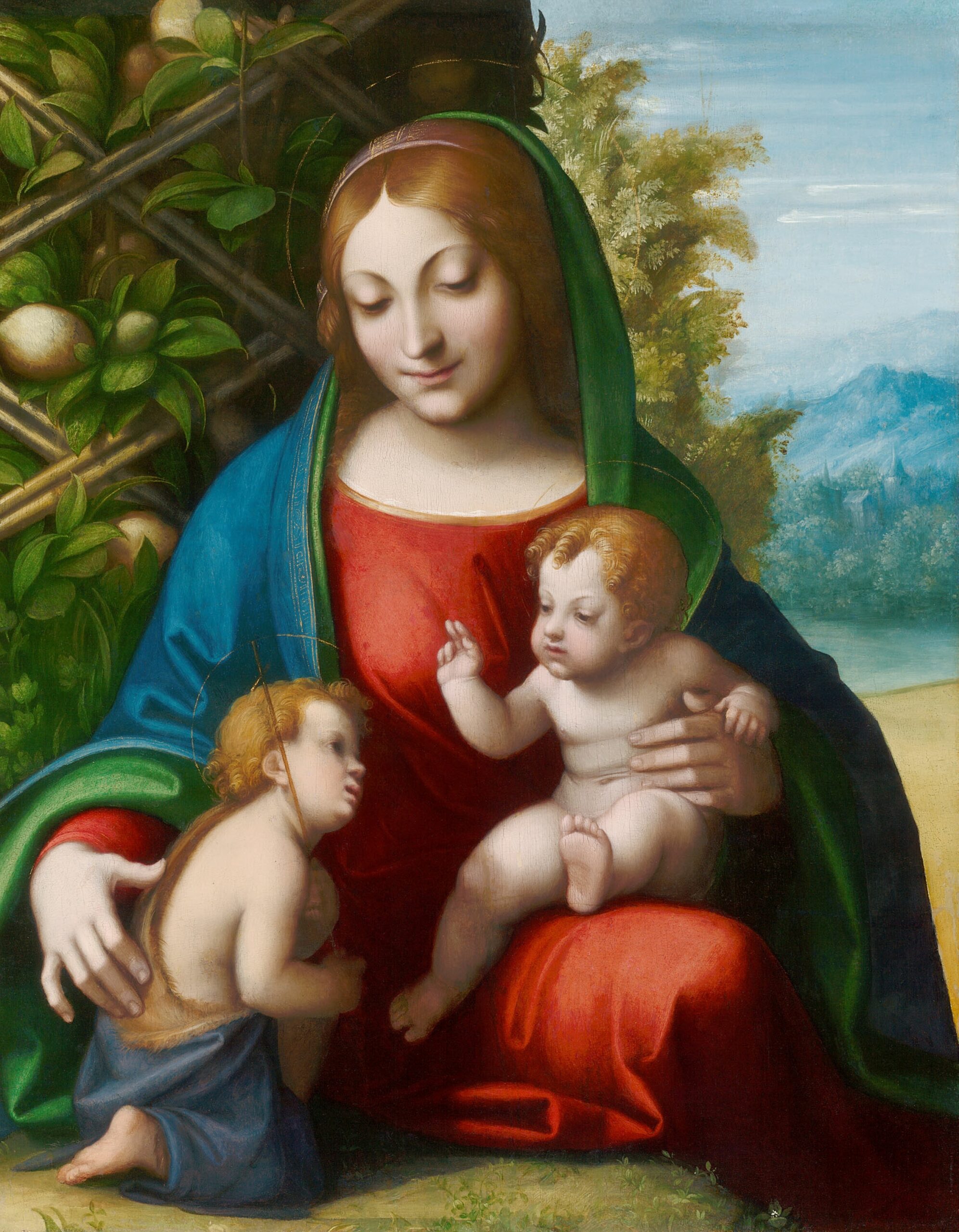
By Roberto Assagioli.
Doc. #23480, #14471, #13598, #17121 – Assagioli Archives, Florence
Unedited shorthand notes, typed notes, and lectures, 1932–undated
Original title: La Bellezza
Translated and edited with notes by Jan Kuniholm
Editorial Note
This article brings together several texts by Roberto Assagioli on the theme of Beauty, written at different times and in different formats. The abstract, contextual subtitle, and cross-section headings, in this online edition have been added by the editor, Kenneth Sørensen, to support readability, navigation, and archival consistency. The original wording has not been altered. The translation, footnotes, and scholarly editorial commentary are by Jan Kuniholm, who has contributed contextual annotations throughout.
Abstract
Drawing on lectures and archival notes, Assagioli explores beauty as a spiritual ray that descends into human consciousness, at once the most accessible and most dangerous attribute of the divine. He traces two responses to this paradox: the ascetic path of rigid negation and the aesthetic way of extension and elevation, following Plato’s ascending scale from sensory beauty through moral beauty and the sublime to essential Beauty beyond all forms. Nature and art serve as gateways to aesthetic consciousness, yet aestheticism remains a pitfall when contemplation stalls at form. The essay integrates Kant’s analysis of the sublime, Otto’s concept of the numinous, and Maeterlinck’s vision of inner beauty into a unified psychosynthetic account.
Part I
Beauty as a Spiritual Element Linking Personality and Spirit
For any new listeners, I would like to quickly mention that in this course we are dealing with spiritual elements that descend like rays of sunlight into the human personality, into our personal consciousness, forming the link between our ordinary human personality and the spiritual Self, the spiritual reality. They are like rays that descend and color us, attenuating in various ways according to the permeability and transparency of our personal consciousness.
We first discussed the moral sense as one of the aspects in which spiritual reality and human personal consciousness reveal themselves. Then we discussed mental, rational, and intuitive knowledge as the means of contact between personal consciousness and spiritual reality in human beings.
Today we will talk about a third, higher element that descends from above to illuminate, enliven, and enrich our human life. It is the sense of Beauty.
Beauty as an Attribute of the Divine and of Creation
To fully understand the nature and power of Beauty, we must remember the spiritual concept we mentioned at the beginning of this discussion, according to which everything that exists externally, concretely, individually, is a manifestation, effect, and reflection of a higher, transcendent spiritual reality. This is the great principle of Involution or Emanation. From a fundamental, primal, absolute reality, a series of levels of life — intellect, feeling, and material life, down to inorganic matter — have gradually differentiated. Therefore, every duality or attribute of the external world, of matter, of countless creatures, is only a more or less pale and veiled reflection of a quality or attribute of spiritual Reality, of the Divine. This is particularly true of the quality of Beauty.
Beauty has been recognized and proclaimed by the highest thinkers, the greatest mystics, and the supreme artists of all time as the essential attribute of the Supreme, of the Divine. In the West, this has been reaffirmed in particular by Plato [1] and Plotinus [2] , and in the Christian sphere by the unknown mystic of the 5th or 6th century, whose works were attributed to Dionysius the Areopagite [3] . He said, “The Infinite is called Beauty,” and defined God as “He who is essentially Beautiful.”
Therefore, in everything that has been created there must be some vestige, some trace of this essential attribute of the Creative Principle. In fact, according to Pseudo-Dionysius the Areopagite, nothing that exists is completely devoid of some beauty. Matter itself, deriving its existence from the essentially Beautiful, preserves in the order of its parts some vestige of intelligible Beauty.
The Paradox of Beauty: Revelation and Illusion
But if we now turn to study the effects of the perception of Beauty as they manifest themselves in humanity in general, we find ourselves faced with a kind of paradox, an apparent contradiction. On the one hand, it can be said that among the attributes of the divine, that of Beauty is the most easily recognizable, because it is the one that manifested itself most anciently, that has become most objectified, that has been imprinted in the most concrete and material forms, and that which most directly strikes the senses and the imagination. On the other hand, it is the one that proves most dangerous. It is the one that more than any other binds man to matter, to form; the one that more than any other arouses desires for sensory pleasure (in the broadest sense, meaning all the senses): a sense of selfish, divisive possession. This more than anything else blinds him, deludes him, and envelops him in the iridescent veils of maya, of the Great Illusion, and thus distances him and keeps him separated from God, from the profound Reality of Truth.
How can this paradox be explained? It is not difficult. Precisely because beauty is the divine quality that has become most concrete, most tangible, most manifest in matter, it is the one that one most easily abuses, without discerning its high origin, the one that he no longer connects with its source, but which he is inclined to regard as a profound quality of matter itself and of its concrete forms.
But there is another reason. It is precisely the intensity of the power and fascination that Beauty exerts that arouses in man, who is not yet purified and not yet master of himself, [creating] overwhelming desires, unbridled passions, and a thirst for exclusive possession.
Two Paths in Relation to Beauty: Asceticism and the Aesthetic Way
How can this antinomy be resolved? How can we ensure that the nectar of Beauty does not become a deadly poison for man, but remains or returns to being what it should be and what it is in essence — namely the water of life, the elixir of immortality? There are two ways:
The first is that of negation of the recognition of maya and illusion: the path of rigid detachment, of the suppression of all sensory activity. It is the path that is somewhat erroneously called ascetic, or rather asceticism. The word “asceticism” has taken on an almost derogatory meaning, precisely because of certain excesses committed by so-called ascetics, but etymologically it has a better and broader meaning. In Greek it simply means exercise, discipline, training, but it has taken on the meaning of harsh imposition and deprivation. This is the way of certain more rigid Easterners, especially Buddhists, and it is the way of certain Christian ascetics and mystics, from the anchorites of the Thebaid [4] to a saint — I believe it was St. Bernard [5] — who, traveling through Switzerland, closed his eyes so that the beauty of the lakes and mountains would not distract him from his concentration. And down to that priest who scrupulously refrained from smelling a rose. [6]
This path easily arouses our criticism and rebellion, appearing divisive, inhuman, and almost blasphemous. Considering it impartially, it can be a quick shortcut, a violent but powerful means of reaching the Supreme by decisively breaking all attachments. Moreover, it can be a necessary, or at least expedient, phase of detachment for those who adhere too strongly to sensual temptations, for those who are slaves to them and want to free themselves decisively. But, granted this, it can be said that this path is not without serious drawbacks and that, in any case, it is for the few.
The Platonic Ascent from Sensory to Eternal Beauty
The other path is easier, more harmonious, gradual, and ultimately leads to the heights no less than the first. It is the path that leads to the overcoming of exclusive and sensory attachments to beautiful things in two ways: through a broadening, a horizontal inclusion of all beautiful forms, without separative and exclusive preferences; and through an elevation, a vertical sublimation, which leads from the effect to the cause, from expression to essence, from manifestation to the unmanifest. It was formulated with admirable clarity and conciseness by Plato in his Symposium:
We must pass from the love of a beautiful form to the love of all beautiful forms, or of physical beauty in general; then from the love of beautiful bodies to the love of beautiful souls, beautiful actions, and beautiful thoughts.
In this ascent through moral beauty, a wonderful and eternal beauty will suddenly appear, free from all corruption, absolutely Beautiful. It does not consist in a beautiful face, nor in any body, nor in a thought, nor in a science. It does not reside in any being other than itself, neither in heaven nor on earth, but exists eternally in itself and for itself, in its absolute and perfect unity.[7]
This ascending path has been used and described by various Christian mystics, first and foremost by St. Francis. Suffice it to recall the Canticle of the Creatures, in which the “sun bears the likeness of God.” He also expressed this in the most graceful details [of life], giving orders, for example, that flowers be cultivated in the convent garden so that all who saw them would remember the Eternal Sweetness. This is the way of Saint Rose of Lima [8] , for whom the song of a bird or the sight of a flower had the immediate effect of elevating her soul to God.
Likewise, Saint Francis de Sales [9] was a master in the art of making every miracle and every natural and beautiful phenomenon a means of reference to God, an analogy and a symbol of spiritual truths.
This is precisely the secret: recognizing that external things have no value or meaning, nor even a reality, in themselves; but are of value only as indicative and representative of inner truths and realities, of spiritual qualities. The secret that was expressed succinctly by Goethe at the end of Faust and which sums up, one might say, the meaning of that admirable poem: “All that is transient is only a symbol.” [10]
Nature as a Gateway to Aesthetic Communion
Let us examine a little more concretely these various steps of the Platonic ladder and the ways of realizing them practically, in order to climb them.
The first, I repeat, is the transition from the love of a beautiful form to the love of all beautiful forms. With this horizontal expansion, we gradually overcome exclusive attachment, the jealous desire for material possession of a single particular form, of a single separate creature. This is, in a sense, discovering the beauty of the world. And this can be done again in two ways. First of all, directly in nature: learn to see the infinite variety and beauty of natural spectacles; learn to see them. This requires a disinterested attitude, the forgetting of one’s own personality, of the separate self with its selfish concerns; it requires immersing oneself in the object that is observed and admired until one almost merges with it and becomes one with it. This is the easiest way to open a crack, a glimmer, in the hard, narrow shell of the separate self. It is a fairly easy way because all it takes is our first movement towards the object for the intrinsic beauty of the object to almost respond, to attract us; and the more it attracts us, the more we move towards it, and the more we discover its beauty. Thus, little by little, we truly come out of ourselves, seeking communion between object and subject, and we arrive at that aesthetic contemplation which, as Schopenhauer [11] says, is liberating and which he considered the greatest consolation of suffering humanity.
At first, it is certain natural objects, certain “miracles” which, by their more evident, more attractive or more magnificent beauty, attract us or help us. One of the natural objects that has this beneficial effect most is the sky. I will read some beautiful expressions on this subject by one of the men who saw the beauty of the world most and best: Ruskin. [12]
It is strange how little people know about the sky. It is the part of creation in which nature has expressed its obvious purpose of recreating man, of speaking to his spirit, of educating him, better than anywhere else. And it is precisely the educational part that we recognize least. Any person, wherever they are and however far from any other source of attraction or beauty, has this at least, at any moment: the sky. The noblest miracles of the earth can be seen and known by few, nor is anyone destined to live among them continuously: they would cease to feel them if they were always before their eyes. But the sky is for everyone. The sky is eminently suited in all its functions to comfort and exalt the heart, to soothe and free it from its impurities. Sometimes sweet, sometimes capricious and even sad, it is never the same for two consecutive moments, always human in its passions, always spiritual in its tenderness, always divine in its infinity and grandeur. Its appeal to what is immortal in us is as evident as its essential role in punishing or wounding what is mortal. [13]
So I repeat, the first degree of communion with nature is with certain “miracles” that are most attractive. But then we move on to a general communion [that is] less “separative,” to see that element of beauty in everything, in the most humble and everyday things: in a blade of grass, in a simple flower, even in what at first glance does not appear beautiful. This was said very well by Marcus Aurelius:
Everything that is produced in the work of nature has its grace and beauty. The fig splits when it is fully ripe. The ripe olive almost decomposes. Yet the fruit still has its own particular beauty. The curvature of the ears of corn bending towards the earth, the thick eyebrows of the lion, the drool dripping from the mouth of the boar, and many other things considered in isolation are not beautiful. Yet being accessories to the works of nature, they embellish them and add a certain fascination. Thus, a man with a sensitive soul and capable of deep reflection will see almost nothing in all that exists in the world that is not pleasing to his eyes, inasmuch as it is connected in some way to the whole of things. [14]
Hidden Beauty, Unity, and Divine Immanence in Nature
It is this relationship, this solidarity, this hidden unity that shines through the variety and multiplicity of things, that gives them a sense of beauty, an almost noble quality, which is an indication of their common origin. There are people who, more than others, have the divine gift of seeing this hidden beauty. One of these is Georges Duhamel. I highly recommend reading his book La possession du monde [The Possession of the World”], which has beautiful pages on the discovery of the world, in this sense of discovering the beauty inherent in everything. There is a chapter, “The Lyrical Life,” which speaks precisely of this:
At a higher, deeper level, we find in the enlightenment of many mystics what is called the revelation of divine immanence; that is, the real and shining presence of the divine in everything: a revelation that in their eyes takes on the appearance of light — a light that is not external and yet more vivid than any sunlight — which they try in various ways to describe in words. An English poet calls it “the light that never was on sea or land.” [15] Another refers to “Light that illuminates light itself.” [16] Things become as if transparent, illuminated from within — thin veils that somehow allow our eyes to intuit, to perceive something of the divine splendor that they would otherwise not be able to sustain. [17]
We therefore already have these different degrees in the contemplation of nature. Admiration of a particular and beautiful object of nature, and therefore a first stepping outside ourselves, a communion between subject and object, a sense of the beauty of all objects in nature; then perception of their profound unity, and finally revelation of the effects of beauty in nature.
Art as Revelation of the Divine Imprint
The other field is that of art. The true function and mission of art is ½ to reveal the hidden beauty, the divine imprint in all things. The artist accentuates, draws out or reveals this beauty, so that those who do not see it in nature alone are helped by art. The soul of the artist who has experienced this beauty and expressed it in new beauty helps us to see the mark of the divine. And this is the touchstone, the difference between minor art, the pseudo-art of external and artificial beauty, and great, true Art.
The Limits and Dangers of Aestheticism
I will limit myself to these hints, otherwise I would have to speak at length on this subject. I will mention, however, that this horizontal path of expansion, of revealing the manifestation of beauty in nature and art, has its limits and dangers. One of the dangers is that of aestheticism, which even when refined, is always a little hedonistic, with a sensual tinge, and [presents as] an end in itself. [18] There is a danger of taking excessive and exclusive pleasure in the enjoyment of this aesthetic contemplation, and therefore there can be the unjustified neglect of other aspects, other qualities or attributes of the divine that we must realize and experience in order to have a complete, integral understanding and realization of the divine. Aestheticism is also always limited to the formal, external aspect of Beauty. In this case of sensible beauty, it clearly depends on our attitude. The same thing can be a step, and therefore a means and an aid to jump over an obstacle that holds us back. Merit and blame do not lie in the thing itself, but in us, in our inner disposition towards it.
Inner and Moral Beauty: The Beauty of Souls and Actions
It is therefore appropriate to move on to the next step of inner beauty. Inner beauty, moral beauty, the beauty of high and harmonious thought, of noble and generous feelings, of heroic deeds has been admirably described by Maurice Maeterlinck. [19] I will read some passages from the chapter entitled “Inner Beauty” from the volume The Treasure of the Humble, perhaps the most profound and elevated of his works.
There is nothing more eager for beauty than the soul, nor anything more amenable to beautifying itself. Therefore very few souls on this earth can resist the power of a soul that wants to be beautiful. One would say that beauty is the very food of our soul. It seeks it everywhere, and there is no lowliness of existence that cannot be nourished by it. It is certain that the first and [most] natural relations between souls are relations of beauty, and that is why every thought, every word, every beautiful and great act is immediately appreciated by the most oppressed soul, and not only by it, but also by the lowest soul. So little is needed to encourage beauty in a soul, so little to awaken sleeping angels! Is it not an effort to think of ordinary things before the sea at night? And what soul does not know that it is always in the presence of an eternal night?
If we were less afraid of beauty, we would find nothing else in life, because in reality, beneath what we see, it is beauty itself, always beauty — Beauty — that exists. All souls know this. All are ready, but where are those who do not hide their beauty? Nevertheless, one of them must begin. Why not be the one who starts? But all the others are there, eager around us, like little children in front of an enchanted palace. They crowd at the door, whisper, look through the cracks, but don’t dare to push the door open. They wait for an adult to come and open it, but this one almost never comes. So what does it take to become this long-awaited adult? Almost nothing, because souls are not demanding. A beautiful thought locked inside you, which you do not express but nonetheless conceive, illuminates you like a flame in a transparent vase. They see it and welcome you in a completely different way than they would if you thought you were deceiving your brother.
Anyone who claims never to have encountered true joy and who does not yet know what beautiful souls are makes us wonder, but this is not so surprising. Perhaps they did not dare to be beautiful themselves, and every beauty that passed by attracted them like a lighthouse attracts ships from the four corners of the horizon.
We find ourselves here in a realm where everything is effective, because all aspects, all doors are open. All we have to do is push them, and the house is full of captive queens, where often a single word is enough to sweep away mountains of filth. Why not have the courage to respond to a vague question with a noble answer? Do you believe that it will go completely unnoticed or that it will only cause astonishment? There is no beauty that is lost. Therefore, we must not be afraid to sow it along the way. It will lie there for weeks, for years, but like a diamond that does not dissolve, someone will eventually pass by, see it shine, pick it up, and go away happy. Why, then, consider a word beautiful and sublime just because you suppose that others do not understand it? Why hold back a mention of superior goodness just because you think that those around you will not be able to benefit from it? Why repress an instinctive movement of your soul towards the summit just because you find yourself among the people of the valley? Does beauty need to be understood in order to exist? — and do you believe that there is not something in every man that understands far more than what he seems to understand, far beyond what he believes he understands?
“Even to the most miserable,” said the noblest creature I have ever had the good fortune to know, “even to the most miserable of men, I have never had the courage to respond with something ugly or mediocre.” [20] And I saw this have an inexplicable power over souls. Certainly, no lips can express the power of a soul that strives to live in an atmosphere that is in itself actively beautiful. [21]
In the eighth book of the fifth Ennead, Plotinus, [22] after speaking of intelligible beauty, concludes: “We are beautiful when we belong to ourselves; we are no longer beautiful when we lower ourselves to the level of lower nature. We are beautiful when we know ourselves; we cease to be beautiful when we ignore ourselves.”
The Sublime, the Numinous, and Transcendent Beauty
I do not believe that the nature, the essence of moral beauty, can be expressed better than this, but beauty can be raised one step higher. Even in the realm of moral beauty, of beautiful thoughts, of high feelings, of generous acts, as in the realm of the individual, of the differentiated, Plato pointed to the third step, the passage to essential beauty above all forms. The sense of the sublime helps us to take this step. The credit for analyzing this feeling goes to Immanuel Kant, who placed the essence of the sublime in an [awareness] [23] of the [disruptive] effect of objects on the relationship between the sensible and the supersensible or spiritual parts of human nature. The sublime, like the beautiful, appeals to two main human faculties: imagination and intellect. But while in the “normal beautiful” these faculties act in agreement, in the “sublime” they are in conflict. In fact, the object is sublime precisely because it strikes our senses, yet the senses and the imagination feel powerless to reach it, as something that infinitely surpasses the sensible sphere. The savage flees before the sublime, yet he cannot escape a sense of anguish, because the sublime makes him feel all its material power. The emotion of the sublime is therefore initially depressing, but the primitive sense of terror is followed by a sense of deep satisfaction, because the sublime awakens in us a sense of our moral greatness. Thus, the emotion becomes exalted, and we pass from anguish to elation.
There are two forms of the sublime: the mathematical — what might be called quantitative — given by the miracle of its greatness in the form of extension; and the dynamic, given to us by the miracle of its power. But if we deepen our analysis of the sublime, we can say that it also includes the majestic and awesome, almost terrible aspect of the divine. This aspect has been well highlighted by the deeply religious soul of R. Otto in his book The Idea of the Holy. [24] He calls this aspect “the numinous,” and he insists on it and highlights it well.
Integration of Immanence and Transcendence
We have mentioned the two great aspects of the divine: immanence and transcendence. Both are true and necessary, but taken separately they are one-sided: they need to be integrated and merged. When the aspect of immanence prevails, there is a danger of diminishing and lowering the idea of the divine and all its manifestations. Thus, in the aesthetic field, when this aspect of expression and form prevails, we have the graceful, the pleasant, the elegant, the cold perfection of the Parnassians [25] and Neoclassicists. [26] In the religious field, we have sentimental mysticism, a personal love for God who has been made too human. In the field of thought, we have the deification of man as man, as in certain idealistic currents. When, on the other hand, the transcendent aspect is emphasized exclusively, there is an excessive dualism, almost an artificial contrast and opposition between nature and God, between creation and the Creator. There is too much detachment between man and God.
I repeat, what is needed is integration, the synthesis of the two, and to achieve this in practice, we need to emphasize the aspect that is most deficient in us or in our age. At present, the immanentist tendency clearly prevails in the external world. It is the age of science, which gives us, especially in its highest aspects, the sublime extended. Here I have had occasion to speak of the great astronomical visions and of modern physics. In philosophy, we have idealistic currents. In general, we have extroversion, the search for truth and beauty, for power in the external world and in nature. Today, therefore, it is appropriate to emphasize the other aspect, to call ourselves back, to call humanity back to a sense of the transcendent, to feel and make others feel the thrill of mystery, the sense of the infinite.
In this regard, I also recommend Maeterlinck’s The Treasure of the Humble. [27] the chapter on Silence is very stimulating! It helps us to shake ourselves up and detach ourselves from the frenetic and extroverted little lives in which almost all of us are involved and overwhelmed. A renewed and timely sense of the transcendent brings us directly back to the great reality and makes us intuit the presence of beauty that is above all forms, of which Plato spoke in an unsurpassable way: eternal beauty, which exists eternally in itself, in its absolute and perfect Unity.
The Aesthetic Way: Extension and Elevation
The Aesthetic Way
By Roberto Assagioli [28] . Doc. #14471 – Assagioli Archive, Florence. (Undated Typed Notes in English). Formatted by Jan Kuniholm
Aesthetic Way:
- The easiest one. The reflection of God in the world of forms.
- The most dangerous one. Illusion of attributing beauty to the form itself (independently of its essence), to the creature, to the individual. Sensible (sensibile) [or sensory] beauty produces attachment, fascination. . . The joy it gives becomes, or remains, sensual.
Attachment to beautiful things can be treated by:
- Extension. Seeing the beautiful in everything ((horizontal))
- Elevation. Seeing, admiring the inner, spiritual beauty. The Sublime.
The great safeguard against attachment to particularly beautiful objects is to consider them in reference to the Whole, to see them as part of a great harmony, to see Life in them and behind them, to remember that “anything transient is only a symbol.” (Goethe. Sense and love of beauty: Beauty is the sensible (sensibile) [or sensory] manifestation of the divine. Platonic conception of beauty: ascending scale.
- Beauty of the senses (sensibile) [sensory]: forms, colors, sounds of objects
- Ideal beauty: harmony, proportions, moral beauty; the good is beautiful
- Perfect archetypes: ideal models, ideas
- God, Supreme Beauty, Principle of each supreme Beauty
To perceive beauty is to be master of the world. It is what Duhamel calls “the lyric way” (see his book) Quote La Possession du monde, pp. 148. . . ; 111 . . . ; 116-117.
Doc. #13598 – Assagioli Archive, Florence. (Undated Typed Notes in English, probably created by Assagioli’s English Secretary Kenneth Leslie-Smith). Formatted by Jan Kuniholm
[ The Aesthetic Way [29] offers another means of reaching transpersonal communion, by contemplation of the beauty inherent in life as manifested in nature and in the supernormal, the beauty; this laugh, which appears at the summit of the Platonic scale. (Quote) (Note: I hope I’ve caught the gist of the Italian text here).] [30]
Voluntary Cultivation of Aesthetic Communion
It might be claimed that this aesthetic way has no connection with the will. It is true that its connection is tenuous, opening spontaneously as it does, as a result of an aesthetic illumination. It can, however, be fostered and even voluntarily induced in someone with a disposition for it. The humdrum city life can be left behind for the bosom of nature with its silence, and by an act of will one can open oneself, voluntarily and joyfully, to the perception of a more ample life of which one feels oneself to be a tiny part. One of the most effective ways of voluntarily creating and sustaining this sense of communion is to contemplate either the starry heavens or a picture of them.
Part II
By Roberto Assagioli. Doc. # 17121 – Assagioli Archives. (Hand-written Notes in English). Transcribed by Istituto di Psicosintesi. Copy-edited and Formatted by Jan Kuniholm
The True Significance of Art and Aesthetic Consciousness
The true significance of any art, and its real purpose cannot be fully grasped unless one has penetrated the nature and essential meaning of beauty, its origin and its cosmic function. Beauty cannot be defined and explained in purely mental terms; it is not a mental notion: it is inner experience, a revelation.
The awakening of the aesthetic consciousness is strictly analogous to the awakening of the religious consciousness and a psychologist might or could well write a most interesting and illuminating book on The Varieties of Aesthetic Experience parallel to The Varieties of Religious Experience of William James.
So the first requirement for the understanding of beauty and the creation of things is the stirring, the cultivation of the aesthetic consciousness. It can be done by the quiet silent, loving contemplation of beautiful aspects of nature, of the simple and grand manifestation or appearance of the cosmic elements, sky and sea, mountain and plain; of the fine and delicate forms and hues of a tiny shell or petal, and even the microscopic shape and decoration of a diatom. [31]
It can be done by the sympathetic observation and appreciation of the best and most significant works or creations of the great artists who have possessed to an eminent degree that aesthetic consciousness. And, as I hope to show further on, the living study of Latin art is particularly useful for this purpose (of stimulating, widening, enriching our aesthetic consciousness).
The first revelation of the awakened aesthetic sense in that beauty is expression. We feel that beauty is in the object, and yet not wholly in it; that it is in it and not of it. We feel that all the elements of beauty: proportion, harmony of the parts, simplicity, appropriateness of the material, etc. are indeed necessary but are not sufficient by themselves, by their mere sum, to create the beauty of a natural scenery, or of a masterpiece: they reveal not its secret. This is not grasped by mere analysis: its root is deeper and more remote.
When we contemplate a beautiful object we discover by and by, behind its obvious pleasantness, so to say an inner beauty; we feel that it conveys or has a deeper meaning to us that it conveys a vital message to our soul. We hear or perceive, so to say, a spirit in it which whispers wonderful secrets to our own spirit; we may not catch them and understand them objectively but we feel them and a special feeling of awe, wonder and reverence fills our soul — we become aware that we have approached a sacred mystery, that we are near the true springs of Life, the creative Power of God.
Beauty as Expression of Inner Meaning and Spirit–Form Harmony
If we endeavor to translate — as much as it is possible to do it — into clearer intellectual terms this complex inner experience, we can say that the beauty is the successful expression of a meaning of an inner, invisible significance in an adequate form. It is the rare, delicate, happy moment of harmony, the eternal dramatic play which is going on between spirit and form and which constitutes the essence of Life, the purpose of creation. Spirit is ever endeavoring to manifest itself in matter, to express itself in it, to inform it; that is, to give it perfect form so that it may be a plastic, lucid means of revealing its glories. Matter is ever resisting this action of the spirit, but this resistance is necessary, is blessed: without it matter would be instantly dissolved, resolved again into spirit and the purpose of creation would be forfeited.
NOTES:
[1] Plato (c.423-348 BC) was an ancient Greek Philosopher. – Oath.
[2] Plotinus (c.204-270 CE) was Greek philosopher who originated the philosophical school of Neoplatonism. – Oath.
[3] Dionysius the Areopagite was a first-century judge at the Areopagus Court in Athens, Greece, who converted to Christianity and became the first Bishop of Athens. He is venerated as a saint by several denominations. By the sixth century a collection of four philosophical-theological treatises was being attributed to Dionysius, that are now generally agreed to have been written by another, often referred to as Pseudo-Dionysius. – Oath.
[4] The hermits of Thebaid, which is an area in Upper Egypt, formed the earliest Christian monastic communities. One of the books that related their story was Lives of the Desert Fathers —Ed.
[5] Bernard, Abbot of Clairvaux (1090-1153) was a mystic, co-founder of the Knights Templar, and a major leader in the reform of the Benedictines. He advocated both first and second crusades to the Holy Land. – Oath.
[6] It was related that St. Louis de Montfort (1673-1716), a French Catholic priest, would deny himself even the slightest worldly pleasure to dedicate himself completely to God. When a beautiful, fragrant rose was offered to him, he would refuse to smell it as an act of penance and self-denial. – Oath.
[7] These passages appear to be paraphrases of sections of Plato’s Symposium lines 210-211, and summarize what has been called “the Platonic Ladder.” – Oath.
[8] Isabel Flores de Oliva, aka Rose of Lima (1586-1617) lived in Peru. She was born into a noble family and dedicated her care to the poor. She was the first person born in the Americas to be canonized by the church, being known as the patron saint of gardening and the cultivation of blooming flowers. – Oath.
[9] Francis de Sales (1567-1622) was a Savoyard Catholic relative who became Bishop of Geneva and is a saint of the Catholic church. He is known for his writings on spiritual direction. – Oath.
[10] Goethe, Faust, Part 2 lines 12097-12098, English translation by David Luke (1987).
[11] Arthur Schopenhauer (1788-1860) was a German philosopher, among the first philosophers in the Western tradition to affirm significant tenets of Indian philosophy. – Oath.
[12] John Ruskin (1819-1900) was an English writer, art historian and critic. – Oath.
[13] This is a part quotation and part paraphrase of Part 2, Section III, Chapter 1, “Of the Open Sky” of John Ruskin’s Modern Painters Volume I (1843). We have translated from Assagioli’s Italian, so the words here may not match the original English edition. – Oath.
[14] This is a paraphrase of selected passages form Marcus Aurelius, Meditations, Book 3 Section 2.—Ed.
[15] William Wordsworth, in his 1807 poem “Elegaic Stanzas Suggested by a Picture of Peele Castle in a Storm.” – Oath.
[16] This expression is from Book of the Wisdom of Illumination (1186) by Persian Sufi philosopher Shahab al-Din Suhrawardi (1154-1191). – Oath.
[17] Duhamel, Georges (1884-1966) was a French physician and author who was repeatedly nominated for the Nobel Prize in Literature. La Possession du Monde [The Possession of the World], was published by Mercure de France in 1919. These passages are translated from Assagioli’s Italian. – Oath.
[18] Aestheticism was an art movement that appeared in 19th century Europe that valued the appearance of literature, music and arts over other functions, such as moral, educational, or practical. This was expressed in the slogan “art for art’s sake.”—Ed.
[19] Maurice Maeterlinck (1862-1949) was a Belgian playwright, poet, and essayist, awarded the Nobel prize in Literature in 1911. —Ed.
[20] This was spoken or written by French novelist Marcel Proust (1871-1922). – Oath.
[21] These passages are selections or paraphrases from Maeterlinck’s book, translated from Assagioli’s Italian. – Oath.
[22] Plotinus (204-270) was a Greek philosopher who was born in Egypt and later lived in Rome and Sicily. – Oath.
[23] The original manuscript shows an ellipsis [. . . ] here, and this editor has provided the interpolated word “awareness.” – Oath.
[24] Rudolf Otto (1869-1937) was a German Lutheran theologian, philosopher, and comparative religionist, and one of the most influential religious scholars in the early 20th century. Das Heiklige (translated into English as The Idea of the Holy) was first published in 1917. —Ed.
[25] “The Parnassians” were a group of French poets whose work began during the positivist period of 1860-1890. In contrast to the Romantics, they strive for exact and faultless workmanship. They were influenced by Théophile Gautier’s doctrine on “art for art’s sake.” – Oath.
[26] Neoclassicism was a style of art, literature and architecture from the 18th and 19th centuries that revived the models and ideals of classical models from ancient Greece and Rome. – Oath.
[27] Published in 1986 as Le Trésor des humbles, translated into English as The Treasure of the Humble in 1897. The English translation excludes three of the original essays. – Oath.
[28] In Archive Note #13560, Assagioli equates “Aesthetic Way” with “Will to Beauty.” – Oath.
[29] The scribe refers to an essay in Italian called “The Aesthetic Way,” which has not been located. Doc. #22280 is an English-language typed manuscript titled “The Aesthetic Approach.” – Oath.
[30] The previous paragraph is clearly commentary by the scribe; the following paragraph is by Roberto Assagioli. – Oath.
[31] A single-celled microalgae with intricate cell walls. – Oath.
