

An article handed to him in 1963 sent a psychiatrist to the Psychosynthesis Research Foundation, where he found Swartley, Hilton and Cooper, and ten years later, Assagioli himself.
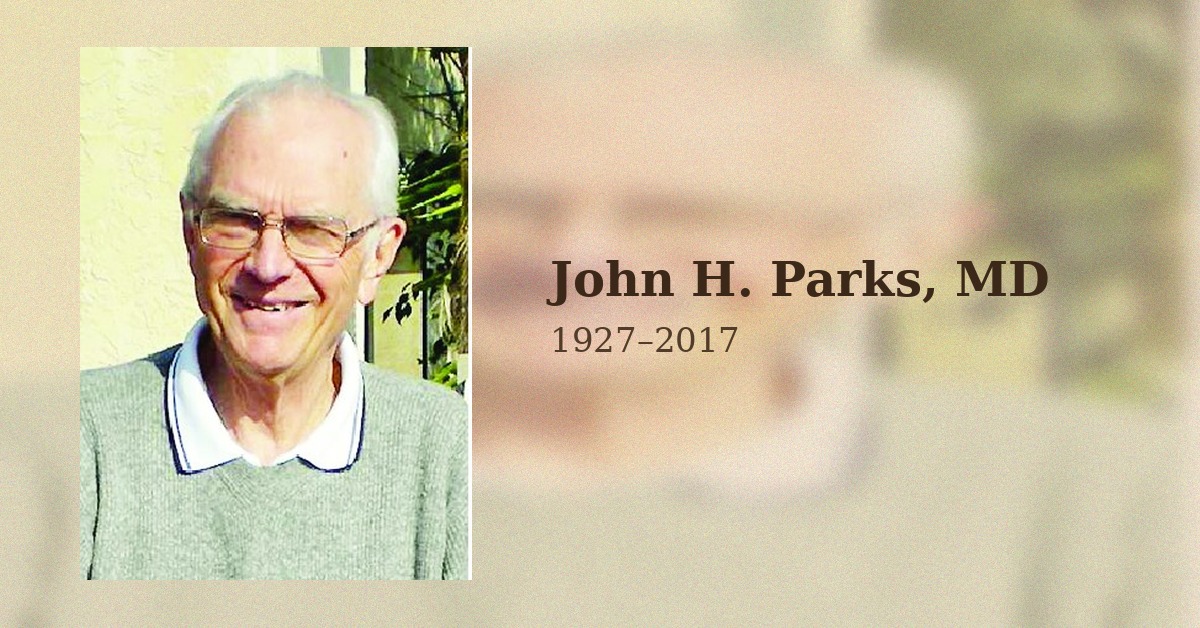
By John H. Parks, MD
AAP Psychosynthesis Quarterly, March 2018
Editorial Note
The abstract, contextual subtitle, and cross-sections in this online edition have been added by the editor, Kenneth Sørensen, for clarity and navigation. The original wording, sequence, and structure of the text have been preserved, and no conceptual edits have been made to the author’s original writing.
Abstract
In this memoir, John H. Parks, a psychiatrist who later sat on the foundation’s board, tells how he came to psychosynthesis and who he found there. A friend gave him Assagioli’s Psychoanalysis and Psychosynthesis in 1963; weeks later he was in Philadelphia with William Swartley, and soon after on the mailing list of the Psychosynthesis Research Foundation. He portrays Frank Hilton, who helped incorporate the foundation at Valmy in Delaware, Robert Gerard, who spent three months in Italy helping Assagioli write his first English book, and Jack Cooper, his mentor for thirteen years. He recounts a dream of a beehive, and a week with Assagioli at Capolona.
Spiritual Formation Before Psychosynthesis
I was raised in Los Angeles, California, with two brothers and a sister. My forebears were dedicated to ministerial and educational service on my mother’s side and farming on my father’s side. My father was orphaned but managed to receive a college education and succeeded in becoming a physician. I was the oldest and was identified strongly with the medical profession, as were my brothers. I did my premedical studies at Dartmouth College and graduated from Harvard Medical School in 1950. My psychiatric residency training was at the Massachusetts Mental Health Center and Harvard Health Services (1955 to 1959). While still in medical school I met my first spiritual teacher, Swami Akhilananda of the Boston Vedanta Society. My wife and I learned to appreciate Neo-Hinduism as articulated by the widely known Hindu teacher Swami Vivekananda. We took householder initiation from Akhilananda in 1955.
Manley Palmer Hall, founder of the Philosophical Research Society in Los Angeles, was my second spiritual teacher. I took a two-year correspondence course with him (1953 to 1955) during the time I worked as a general practitioner on the Pima and Papago Indian Reservations in Arizona.
The year I came to the PRF, I was 36 years old, married for 11 years, with two small children. I had chosen academic psychiatry as my career; my first job was as assistant professor of psychiatry at the University of Virginia School of Medicine. I was enrolled part-time in the Washington Psychoanalytic Institute, where I spent four years in training. In 1963, I connected with the PRF, which had recently moved from Valmy, Delaware, to New York City. I met William Swartley, and through him, joined the PRF and the group of members who were dedicated to the growth of psychosynthesis, which included Frank and Hilda Hilton, Jack and Rena Cooper, Bertha Rodger, Nancy (Tara) Stuart, Audrey Beste, Martha Crampton, James and Susan Vargiu, Frank Haronian, and Roberto Assagioli. Such a dedicated group of deeply spiritual world servers and pioneers in psychology I had never seen before gathered under one roof!
First Contact with the PRF and William Swartley
It all began in 1963 when a friend gave me a copy of Assagioli’s article Psychoanalysis and Psychosynthesis, an Italian article translated into English and published in the Hibbert Journal in 1934. (This article later became Chapter 1 of Roberto’s book, Psychosynthesis: A Manual of Principles and Techniques.) My first two spiritual teachers had instilled in me the extreme importance of meditation as part of spiritual practice. Reading Assagioli’s article, which stressed meditation, influenced me to contact the PRF immediately. Only a few weeks later, I was in Philadelphia paying a personal visit to William Swartley, an early member of the PRF.
The first day of our meeting, the two of us spent long hours sharing our respective spiritual paths. Bill told me that the purpose of his life was to study super-normal psychology. He thought the psychologist’s role was to be a psychological midwife. Prior to graduate school, Bill had studied some Jungian therapy and then traveled to Zurich where he had a personal interview with Carl Jung. Jung advised him to go to India, find a teacher and study yoga, which he did. Bill then moved to California and became a student at the American Academy for Asian
Studies, where he obtained his MA and PhD in clinical psychology. He attended the teaching seminars of Fritz Perls while in California and later traveled to Europe and studied with Wolfgang Kretschner, MD, and Hanscarl Leuner, MD, pioneers in meditation and imagery. In 1956, he attended a seminar led by Dr. Assagioli at his summer home in Capolona.
Returning to the United States, Bill worked first with a juvenile delinquent program and later as prison psychol- ogist in New Jersey. Deciding to switch to industrial psychology, Bill began to do management training in 1961, and he also started a part-time private practice. When I first contacted him, he had just opened a Self Analysis Training Institute where he would take students and help them gradually develop their supra-normal potential.
When the conversation turned to my own path, I outlined my 13-year experience with Swami Akhilananda, which brought me major life changes and commitments. Bill’s validation of my experience was very important to me at that time. He advised me to see Frank Hilton and to ask for the transcript of the First Valmy Conference of the PRF, which took place in 1958. This conference, highlighting the incorporation of the PRF in 1957, allowed Roberto Assagioli a chance to present psychosynthesis in person to the United States. He also advised me to obtain from Frank Hilton a mimeographed copy of Assagioli’s Manual of Principles and Techniques, which Frank had quietly circulated to a few close friends since early 1963.
A Dream Encounter: The Beehive as Symbol of Psychosynthesis
Bill Swartley referred me to an important Jungian teacher, with whom I underwent seven months of dream work. A significant dream occurred in December of 1963, giving me a visual image that became symbolic of my future path.
I was on a train traveling to an important meeting. I noticed a tall blond Nordic-appearing man who was walking forward in the central aisle of our passenger car. He was carrying a large white object in his arms. He stopped at my seat and sat down next to me. My eyes explored the object he was carrying. It was made of a white ivory-like substance shaped like a beehive with a round, circular base several feet in diameter. There was a parabolic planetarium-like roof that rose several feet from the base. The man introduced himself as Theodore Reich. He told me that it was very important that he show me his model. He showed me that the roof, with the shape of a half-egg, was hinged and could be completely opened up so as to rest upside-down beside its the base. As he opened the roof, I could see the inside of the model. The outside wall of the base formed a perfect circle. Within it were approximately 20 spaces or rooms. The remarkable thing about the walls of these rooms was that they were serpentine. This produced a mosaic effect when looked upon from above. The rooms seen all together resembled a round, completed jigsaw puzzle with each piece different, and when seen as a whole, made a perfect fit within the circular base of the model. Thus, each room had the single, large, parabolic, planetarium-like space above for its ceiling. The model was a beautiful flowing geometric symbol of the synthesis of diversity and unity.
The beehive in the dream, I believe, is a model of psychosynthesis, the egg-shaped roof representing the higher unconscious, and the cylindrical base with the many unusual rooms representing the personality. The rooms represent the many theories and techniques of different schools of human psychology, which together form the composite personality of psychosynthesis. The space under the egg-shaped roof is like the space in a planetarium, open to the entire cosmos. It is symbolic of transpersonal psychosynthesis, in which each human being finds his or her unique spiritual direction.
Dr. Swartley was my door to the PRF; having validated my path, he invited me in. Through him, I contacted Frank Hilton and was placed on the PRF mailing list, receiving regular newsletters about the activities of key persons associated with the PRF. I learned about the monthly seminar series just being started by Jack Cooper, MD on psychosynthesis techniques.
Frank Hilton, Jack Cooper, and the PRF’s Core Circle
Frank Hilton was one of the most influential persons in my life. Born in England, he started his career in business specializing in marine insurance, shipping, and marine law. He met Roberto Assagioli in 1938, and Frank and Roberto were intimate friends thereafter. In 1946, Frank moved to the United States to be with Alice Bailey and the Arcane School she founded. After careful consideration, in 1957 he helped Roberto incorporate the PRF based at Valmy, the Dupont family mansion, in Greenville, Delaware. In 1959, Mrs. Alexis du Pont de Bie donated Valmy and its adjoining property to the PRF. At her death in 1963, the house was sold and the proceeds from the sale were invested. The PRF rented an office in New York City.
In 1955, Robert Gerard, PhD was the first American clinical professional to meet Roberto Assagioli at the International Congress for Psychotherapy in Paris. In 1959, he traveled to Italy and spent three months with Roberto to assist him in writing his first English-language book, Psychosynthesis: A Manual of Principles and Techniques, which was finally published by Viking Press in 1965. In the 1970s, he established his own Integral Psychology Training School in Los Angeles, and lectured to hundreds of psychologists and psychiatrists at colleges and universities.
Robert Gerard and Bill Swartley were acknowledged to be the two most important clinical members of the PRF in the late 1950s. Both turned down the salaried position of Director of Research at the PRF. Finally, Jack Cooper, an MD and clinically oriented psychiatrist, accepted the position as vice president of the PRF board of directors in 1963. In 1968, Jack became president of the PRF board. He was not a researcher but had vast experience in the clinic with patients.
Frank Hilton and Jack Cooper invited me to lunch in 1963. It was another landmark meeting for me; I revisited my spiritual journey while they listened and responded with some stories of their own. As our meeting was coming to an end, Jack quickly and skillfully suggested that I do personal work with some of the exercises that were available in the mimeographed copy of Roberto’s first book. He asked me to send him the results of my work; I accepted his challenge. For the next 13 years (1963 to 1976), Jack was my chief mentor in psychosynthe- sis. From 1963 to 1966, my contacts with the PRF had been largely by mail. When I moved to Lexington, Kentucky in 1966, my contacts with Jack Cooper, Frank Hilton and the PRF became more frequent.
Using Roberto Assagioli’s terminology, my learning loosely could be described as a group didactic analysis. It was a complete immersion in the energy, teaching, and work of the PRF. One could call this intense group work a living process of psychosynthesis.
Study Groups in Virginia and Kentucky
It was with Frank Hilton’s approval and indirect suggestion that PRF members came as guest teachers to both the Virginia Psychosynthesis Study Group and the Kentucky Psychosynthesis Study Group. Bertha Rodger, Ira Progoff, Bill Swartley, Jack and Rena Cooper, Martha Crampton, Nancy (Tara) Stuart, and Jim and Susan Vargiu all came to teach. Bill Swartley visited the psychiatry department of the University of Virginia and met with the residents and members of the faculty. He demonstrated some of the interviewing imagery techniques he had learned in Germany from Hanscarl Leuner and Wolfgang Kretschmer. He also did individual diagnostic sessions with members of the Virginia Study Group. Later, Psychosynthesis Study Group members from Kentucky always were invited to the public PRF meetings in New York City and to the yearly board of directors’ meetings. Ann Anderson, Ron Barnett, James Bergman, Michael Kavanaugh, Edward Moles, PhD, and I all made regular visits to PRF.
In 1965, I participated with Bill, Jack Cooper and other SES members in some preliminary experiments with extra-sensory perception (ESP). Shortly after this time, Bill left the PRF and I did not see him again. Several years later, I heard that he had died suddenly from a tragic accident. In 1969, Frank nominated me to be on the PRF board of directors. I served on the board until 1976 when the PRF closed down.
Frank was aware of my work with Jack Cooper over the years and with Bertha Rodger in the 1970s. When I communicated with Frank, I felt I was communicating with Roberto Assagioli himself. Actually, I felt this with all the PRF members. Frank spent many hours helping me with the writing of papers that I presented to the monthly public psychosynthesis meetings in New York – one paper on Will and the other on Biopsychosynthesis. Frank was always willing to go far beyond the call of duty. His occasional well-timed words of caution to me concerning my administrative work in Kentucky were extremely accurate.
The School for Esoteric Studies and Esoteric Influences
What I learned from Roberto and Frank and Hilda Hilton included information from the School for Esoteric Studies (SES) in New York City, where they were also key leaders. I joined the SES. I read many of the Bailey books, on which the work of the School was based, and sent in monthly reports to its headquarters for seven years. In 1976, I dropped the SES work in order to focus all my time on the psychosynthesis training at the Kentucky Center.
I will always remember seeing a copy of Manley Palmer Hall’s magnum opus, The Secret Teaching of All Ages, which Frank Hilton kept in the SES waiting room. This remarkable book, first published in 1928, is an encyclopedic outline of Masonic, Hermetic, Qabbalistic, and Rosicrucian symbolic philosophy. I had obtained it when I met and became a student of Manley Palmer Hall. Seeing it in the SES office was a sign for me that all of the above influences were true components of my spiritual path.
Assagioli Meeting at Villa Ilario, Capolona, 1973
From 1963 to 1973, Roberto Assagioli had communicated with me indirectly through Frank Hilton and the other PRF board members. I didn’t personally meet and work with him until 1973, the year before his death. In July 1973, the PRF sent me as its representative to the Ninth International Congress of Psychotherapy in Oslo, Norway. After the Congress, I flew to Italy to stay for one week with Roberto Assagioli at his country villa, Ilario, in Capolona. (Ilario was the name of his only son, who died at age 28 from an illness acquired during World War II.) Ilario was situated on top of a small hill overlooking the gorgeous Italian landscape. When I first entered his study, Roberto was dressed in a purple house jacket and was seated at his desk, supported by several pillows. He was shorter than I expected, and seemed quite frail. There was one of his evocative word cards on his desk with the word ENERGY written on it. Because of his deafness, I had already communicated with him through writing the day before. I tape-recorded all of our meetings and after each session transcribed Roberto‘s words.
Roberto was gracious enough to see me, even though another group (Edith Stauffer with High Point students) was visiting him at the same time. He spoke in a quiet voice about the process of therapy. At first, he did some brief personal work with me. He then discussed some of the important exercises that a therapist might use for didactic psychosynthesis, such as writing a letter to the Higher Self, free-hand drawing, journal writing, and the crucial importance of writing an autobiography. Roberto then addressed the importance of both personal and spiritual psychosynthesis. He said that most Americans rush too quickly to spiritual psychosynthesis, and need to spend more time with the personal and psychoanalytic approach. He used the image that personal psychosynthesis is like the ground floor of a house. Everyone needs that solid foundation on which the spiritual aspect is built.
At the end of my visit, Roberto wholeheartedly endorsed the idea of establishing a psychosynthesis center in Kentucky. This in-person endorsement formalized what I had been experiencing for ten years (1963 to 1973) in my contacts with Frank Hilton and the PRF.
…
John H. Parks, MD (1927–2017)
John H. Parks, MD, was an American psychiatrist and an important early contributor to the development and dissemination of psychosynthesis in North America. Trained at Dartmouth College and Harvard Medical School, he completed his psychiatric residency at the Massachusetts Mental Health Center and Harvard Health Services.
Parks’ professional path combined academic psychiatry with a sustained engagement in spiritual psychology. Early in his career, he was influenced by Vedanta through Swami Akhilananda and later by the philosophical teachings of Manly P. Hall.
In 1963, Parks became actively involved with the Psychosynthesis Research Foundation (PRF) in New York, where he worked closely with key figures such as William Swartley, Frank Hilton, and Jack Cooper. Over more than a decade, he participated in the development of psychosynthesis training, contributed to study groups, and later served on the PRF Board of Directors until its closure in 1976.
He played a significant role in introducing psychosynthesis into clinical and educational contexts in the United States, particularly through the establishment of study groups and training initiatives. His work reflected a synthesis of psychotherapy, meditation, and transpersonal development, emphasizing both personal and spiritual dimensions of psychological growth.
Parks met Roberto Assagioli in 1973 and received direct encouragement for his work in establishing psychosynthesis activities in the United States.
He is remembered as a dedicated clinician, teacher, and pioneer whose life bridged psychiatry and spiritual development, contributing to the early institutional and experiential foundations of psychosynthesis in North America.
